Egypt’s Ministry of Water Resources and Irrigation said fluctuations in water releases resulting from Ethiopia’s unilateral operation of the Grand Ethiopian Renaissance Dam (GERD) require continuous updates to the operating plans of Egypt’s dams and water infrastructure.
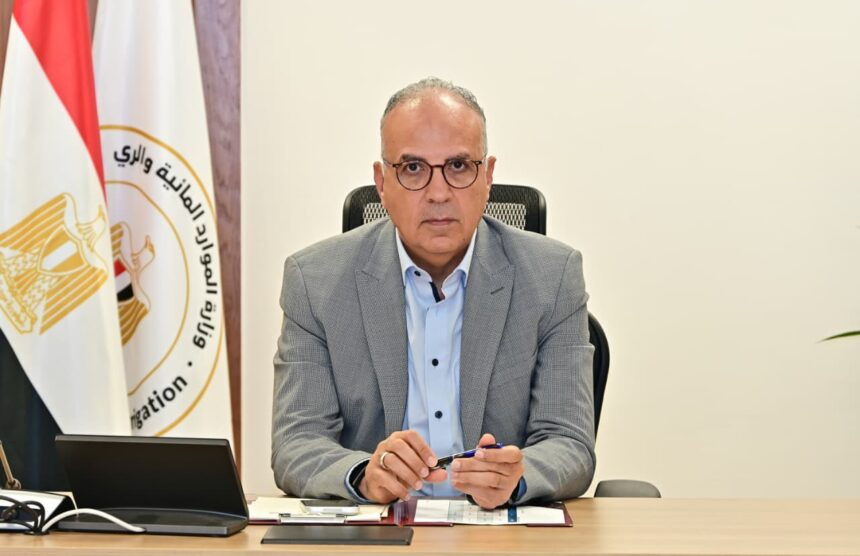
The assessment came during a meeting of the Permanent Committee for Nile River Flow Regulation, chaired by Minister of Water Resources and Irrigation Hani Sewilam, to review water availability during the country’s peak demand season, according to a ministry statement.
The committee reviewed developments related to the operation of the GERD, which Egypt described as “illegal and contrary to international law”, saying the absence of a legally binding agreement governing the dam’s operation and data-sharing has created variability in Nile river flows.
According to the ministry, the lack of clear operating rules and regular data exchange with Ethiopia requires operators of downstream dams and water facilities to continuously adjust operational plans to respond to changing hydrological conditions.
The committee also reviewed rainfall over the Nile headwaters and inflows from the Blue Nile, White Nile and Atbara River.
The ministry said Nile inflows during June were above average, while flows recorded so far in July have been below normal.
The committee said it remains too early to assess the overall flood season, noting that a clearer picture is expected after the first 10 days of August, when much of the Blue Nile’s seasonal floodwaters are projected to reach Egypt.
It added that the accuracy of flood forecasts improves as the rainy season progresses and additional hydrological and climate data become available.
The meeting also reviewed the latest regional and international climate outlooks on the El Niño and La Niña weather patterns and their potential impact on rainfall across East Africa. The committee noted that while these indicators are important for seasonal forecasting, they must be combined with real-time hydrological observations from across the Nile Basin.
Sewilam said Egypt’s water management system relies on continuous monitoring of hydrological and climate indicators, alongside the flexible operation of water infrastructure, to respond efficiently to different hydrological scenarios.
He added that the Aswan High Dam will remain the cornerstone of Egypt’s water security due to its storage and operational capacity, enabling the country to meet water demand under varying hydrological conditions.
The minister directed officials to continue daily monitoring of rainfall and river inflows, regularly update hydrological and climate forecasts, and maintain close coordination among relevant agencies to ensure the stability and efficiency of Egypt’s water management system.