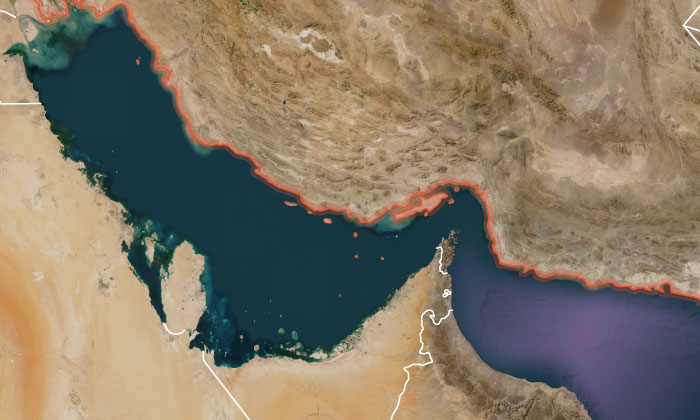
The US-imposed maritime blockade on Iran cannot be adequately understood in isolation from the broader equation of “sovereignty versus technological supremacy” that structures the ongoing rivalry between the United States and China. The swift and unequivocal response delivered by China’s Minister of Defence, Dong Jun, made this explicit: freedom of navigation and the uninterrupted flow of energy from Iran constitute a paramount security interest for Beijing, and China will not permit the blockade to undermine its economy, thereby drawing clear red lines for Washington. Almost immediately thereafter, the Chinese oil tanker Rich Star transited the strait carrying approximately 250,000 barrels of Iranian methanol, becoming the first vessel to depart the Gulf since the onset of the blockade.
It is no coincidence that Iran, following Venezuela, has been targeted by US President Donald Trump; both countries collectively supply China with nearly 20% of its effective oil imports. These flows provide Beijing with price security and a degree of insulation from Western pressures, rendering them a strategic asset in its economic confrontation with Washington.
Undoubtedly, the blockade is primarily aimed at Iran, further exacerbating its economic strain. More than 90% of its maritime trade—both oil and non-oil—passes through the Strait of Hormuz, while its options for circumventing the blockade remain extremely limited. Should the blockade be effectively enforced, prolonged export disruptions and an inability to offload crude oil would pose a tangible operational risk to Iran’s oil fields. Once onshore storage capacities and available tankers reach saturation, forced well shutdowns may become unavoidable.
In such scenarios, aging fields may face technical risks related to reservoir integrity and declining production efficiency, potentially leading to irreversible damage. Under the weight of such losses, Tehran may resort to escalatory measures designed to raise the cost of the crisis for all parties. Among these, environmental or maritime contamination in the vicinity of the strait—reminiscent of the aftermath of Iraq’s occupation of Kuwait—cannot be ruled out, with the aim of disrupting navigation and driving up global insurance and shipping costs.
Conversely, the US blockade also serves broader strategic purposes within its economic confrontation with Beijing in the Gulf region, which has increasingly become an arena of competition between the two powers. The rivalry is no longer confined to energy contracts; it now encompasses technology, renewable energy, digital currencies, and the so-called “corridors of the future,” of which the Strait of Hormuz is a critical node.
Estimates for 2026 suggest that trade between Gulf states and China is on track to exceed $325 billion by next year, surpassing the combined total of Gulf trade with the United States and Europe. China is no longer merely an energy consumer; it has become the leading technological partner in national development visions—such as Saudi Arabia’s Vision 2030—particularly in smart infrastructure sectors. The United States, in turn, is attempting to counterbalance this influence through strategic initiatives such as the India–Middle East–Europe Economic Corridor (IMEC), positioned as a direct competitor to China’s Belt and Road Initiative.
Washington has also exerted sustained pressure on Gulf states to curtail cooperation with Huawei in the domains of 5G networks and cloud computing, citing security risks to US military bases in the region—a clear red line for American policymakers. Meanwhile, Beijing has successfully secured agreements to construct large-scale data centres in Saudi Arabia and the UAE, thereby consolidating its influence in the “big data” sector, which Washington likewise views as an intelligence threat.

The year 2025 witnessed an acceleration in the use of local currencies for settling energy transactions, with some oil and gas shipments between China and Gulf states already denominated in the digital yuan. While the US dollar remains dominant, the mere existence of a viable Chinese technological alternative diminishes the effectiveness of American sanctions as a geopolitical tool—an evolution that Washington is monitoring with growing concern, given its implications for the global financial order.
In the first quarter of this year, Gulf sovereign wealth funds showed a discernible shift toward increasing investments in Chinese technology firms, while Beijing moved to localize electric vehicle manufacturing within the region.
Since Trump’s return to the White House, a primary objective has been to curb China’s accelerating technological ascent. The crises he has ignited in Venezuela and Iran—both capable of inflicting immediate and substantial damage on the Chinese economy through disruptions in oil supplies—have, paradoxically, revealed China’s preparedness to convert such challenges into opportunities. Beijing has leveraged these dynamics to reinforce its leadership in renewable energy technologies and to entrench itself as a global political power capable of filling the vacuum left by military conflicts.
China has not only managed the economic repercussions of the crisis through reliance on its strategic reserves but has also demonstrated political dexterity. From a pragmatic standpoint, it has exerted pressure on Iran to engage in negotiations in Islamabad, despite the fact that a prolonged US entanglement in the Gulf could theoretically expand China’s strategic manoeuvrability regarding its claim over Taiwan—the world’s leading producer of semiconductors. This is not a contradiction; rather, it reflects a calculated pursuit of a “controlled conflict” that exhausts the adversary without escalating into a direct confrontation that could jeopardize China’s commercial interests.
This assessment is reinforced by a recent report issued in April by the Mitchell Institute for Aerospace Studies, which concluded that the US Air Force no longer possesses sufficient capacity to prevail in a direct conflict with China. The report attributes this condition to decades of underinvestment and delays in modernization programs, resulting in a fighter fleet lacking the range and survivability required to maintain air superiority against a peer competitor.
The current confrontation is no longer about “who buys oil,” but about “who sets the technological and financial rules of the region.” The intervention of China’s defence minister underscores Beijing’s recognition that the security of maritime corridors is inseparable from the security of its strategic connectivity projects, foremost among them the Belt and Road Initiative, through which China seeks to link Asia with Europe and Africa via an integrated network of land and sea routes.
The crisis surrounding the blockade and the Strait of Hormuz simultaneously advances immediate US objectives vis-à-vis Iran and broader strategic aims in its rivalry with China within the framework of “corridor competition.” What we are witnessing is the apex of global geopolitical and economic rivalry, where geopolitics has evolved from a contest over territory to a contest over connectivity; over corridors, data, energy, and supply chains.
Prof. Hatem Sadek – Helwan University