

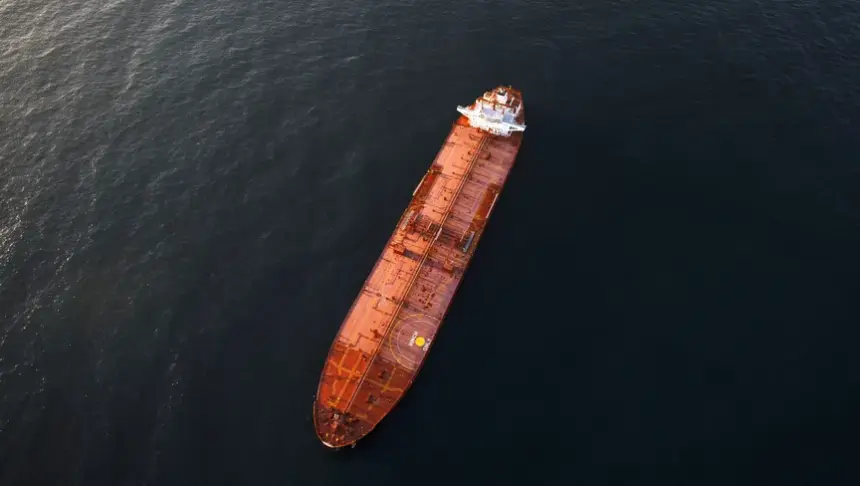
Oil and European natural gas prices surged after Tehran re-closed the Strait of Hormuz and fired on vessels following the US Navy’s seizure of an Iranian ship, halting all shipping traffic through the vital energy corridor.
The turbulent weekend escalation saw Tehran re-impose restrictions on the waterway on Saturday, reversing a brief reopening. Iranian officials stated that a US blockade of Iran-linked ships violated a ceasefire agreement set to expire on Tuesday.
In the latest trading, Brent crude futures for June settlement rose 5% to $94.92 a barrel at 11:00 a.m. in London, approaching the $95 mark and erasing about half of the losses recorded on Friday when the corridor’s initial reopening was announced. West Texas Intermediate (WTI) futures for May delivery, which expire on Tuesday, jumped to $89.07 a barrel, while the more actively traded June contracts rose 6% to $87.56 a barrel.
European natural gas prices initially jumped about 3% as the disrupted Arabian Gulf supplies threatened energy markets. Benchmark futures on the Dutch Title Transfer Facility (TTF) electronic gas trading market ultimately surged by up to 11% to €43 ($50.56) per megawatt-hour. The contracts later pared gains to 6.2% at 12:35 a.m. Singapore time, wiping out most of Friday’s declines.
No ship transits were recorded through the Strait of Hormuz on Sunday, according to tracking data compiled by Bloomberg up to the London afternoon. At least 13 oil tankers, alongside liquefied natural gas (LNG) carriers, abandoned their departure attempts and returned to Gulf waters on Saturday after Iran announced the closure.
The standoff threatens to exacerbate the global energy crisis and undermines expectations expressed by Trump over the weekend for a swift end to the conflict. Prior to the outbreak of the US and Israeli war on Iran at the end of February, the strait accommodated approximately one-fifth of the world’s oil and LNG supplies.
The shipping corridor remains one of several outstanding issues in the conflict, alongside Iran’s nuclear capabilities and the ongoing Israeli invasion of Lebanon.
“The market is retaining a risk premium as the deadline approaches, but is not fully committing to it,” said Harris Khurshid, chief investment officer at Karobar Capital in Chicago. “If things stay as they are, we are likely to see a gradual rise towards $105 to $115, but with a lot of news-related volatility.”
The unprecedented supply shock is reinforcing inflationary pressures and weighing on global economic growth. The cumulative global fallout is expected to become visible this week, with business surveys across several countries likely pointing to potential stagflation.
“As long as Hormuz flows remain restricted, the physical market, not paper indices, will determine prices, with fuel costs in the real economy remaining under persistent upward pressure,” said Robert Rennie, head of commodity and carbon research at Westpac.
The disruption leaves Europe facing a challenge to refill its gas inventories unless it attracts larger volumes of LNG, putting it in direct competition with Asian markets that are simultaneously seeking to replace lost supplies from Qatar.
Speaking on the sidelines of a market briefing on Monday, Masanori Odaka, Vice President for Gas and LNG Market Research at Rystad Energy, highlighted the widening global competition.
“Two things could happen: the spread between the Dutch electronic gas trading market and the Japan-Korea LNG market could narrow, or the demand destruction in Europe could worsen further,” Odaka said, noting the price differential between the European and Asian indices.
