

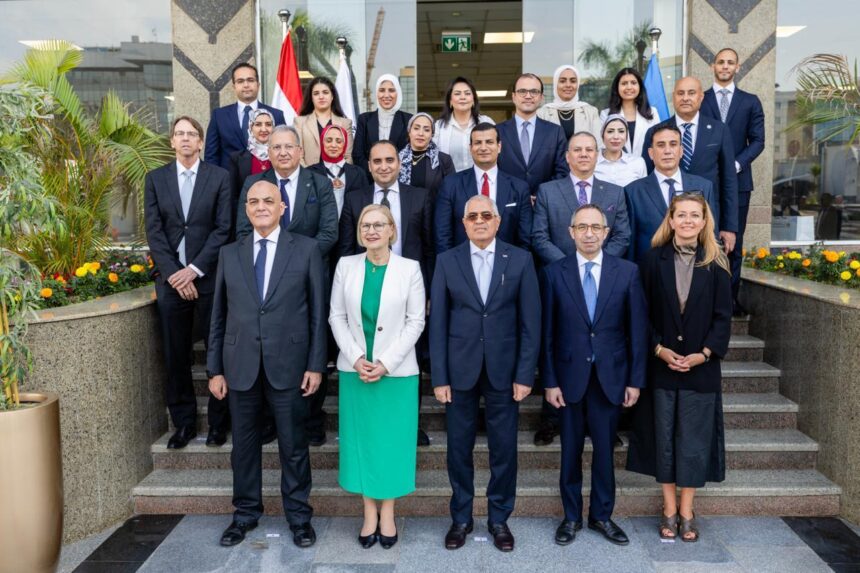
Egypt and the United Nations peacebuilding office have committed to expanding partnerships to combat illicit financial flows and transnational crime, citing the need for intensified international collaborative measures amid current global geopolitical tensions.
The commitment was outlined during a Sunday meeting between the Egyptian Money Laundering and Terrorist Financing Combating Unit and a delegation from the UN Office of Peacebuilding and Peace Support (PBPSO) headed by Assistant Secretary-General Elizabeth Spehar.
Discussions focused on the links between organised crime, corruption, and money laundering. The parties stressed the necessity of capacity building and enhancing the expertise of practitioners in the field, while placing a strategic priority on empowering women within the framework of combating corruption and other crimes.
Judge Ahmed Said Khalil, Chairman of the Board of Trustees of the Egyptian unit, said Egypt remains committed to strengthening its systems against money laundering and counter-terrorism financing. This commitment, he noted, is demonstrated through adherence to international standards issued by the Financial Action Task Force (FATF) in response to the challenges illicit financial flows pose to the integrity of the economic system.
Khalil highlighted the PBPSO’s efforts in promoting peacebuilding, consolidating stability in member states, and supporting the development of criminal justice systems. Stating that joint and collective action is the cornerstone of combating transnational crime, he emphasised Egypt’s role in promoting regional and international cooperation through its membership in specialised organisations.
During the visit, the Egyptian unit presented a video outlining its mandate and core competencies in accordance with Anti-Money Laundering Law No. 80 of 2002 and its subsequent amendments. The presentation detailed the unit’s contributions to professional development, institutional capacity building, and key milestones in its activities, alongside what it described as a successful track record in regional and international cooperation.
Both parties concluded the talks by assuring to intensify efforts to strengthen relevant institutional frameworks. They affirmed the importance of cross-border coordination to support the global movement against financial crimes, aiming to build institutional resilience against current challenges and encourage a more secure and stable environment at both regional and international levels.


