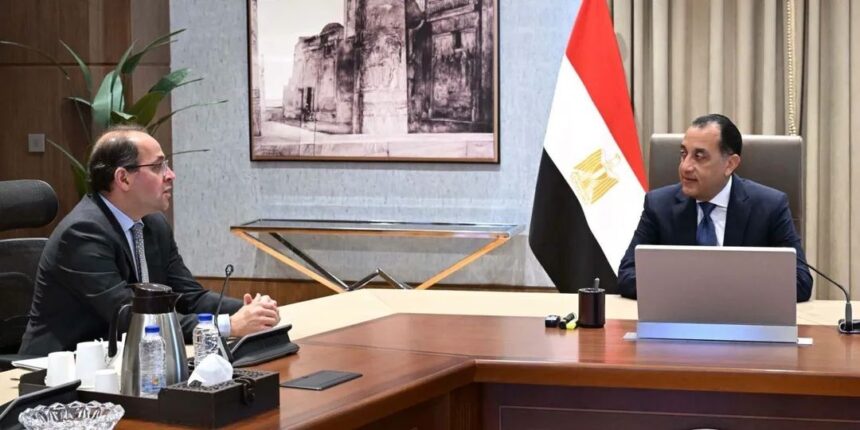
Prime Minister Mostafa Madbouly met with Finance Minister Ahmed Kouchouk to review key meetings and engagements held on the sidelines of the IMF-World Bank Spring Meetings in Washington, D.C.
During the meeting, Kouchouk said he held discussions with counterparts from the Middle East and North Africa, underscoring the need to accelerate the transition towards a green economy and renewable energy amid ongoing global uncertainty. He noted that, despite external shocks, the Egyptian economy has demonstrated resilience, supported by proactive and well-coordinated policies that promote growth while protecting vulnerable groups.
The minister also highlighted his participation in an expanded investor session organised by Bank of America, where he stressed that Egypt has adopted balanced, flexible measures to navigate the current global challenges. These efforts are guided by four key fiscal policy priorities aimed at reinforcing discipline, stimulating economic activity, and supporting the business environment.
Kouchouk added that transparent and candid engagement with investors, alongside the credibility of implemented reforms, has helped improve visibility on Egypt’s business climate. He noted that tax facilitation measures have contributed to broadening the tax base and increasing revenues by 29% during the current fiscal year, without placing additional burdens on investors.
He also took part in a roundtable on emerging markets, where he highlighted that developing economies have been among the most affected by regional and global disruptions, particularly rising energy costs and supply chain constraints. He stressed that debt management in these economies requires innovative approaches that balance sustainability with growth, alongside fairer financing mechanisms and expanded fiscal space to meet development needs.
The minister further emphasised the importance of intensified international efforts to reduce financing costs for emerging markets, noting that such measures are essential to attract greater private sector investment.
Kouchouk also participated in an investor dialogue organised by RMB, where he said Egypt’s economy recorded a growth rate of 5.3% in the first half of the current fiscal year. Growth was driven by strong performance in industry, information technology, tourism, and private investment.
He pointed out that fiscal performance from July to March reflects improving economic conditions, continued efforts to expand the tax base, and the success of policy and procedural reforms in rebuilding trust with the business community. The primary surplus reached 3.5% of GDP, supported by the rise in tax revenues without imposing new burdens on citizens or investors.
In addition, Kouchouk highlighted his participation in investor discussions organised by Jefferies International and Société Générale, where he underlined strong coordination among government entities to ensure swift decision-making and effective communication with markets.
Across his engagements, the minister said the focus remained on Egypt’s steady growth trajectory and its increasing capacity to attract investment. He noted that improved economic indicators during the current fiscal year reflect the strength of ongoing reforms and the adoption of flexible policies that balance fiscal discipline with growth objectives.
Kouchouk added that the government continues to strengthen a “partnership of trust” with the business community through tax and customs facilitation measures, alongside targeted initiatives supporting priority sectors. He also pointed to efforts to expand the productive and export base, creating broader opportunities for sustainable development.
The minister concluded by highlighting the growing role of the private sector in development, noting a 42% increase in private investments during the first quarter of the fiscal year, and reaffirmed Egypt’s commitment to deepening cooperation with international financial institutions to build a more competitive economy.