

Diplomacy today is no longer defined by what embassies represent, but by what they produce. Not agreements, but networks. Not statements, but knowledge.
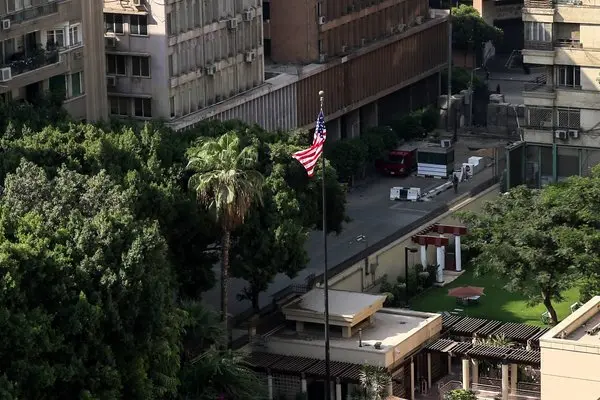
In this evolving landscape, the US Embassy in Cairo offers a revealing case of how diplomacy is being reconfigured as a platform for influence through intellectual and professional engagement.
Embassies are no longer merely channels for managing political relations. They are becoming platforms that integrate politics, economics, knowledge, and culture into structured ecosystems of influence. In this sense, the US Embassy in Cairo extends beyond formal representation to building expansive networks that connect research with policymaking.
This transformation reflects a broader shift in diplomacy, from managing interests to producing knowledge and cultivating long-term relationships. Programs such as Fulbright and the International Visitor Leadership Program (IVLP), alongside academic and cultural initiatives, do more than facilitate exchange. They contribute to shaping transnational elites capable of operating across borders and developing a shared language between policymakers and researchers.
Yet influence is not automatically generated. Without local institutional capacity to interpret, absorb, and translate these experiences into policy, such platforms risk remaining symbolic rather than transformative. In some cases, they may even reinforce asymmetries in knowledge production, where ideas circulate globally but are unevenly internalised locally.
Direct engagement with US institutions reveals how this ecosystem operates in practice. I spoke at a formal session at the US Congress, where I addressed a specialised audience on the comparison between the Egyptian and American political systems. This experience provided direct insight into how institutional debate is structured and how knowledge circulates within decision-making environments.
Similarly, my studies in leadership programs at the Thunderbird School of Management in Washington, D.C., illustrate how educational institutions function as indirect extensions of diplomacy. These programs do not simply transfer knowledge; they build cross-border professional networks that sustain influence over time.
International academic platforms further reinforce this dynamic. I have been invited to participate in the upcoming annual meeting of the American Political Science Association (APSA) in Boston, where I will present a research paper on democratic erosion in the Arab world from a “governance of meaning” perspective, a framework I am currently developing across multiple research projects, including ongoing collaboration with the Hertie School in Berlin. This engagement is not only about presenting research, but about contributing to global debates on governance and democracy, fields that formed the core of my doctoral research.
Understanding this ecosystem also requires moving beyond institutional analysis to lived experience. Observing how ideas, practices, and networks interact on the ground reveals that influence is not exercised solely through formal decisions, but through continuous intellectual and professional engagement.
The central challenge for embassies today is not their presence, but their capacity to function effectively as platforms. The task is not merely to organise events, but to deepen engagement with local research communities, create meaningful spaces for dialogue, and connect ideas more directly to policy processes. Investing in long-term relationships with emerging researchers and opinion leaders remains one of the most effective strategies for sustainable influence.
At the same time, the responsibility does not lie with embassies alone. The impact of these platforms ultimately depends on local societies’ ability to engage with them critically and productively. Too often, international initiatives remain confined to narrow elite circles or become credentials rather than catalysts for policy change.
The real measure of diplomacy today is not visibility, but integration, the extent to which it becomes embedded in how societies think, learn, and decide.
Influence that remains external is temporary. Only when knowledge is internalised and translated into policy does diplomacy achieve its lasting effect.
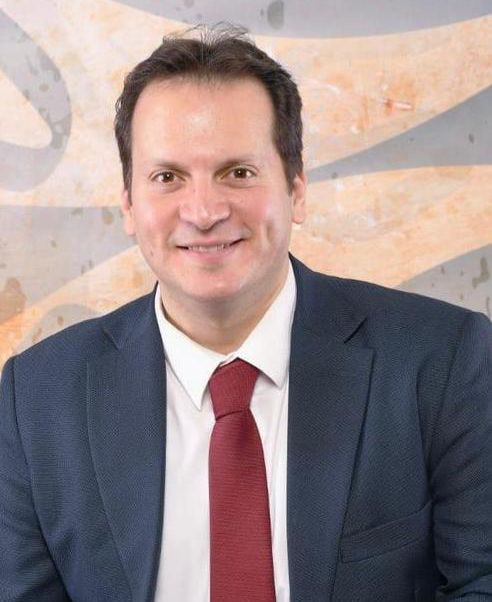
Dr Ramy Galal is a governance and institutional reform specialist focusing on state capacity, accountability, and the design of effective public institutions. His work examines how institutional arrangements shape policy outcomes and government performance, particularly in emerging and middle-income contexts. He also engages with the concept of governance of meaning as an analytical lens for understanding how authority, narratives, and interpretation influence policy environments.
He is an Assistant Professor and a former Senator, bringing a combination of academic expertise and hands-on experience across both legislative and executive domains. He previously served as an advisor and official spokesperson for Egypt’s Ministry of Planning and Economic Development, with direct involvement in policy design, government decision-making, and implementation processes at the center of government.
He holds a PhD from Alexandria University, a master’s degree from the University of East London, and a diploma in public administration from the University of Chile.
