

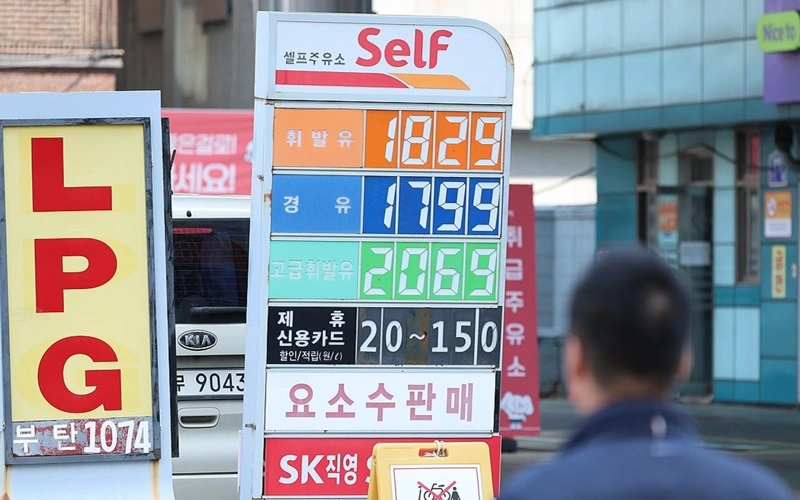
South Korea is weighing an extension of driving restrictions to the general public if crude oil prices surpass $120 per barrel, Finance Minister Choo Kyung-ho said on Sunday, a measure that would mark the country’s most severe civilian fuel-rationing step since the 1991 Gulf War as the conflict in Iran ripples through Asian energy markets.
Speaking to broadcaster KBS, Choo said the government “is reviewing whether to extend the system to the private sector to encourage public co-operation, but we hope the war ends soon so that such measures will not be necessary.”
South Korea has already imposed odd-even driving restrictions on government employees, limiting their access to official buildings based on the last digit of their vehicle registration plates. Broadening that scheme to private citizens would signal a markedly elevated level of concern about a looming energy shock in an economy that serves as a linchpin of global technology supply chains.
President Lee Jae-myung last week called on citizens to reduce electricity consumption and switch to public transport rather than driving, as the conflict in Iran shows no sign of abating.
“Closing the Strait of Hormuz is, to some extent, an Asian crisis,” Singapore FM Vivian Balakrishnan
Oil Markets: Brent Near Monthly Record, WTI Tops $100
Brent crude rose as much as 3.7% to $116.75 per barrel on Monday morning, setting the benchmark on course for a record monthly gain, after Houthi forces fired missiles at Israel over the weekend and pledged to continue operations until attacks on Iran and affiliated armed groups cease. West Texas Intermediate likewise cleared the $100 threshold.
As one of Asia’s largest crude importers and a major regional fuel exporter, South Korea faces compounding risks: surging global oil prices are inflating raw-material costs, while deteriorating shipping conditions and broader supply disruptions are bearing down on trade flows. Export growth had held firm in early March on robust demand, but analysts warn the margin for continued resilience is narrowing rapidly.
Singapore Flags ‘Untested’ Asian Vulnerability
Singapore’s Foreign Minister Vivian Balakrishnan articulated the regional stakes in pointed terms on Monday. “At the moment, closing the Strait of Hormuz is, to some extent, an Asian crisis,” he told reporters. “This vulnerability is known, but it has not been tested to this extent before.”
Many Asian economies depend on the Middle East for the bulk of their crude oil imports, and regional strategic reserves are already being drawn down.
Shortages Visible Across the Region
The strain is manifesting on the ground across Asia. Working weeks have been curtailed, street lighting switched off, and filling stations forced to close in multiple countries. The disruptions are sharpest in South Asia.
In Pakistan, cricket supporters have been asked to stay home and watch matches on television to conserve fuel. The government is also planning fuel rationing for vehicles, according to people familiar with the matter who requested anonymity because the information is not yet public.
In Bangladesh, motorists are waiting hours to refuel, with queues stretching up to a kilometre at service stations. Authorities have halted production at most fertiliser plants and are urgently seeking $2bn in multilateral loans to secure enough energy to meet elevated summer demand.
India Invokes Pandemic Parallel
Indian Prime Minister Narendra Modi struck a sober note, telling the nation that India must prepare for the current situation in the same way it mobilised against the coronavirus pandemic five years ago.

