

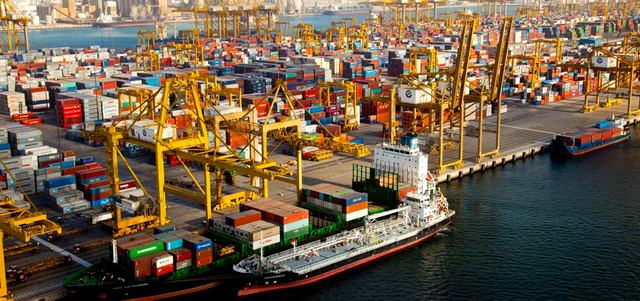
Egypt’s Cabinet has highlighted the growing role of free zones in reshaping the country’s investment and trade landscape, supported by strong performance indicators and rising investor interest.
Free zones remain a central pillar of Egypt’s investment ecosystem, offering a flexible and business-friendly environment that supports industrial and commercial activity. They play a key role in attracting both local and foreign investment through a range of tax incentives and streamlined procedures, helping to enhance the competitiveness of the national economy and reinforce Egypt’s position as a regional hub for industry, logistics and international trade.
According to government data, Egypt currently has 231 public and private free zones that are either operational or under development. These zones operate under special fiscal, customs and monetary frameworks, while remaining under state jurisdiction and administrative oversight.
International institutions have also underscored the importance of Egypt’s free zones. The Organisation for Economic Co-operation and Development (OECD) has identified them as a key driver of foreign direct investment inflows, noting that Egypt’s nine public free zones offer competitive incentives and well-developed infrastructure. Meanwhile, the United Nations Conference on Trade and Development (UNCTAD) reported in January 2026 that Egypt ranked first in Africa for foreign direct investment inflows for the fourth consecutive year, supported by investment facilitation measures such as electronic company registration services provided by the General Authority for Investment and Free Zones (GAFI).
Free zone projects benefit from robust legal protections, including safeguards against expropriation or administrative seizure except through judicial procedures. They also enjoy extensive exemptions from customs duties and taxes on capital goods, production inputs, exports and imports, as well as value-added tax exemptions on domestic inputs and transit goods.
Fitch Ratings has also highlighted the advantages of Egypt’s strategically located free zones, citing tax and customs exemptions, unrestricted import and export activity, and simplified administrative procedures as key attractions for investors.
Performance indicators for public free zones have improved markedly. In 2025, 152 new projects were established, bringing the total number to 1,243, up from 1,091 in 2014. Invested capital rose by 30.3% to $14.2bn, including $2.8bn in foreign direct investment, compared with $10.9bn in 2014.
Total investment costs increased by 66.5% to $38.3bn, while exports more than doubled to $9.3bn, accounting for nearly 20% of Egypt’s total exports. Free zone projects now employ more than 248,000 workers nationwide.
The data also highlighted several major projects operating within these zones. Leoni Egypt produces around 45,000 automotive cables daily across three zones, operating 15 factories and employing approximately 6,000 engineers, technicians and workers. Gid Textile runs five factories with investments exceeding $250m and 300 production lines. Meanwhile, Yazaki Egypt, a private free zone project, has invested around €30m and exports 100% of its production.
The Cabinet said these indicators reflect the success of ongoing efforts to strengthen the investment climate, accelerate industrial growth and expand Egypt’s export base.


