

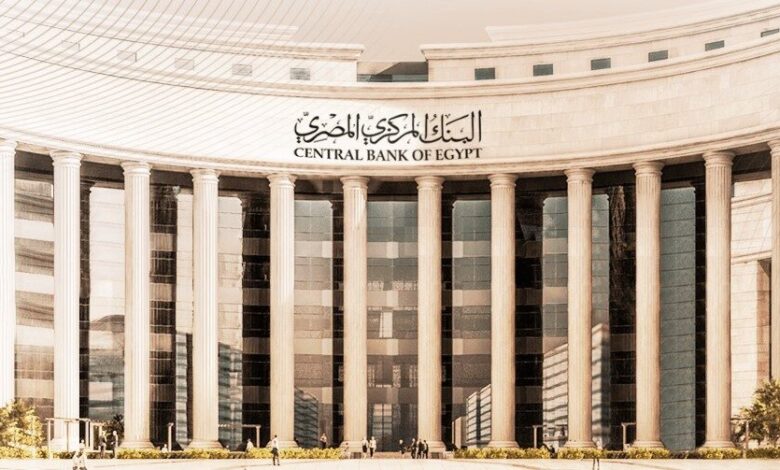
The Central Bank of Egypt (CBE) has underscored the effective transmission of its 2025 monetary easing cycle, with the majority of policy rate cuts swiftly reflected in money market conditions, bank pricing, and government debt yields.
During the fourth quarter (Q4) of 2025, the CBE reduced its policy rate by a further 200 basis points (bps), bringing cumulative rate cuts since the beginning of the year to 725 bps. As a result, the policy rate declined to 20.5% in Q4 2025, compared to 27.8% in Q1 2025. Despite the substantial easing, nominal interest rates remained above inflation, preserving positive real returns.
Strong interbank passthrough
Approximately 94% of the cumulative policy rate cuts were transmitted to the interbank market. The overnight interbank rate stood at 20.6% in Q4 2025, down from 27.4% in Q1 2025, reflecting a rapid and effective passthrough of monetary policy to short-term money market conditions.
At the same time, Egypt’s average excess liquidity declined sharply, reaching EGP 176.5bn in Q4 2025 – equivalent to 20% of the reserve requirement – compared to EGP 828.5bn (90% of the reserve requirement) in Q1 2025, before the easing cycle began. This marks the lowest level since Q4 2016, largely driven by net government securities issuance.
The contraction in excess liquidity was accompanied by a revival in overnight central bank lending, which averaged EGP 14.97bn in Q4 2025 following a prolonged period of near-zero activity. The tightening liquidity backdrop also contributed to a narrowing spread between the overnight interbank rate and the policy rate, with the interbank rate exceeding the policy rate by just 5 bps on average in December 2025.
Interbank market activity continued to strengthen in H1 FY2025/26. Total transaction volumes rose by EGP 1.7trn compared to the previous half-year, marking a 28% increase. Activity remained concentrated in overnight and one-week tenors, highlighting banks’ continued reliance on short-term liquidity management tools.
One-week transactions accounted for 36% of total interbank volumes, broadly stable relative to the previous half but significantly higher than historical averages of 5% in H1 FY2022/23 and 7% in H1 FY2023/24. This structural shift reflects the impact of the full allotment policy and relatively tighter liquidity conditions.
Deposit and lending rates adjust
Following the cumulative 725-bps easing, banks began adjusting deposit and lending rates.
In December 2025, the weighted average rate on new deposits declined to 15.3%, while the rate on new loans fell to 22.7%, compared to 20.6% and 28%, respectively, in March 2025. Around 87% of the decline in the overnight interbank rate was passed through to new deposit and lending rates, signalling strong monetary policy transmission to retail and corporate financing conditions.
Meanwhile, the spread between new lending rates and the interbank rate remained contained, indicating broadly accommodative financing conditions.
Government securities yields moderate
Yields on local-currency government securities edged lower in Q4 2025. The weighted average yield (WAY) of accepted bids in Treasury bill and bond auctions declined to 25.7%, compared to 26.9% in Q1 2025 (gross of tax), prior to the start of the easing cycle.
The moderation reflects early transmission of policy easing to domestic funding costs. Treasury bill yields – which carry a higher issuance weight than bonds – continued to exceed bond yields throughout the easing cycle.
Demand for government securities remained solid. The coverage ratio (submitted-to-required bids) eased slightly to 2.6x in Q4 2025 from 3.0x in Q1 2025, indicating sustained investor appetite despite some moderation. Meanwhile, the accepted-to-required ratio rose from 0.9x to 1.2% between June and December 2025, suggesting improved acceptance of securities at lower yields.
The decline in T-bill yields reflects lower domestic funding costs in line with the CBE’s easing cycle. In parallel, the Ministry of Finance continued efforts to deepen and diversify the local debt market, including the introduction of local-currency sukuk issuances in Q2 FY2025/26, while maintaining a focus on longer-dated bonds to extend maturities, reduce rollover risks, and smooth the redemption profile.
Yield curve normalisation and foreign inflows
Egypt’s yield curve has shown signs of normalisation as monetary easing progressed. The spread between 3-month and 12-month instruments narrowed from 141 bps to 73 bps, reflecting a flattening of the short end of the curve – a typical pattern during easing cycles, as short-term yields adjust more rapidly to policy changes.
Improved macroeconomic fundamentals have further supported yield compression. The continued accumulation of net international reserves, declining inflation, sustained portfolio inflows, and tighter CDS spreads across tenors have all reinforced investor confidence.
Foreign participation in Egypt’s domestic debt market strengthened further, with investors increasingly allocating funds to longer-dated instruments amid expectations of continued easing and confidence in the country’s reform trajectory.
In Q2 FY2025/26, Egyptian Eurobond yields declined by an average of 140 bps, extending the downward trend that began at the start of the previous fiscal year. The improvement was driven by both domestic reform momentum and more accommodative global financial conditions, which supported demand for emerging market assets, including Egyptian sovereign debt.


