

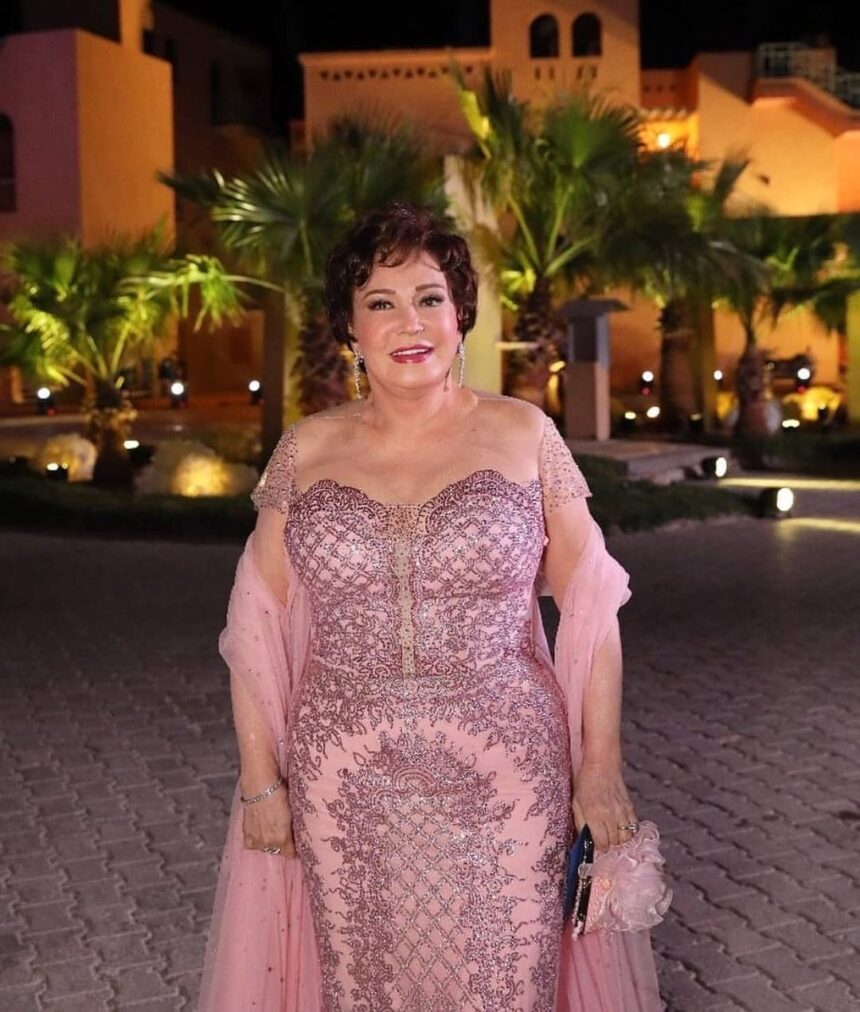
From her first appearance on screen as a young girl to her evolution into one of the Arab world’s most versatile and enduring performers, Lebleba has never strayed from her greatest passion. She never treated art as a mere profession but lived it as a calling, an inseparable part of her life. Her presence cannot be confined to comedy or musical performance; it encompasses profoundly human roles that allowed her to make audiences laugh with sincerity, ache with empathy, and weep from the heart.
In this exclusive interview with Daily News Egypt, Lebleba reflects on her artistic journey, her relationship with the audience, and her experiences working with icons such as Adel Imam, Youssef Chahine, and Atef El-Tayeb. She speaks candidly about her fears, her courage, and the dreams she continues to nurture.
You once said you have never felt a single moment of regret for choosing art as your life’s path. How do you view that decision today, after all these years?
Indeed, I never felt regret, not for a moment. There is no such thing as loss in art. I gained the very thing I loved since childhood, and I gained a vast audience that loves and trusts me. What many people don’t realise is that my personal life and artistic life are one and the same. I never knew any other world.
Actress Elham Shaheen once said that you give every character a piece of your soul and make it more beautiful than what is written. How did you receive that?
It makes me very happy to hear that, because acting at its core is not memorised dialogue; it is feeling, spirit, and lived experience poured into a character until it becomes real and relatable to people.
At the Red Sea International Film Festival (RSIFF), you said audiences have only seen half of your potential. What did you mean?
I have played many roles across many genres, but I still genuinely want to take on roles I haven’t tackled yet, especially psychologically complex ones, such as characters struggling with emotional or mental disorders. These roles represent a real artistic challenge for me.
And yet you always insist on choosing roles appropriate to your age?
Absolutely. I never deceive the audience. I always make sure the character is truthful and fits my life stage, because truth is the key to any success.
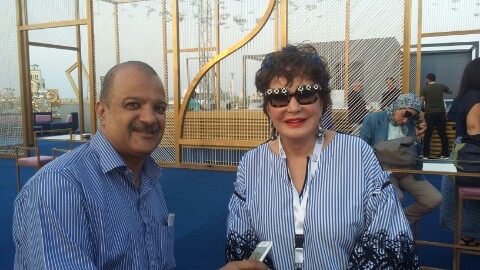
What is the secret behind the deep bond between you and the Arab audience?
I grew up among them since I was five years old. I never knew a life outside the artistic world. I never felt a barrier between us. I belong to them, and I have never looked down on them, because they are the ones who made my name.
Outside comedy, how do you remember your experience in Gannet Al-Shayateen?
It was a very difficult and very special experience. The scene with Mahmoud Hemida was filmed in one long take inside a tunnel with director Osama Fawzy–done correctly from the first attempt. It was a true challenge.
You once said that the character “Hamida” in the series Ma’moun wa shorakah was one of your most difficult roles. Why?
Because audiences were used to seeing me in a comedic frame, while this character was rooted in deep human emotion and intense reactions.
You shared a long artistic partnership with Adel Imam across 14 works. What does that mean to you?
It is a rare artistic partnership. We understand each other with a glance or a single word. I feel Adel Imam is my artistic twin, and audiences deeply loved our work together.
Your latest film, Gawaza Wala Gnaza, was screened in the RSIFF’s Arab Masterpieces programme. How do you choose your roles?
I read the entire screenplay, and I don’t concern myself with billing or the size of the role. What matters is that the audience believes me and that the work touches their hearts. I agreed to do the film after only a 12-minute conversation with director Amira Diab, her vision was sincere, and I felt an immediate sense of comfort with her.
Do you fear working with new directors?
On the contrary, I enjoy it. A new director gives the actor fresh energy and a different spirit. Osama Fawzy was making only his second film when I worked with him, and I won three awards because of that experience.
What about your bold experience with Atef El-Tayeb in Ded Al-Hokuma?
I was scared at first because he never said “Bravo,” and I thought he wasn’t satisfied with me. But when I asked him, he said, “As long as I say ‘Next shot,’ then the scene is right.” I learned so much from him, and I won 13 awards for the works I did with him.
And what was Youssef Chahine like as a director?
He adored actors. He paid incredible attention to the eyes and to the tiniest details. He made me learn crochet because the character required it, and he made me sit on the set before shooting so I could absorb the space. He was a true school in filmmaking.
Have you ever thought of retirement?
Never. As long as I can give, I will continue working. Acting is not a job for me, it is the pulse of life.
What role do you still dream of playing?
A woman undergoing a violent, inner psychological conflict, between strength and fragility. That kind of role brings out the best in me.
How do you see cinema today?
Every era has its language and tools, but truthfulness will always be the most important element, because the audience is incredibly perceptive.
What advice do you give young artists?
Learn well, don’t chase quick fame, and love art sincerely.
How do you maintain your positive energy?
Through contentment, through loving people, and by living simply, without envy or resentment.
When did you feel you were truly a star?
When I felt that the audience was waiting for me, trusting that I would never let them down.


