

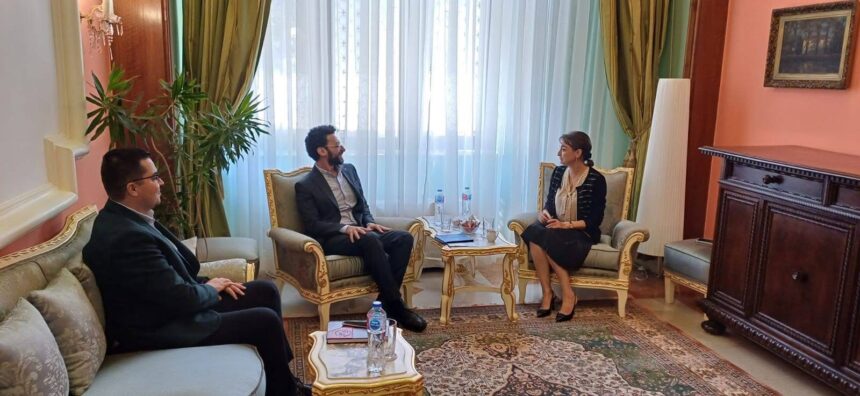
As Romania and Egypt approach the 120th anniversary of their diplomatic relations in 2026, the partnership between the two nations is poised for a significant transformation. Moving beyond historical ties, both Cairo and Bucharest are looking to redefine their cooperation through green energy, digital innovation, and strategic logistics connecting the Black Sea to the Suez Canal.
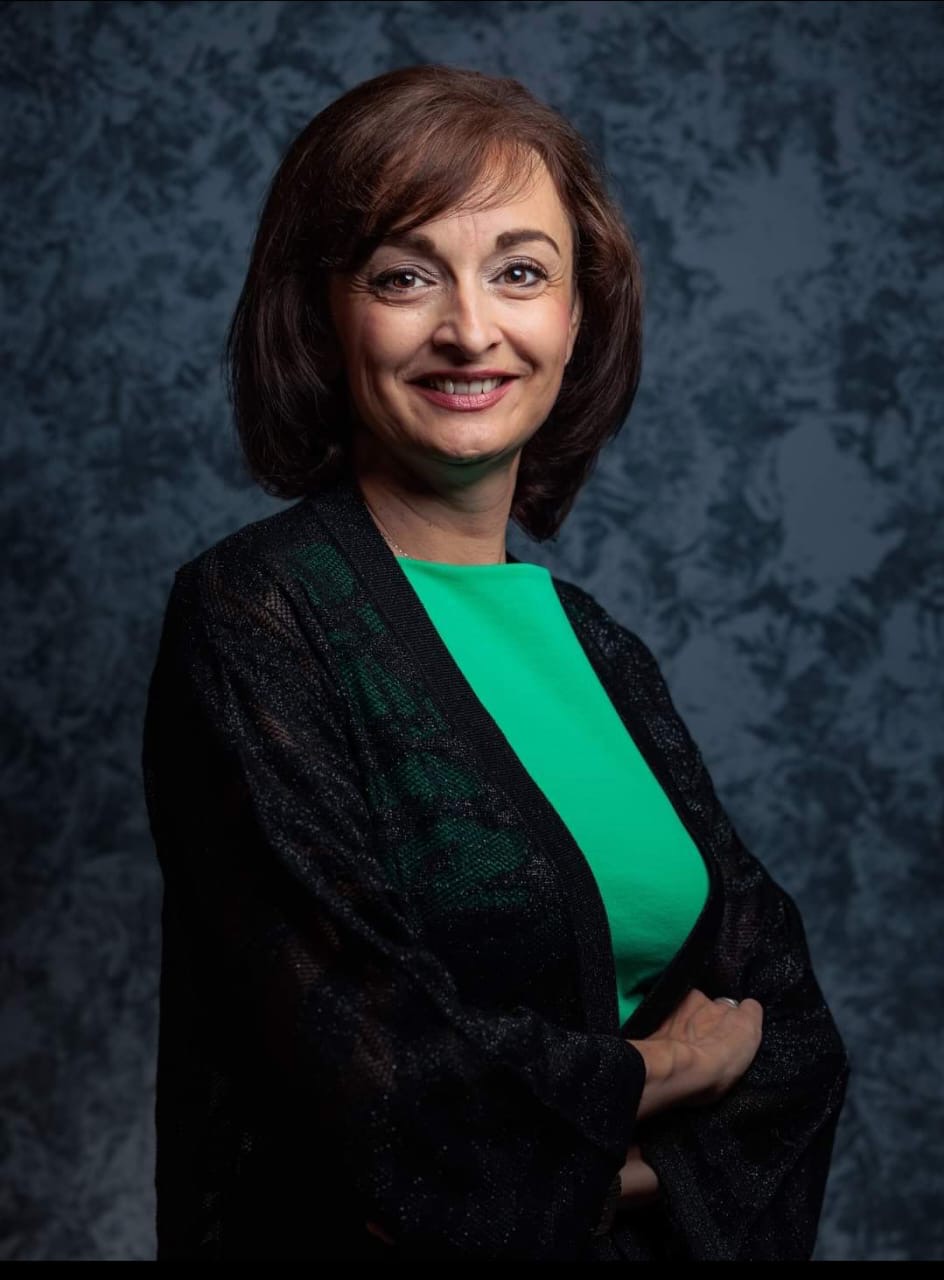
Daily News Egypt sat down with Olivia Toderean, Ambassador of Romania to Egypt, to discuss the roadmap for this milestone. From unlocking trade potential and navigating regional geopolitical challenges to fostering a modern cultural dialogue, Ambassador Toderean shares her vision for a partnership that honors the past while aggressively pursuing the opportunities of the future.
Beyond the Celebration: Our nations are approaching a remarkable milestone: 120 years of continuous diplomatic relations. Your Excellency, the 120th anniversary is a powerful symbol. But to make it truly meaningful, it must be a catalyst for action. When you stand alongside your Egyptian counterparts on April 1, 2026, what specific, tangible outcome—be it a major trade agreement, a new investment project, or a strategic policy declaration—do you hope to announce that will define the next chapter of our relationship?
You are absolutely right, and I believe this is the approach both in Bucharest and in Cairo. While some of the preparations are too early to reveal, I can assure you they are substantial. It is clear that the 120th anniversary of Romanian–Egyptian diplomatic relations is not only a moment of celebration but also an excellent opportunity to project our partnership into the future.
Over the past century, our nations have built relations of trust, solidarity, and respect—from political dialogue to economic and cultural exchanges, as well as educational cooperation. Now, as we approach this milestone, our priority is to translate that history into new, tangible achievements. We would like the anniversary to be marked by more than symbolic gestures. Together with our Egyptian partners, we are working so that throughout 2026 we can announce a set of flagship outcomes that will truly define the next chapter of our relations.
Beyond government-to-government agreements, we also want this anniversary to bring benefits felt by our peoples. We are therefore paying close attention to fostering people-to-people contacts, cultural and academic partnerships, and opportunities for young generations to know and understand each other better.
In short, what matters most is that this anniversary should leave behind more than memories. It should create the foundation for new opportunities, sustainable development, innovation, and deepening the friendship that has linked Romania and Egypt for over a century. The fact that Romania will be the Guest of Honor at the Cairo International Book Fair 2026—a flagship cultural event that highlights the rich cultural tapestry of Egypt—is just one of the significant projects for 2026. We will bring numerous Egyptian and Romanian writers, cultural debates, workshops, and round tables to our national pavilion. I promise you there will be many pleasant surprises that will attract our Egyptian readers and expand the circles of our Egyptian friends.
Reimagining the Pillars: For decades, this relationship was built on solid pillars: political solidarity, cultural exchange, and educational ties that saw thousands of Egyptians study in Romania. Looking forward, what do you believe should be the new pillars of the Egypt-Romania strategic relationship in the 21st century? Are they in energy, digital transformation, and logistics, or something else entirely?
Indeed, the traditional pillars of our bilateral relationship remain a living foundation that continues to inspire us today. However, in the 21st century, it is our duty to contextualize these pillars differently. The world around us is transforming at an unprecedented pace, and Romania and Egypt, both situated at geopolitical crossroads, have a special responsibility to adapt and innovate together.
Looking forward, we see energy—with a focus on renewables and the broader green transition—as a natural area of cooperation. Both Romania and Egypt are investing in sustainable energy solutions, and there is great potential to connect our efforts, whether in technology, innovation, investment, or joint projects that serve our citizens and contribute to climate resilience.
Logistics and connectivity are another strategic field. Egypt plays a central role as a regional hub through the Suez Canal and its modernized ports, while Romania represents a gateway to the European Union, the Black Sea, and Eastern Europe.2 Linking these advantages in a more systematic way could position our countries as essential partners in ensuring supply chain resilience between Europe, Africa, and the Middle East.
We are also convinced that digital transformation and the knowledge economy must be at the heart of the new agenda. Digital skills, artificial intelligence, and the integration of new technologies into health, education, and governance are areas where Romania has experience as a European IT hub, and where Egypt’s young and dynamic population offers extraordinary potential.
At the same time, I would emphasize that people-to-people connections will remain the soul of our relationship. The ties that once brought Egyptian doctors, engineers, and artists to study in Romania can now evolve into new forms of cooperation. So, to answer your question: the new pillars will certainly include energy, digital innovation, and connectivity, but they must also be complemented by the timeless human dimension—education, culture, and direct
Unlocking Trade Potential: Our bilateral trade is healthy, but many analysts believe it is performing below its potential. What are the key barriers preventing more Romanian companies from entering the Egyptian market, and how can we better position Egyptian exports to find a home in Romania and the wider EU market?
You are right to point out that our bilateral trade, while solid and growing, has not yet reached its full potential. I must recognize that the trend of 2024 was slightly disappointing compared to recent years, but in the first half of 2025, there seems to be a bounce back—I am eagerly looking forward to the figures at the end of this year.
The complementarities are evident: Romanian expertise in IT, cybersecurity, automotive components, and advanced agriculture pairs well with Egypt’s role as a manufacturing hub and a market of over 100 million people.
Barriers do exist, such as limited mutual visibility. Romanian SMEs may be unfamiliar with the Egyptian business culture, just as Egyptian exporters may find EU standards complex. We also need stronger logistical and financial connectivity. However, these are not structural roadblocks; they are challenges that can be addressed with targeted policies.
Regarding Egyptian exports, the answer lies in moving up the value chain. Beyond traditional goods, there is real potential for processed food products, textiles with higher value-added, chemicals, fertilizers, and renewable energy technologies. Romania, with its Black Sea ports and modern transport links into Central and Western Europe, can serve as an entry point for these Egyptian products into the EU single market.
The Energy Bridge: Black Sea to the Mediterranean: Romania is a significant energy producer in Europe. Egypt is positioning itself as a major regional energy hub for LNG and green hydrogen. How do you envision a strategic energy partnership between our two countries?
Energy is without a doubt one of the most promising areas of the Romanian–Egyptian partnership. There is an ongoing dialogue between EGAS and its Romanian counterpart, Transgaz, on joint projects of significance. CisGaz from Romania has developed a series of projects in partnership with Town Gas in Egypt, taking place in both countries. We are currently supporting other emerging projects in green energy, and hopefully, I will be able to share good news by next year in this field too.
Romania is already a significant energy producer in Europe. Except for peak periods in winter, we will be self-sufficient with a mix of green, nuclear, and gas-based production. Egypt has ambitious plans for green hydrogen and solar energy. We can certainly collaborate in energy engineering and technology, including offshore exploration.
Port to Port: Constanța and the Suez Canal: How can we create a more robust logistical and trade corridor between our key ports?
The Port of Constanța and the Suez Canal are not only vital for our respective countries but for global trade. If we think strategically, linking these two gateways more closely could create a powerful corridor between Europe, the Middle East, and Africa.
I also see great potential in the Suez Canal Economic Zone (SCZONE), a priority I am actively promoting to Romanian companies. For those seeking to expand into Africa and the Gulf, the SCZONE offers a unique platform. Positioning the zone as a natural destination for Romanian business—in industries ranging from agri-food to light manufacturing and IT—would give our partnership a tangible, future-oriented dimension.
A Bridge to Brussels: As an influential EU member state, how can Bucharest help shape a more nuanced and supportive EU policy toward Egypt?
Romania has always valued its role as a constructive bridge between the European Union and the wider Middle East. The context is very favorable to EU-Egypt relations—the only strategic and comprehensive partnership the EU has signed so far.
On water security and the Nile, Romania encourages dialogue that acknowledges Egypt’s vital interests. On regional stability, we promote balanced policies that reflect Egypt’s indispensable role in maintaining peace. This positioning was proven once again by the overwhelming majority of Romanian MPs who voted in favor of the European Parliament’s adoption of the €4 billion macro-financial assistance package for Egypt in April 2025.
The Ukraine War: What is your message to the Egyptian people about the resilience of the Black Sea grain corridor and Europe’s long-term strategy to ensure global food supply chains?
Romania has been at the frontline of the geopolitical and humanitarian crisis triggered by Russia’s war against Ukraine. To mitigate the dire consequences on food security, Romania took decisive steps to ensure that Ukrainian grain reaches global markets—over 50 million tons have transited our country. Moving from zero transit before the war to millions of tons per year was an enormous logistical challenge, but we remained committed.
At the same time, we are doing our own homework to increase our food exports. Keep in mind that Romania has been the 3rd largest exporter of wheat to Egypt in recent years, and we are actively working to enhance this market share.
The Gaza Crisis: What role can Romania play in supporting mediation and humanitarian relief?
Romania has always believed in dialogue, balance, and respect for international law. From Cairo, I have the privilege of listening closely to Egyptian interlocutors who are at the heart of mediation efforts. We support Egypt’s mediation role as indispensable.
Romania has supported the vision of two states—Israel and Palestine—living side by side in peace and security for decades. We also emphasize the humanitarian dimension. Romania has contributed aid and executed international evacuations to EU Member States for urgent medical cases, especially children. Around 50 children are currently being treated in Romanian hospitals, accompanied by approximately 100 family members.
Revitalizing Educational Ties: How can we revive and modernize the educational bridge between our nations?
We are actively encouraging stronger links between Romanian and Egyptian universities through joint research initiatives and double-degree programs. For example, there are new discussions between Alexandria University and Babeș-Bolyai University regarding a partnership.
Beyond traditional programs, Romania is exploring opportunities in online learning and tech incubators. A recent success is the training program organized by the Romanian Silver Screen Film School in partnership with the American University in Cairo. The first edition was a success, and I hope to see it grow, as the film and entertainment industry can bring significant economic growth.
Beyond Dracula and the Pyramids: How can our two countries foster a more contemporary cultural exchange?
Moving “beyond Dracula and the Pyramids” means embracing the full richness of who we are today. Romania hosts world-class festivals like the Sibiu International Theater Festival (FITS) and the Transylvania International Film Festival (TIFF). Likewise, Egypt is witnessing a flourishing of theater, cinema, and design.
We need to make sure our modern stories reach wider audiences. I was incredibly proud when a Romanian film won the supreme trophy at the Cairo International Film Festival last year. In essence, Romania and Egypt both have stories to tell that are as modern and dynamic as our relations are ancient.
Finally, Madam Ambassador, when you look back on your time in Cairo, what is the one human connection or diplomatic breakthrough you hope to have fostered?
This is perhaps the most difficult question. As I am only approaching the middle of my mandate, it is too early to speak of a diplomatic breakthrough in retrospect. I promise to answer this in a special interview with Daily News Egypt as I approach the end of my tenure!
As for the human connection, I can already say there isn’t just one, but many. I have made friendships here that have changed me and will remain with me for a lifetime. These connections span culture, science, business, and civil society. Even at mid-mandate, I can say without hesitation that the human connections I’ve made in Cairo have been one of the greatest pleasant surprises I have experienced, not only as an ambassador but as a person.

