Petroleum and Mineral Resources Minister Karim Badawi said efforts to support and increase domestic natural gas production are continuing through the development of existing fields, expanded exploration activities, and the accelerated development and connection of new discoveries to the production network.
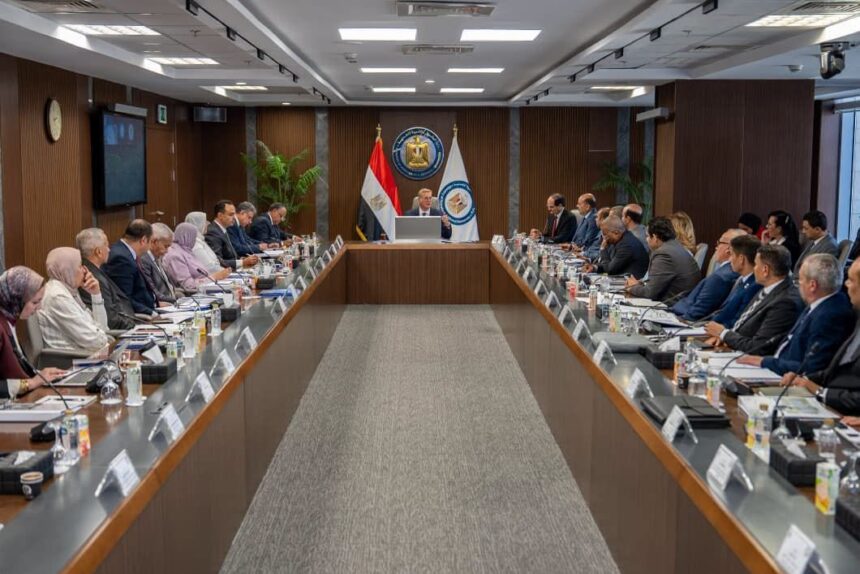
Badawi made the remarks as he chaired the general assembly of the Egyptian Natural Gas Holding Company (EGAS) to approve the company’s results.
He said completing the payment of outstanding dues to investment partners was a necessary step towards creating an environment conducive to new investment in exploration and field development. Restoring partners’ confidence, he added, had helped revive investment activity and prevent production from falling further, which would have increased the country’s import burden.
During the general assembly, officials announced plans to add 330 million cubic feet per day to domestic gas production from fields in the Mediterranean and Western Desert before the end of the year.
The increase includes around 250 million cubic feet per day from the Zohr and West Mina fields in the Mediterranean, as well as 80 million cubic feet per day from the Meleiha fields in the Western Desert before the end of September, following completion of the second phase of the gas processing plant.
Badawi said the gas industry, particularly in the deep waters of the Mediterranean, requires substantial long-term investment. He noted that drilling the Velox-1 well in the western Mediterranean cost $95m, highlighting the scale of investment required to access new resources and the importance of creating an investment environment that encourages international oil companies to maintain and expand their investments.
He said the ministry is working to accelerate the conversion of new discoveries into actual production through specific timetables for field development and exploration drilling. Restoring production growth rates, he added, requires simultaneous efforts to increase output from existing fields, develop new discoveries, and intensify exploration activities.
The petroleum minister praised cooperation between EGAS and the Egyptian General Petroleum Corporation (EGPC) in implementing the Meleiha plant project, stressing the importance of accelerating projects aimed at increasing production to offset natural decline and support a gradual return to production growth.
Badawi said increasing domestic production remains one of the main pillars for reducing the gas import bill and securing domestic requirements. Meeting the needs of citizens and the state’s productive and service sectors, he added, is among the petroleum sector’s top priorities.
He added that securing natural gas supplies helped maintain regular fuel supplies to the electricity sector during the summer amid high temperatures and exceptional challenges in global energy markets.
Securing gas supplies is also essential to supporting industrial activity, increasing production and exports, attracting new investment, and maximising the economic value of natural gas through industrial activities, he said.
Badawi praised the teams at EGAS and the Egyptian Natural Gas Company (GASCO), as well as employees at the National Gas Grid Control Centre, for their efforts to secure supplies during the summer and their continuous coordination with the Ministry of Electricity and Renewable Energy.
He also pointed to the use of infrastructure and storage capacity at the Damietta liquefied natural gas (LNG) plant to support the gas import system, enhancing supply flexibility during periods of high demand.
Regarding the expansion of natural gas connections to homes, Badawi said supporting connection plans would remain a state priority in the coming period, as natural gas provides citizens with a more convenient and higher-quality service while reducing the consumption of butane cylinders and lowering the import bill.
He directed officials to provide the necessary support to accelerate the implementation of connection plans and increase connection rates across Egypt’s governorates.
Badawi also directed officials to establish cooperation programmes with governorates, in coordination with the Ministry of Local Development and Environment, to improve emergency preparedness, strengthen protection of gas pipelines during excavation works, and prevent encroachments.
He also called for continued inspection rounds to ensure compliance with occupational health and safety requirements, protect workers, strengthen operational safety, and prevent major accidents. He praised EGAS’s efforts to increase the number of such inspections during the recently concluded fiscal year.
For his part, EGAS Executive Managing Director Sayed Selim reviewed the company’s main results for FY2025/2026, saying the period had seen an intensification of exploration activities, drilling programmes, and field development efforts aimed at maximising gas resources and increasing production.
Selim said four new blocks in the Mediterranean and Nile Delta had been awarded for gas exploration, with investments approaching $200m to drill nine wells.
Final agreements were also signed for five new gas exploration concessions involving investments of $240m to drill 14 exploration wells, in addition to the signing of a development contract for the North Atoll field with Arcius Energy.
He added that nine new discoveries had been made, including eight gas discoveries and one oil discovery, adding reserves of around 2.8 trillion cubic feet of gas. Three new gas exploration wells are currently being drilled and are scheduled for completion before the end of the year.
Selim said 16 new gas exploration opportunities had been identified, comprising seven offshore and nine onshore prospects. Sixteen wells are planned to be drilled during the current fiscal year, targeting estimated resources of around 6 trillion cubic feet and supporting the addition of new resources to production over the medium term.
He said the results of the western Mediterranean seismic survey project had helped attract new investment from TotalEnergies, while EGAS is preparing to begin a seismic survey project in the eastern Mediterranean in October.
Three-dimensional seismic survey programmes covering 307 square kilometres have also been completed in EGAS exploration areas, while a four-dimensional seismic survey programme covering around 2,307 square kilometres has been completed in the West Nile Delta areas in the deep waters of the Mediterranean.
Selim said the company had implemented nine gas field development projects and connected 28 new wells to the production network, with investments totalling $1.12bn. It also launched an international bid round for gas exploration in eight areas in the Mediterranean, Nile Delta, and North Sinai.
He highlighted the importance of drilling the Velox-1 well in the western Mediterranean, where positive hydrocarbon indications confirmed the presence of an active petroleum system in the area, opening new prospects for crude oil exploration in the western Mediterranean.
As part of efforts to secure domestic market requirements, Selim said the company had succeeded in meeting 100% of the electricity sector’s fuel needs throughout the year.
He said natural gas was connected to 804,000 residential units during the year, bringing the total number of units supplied with natural gas to around 16.2 million, serving approximately 69 million people and helping reduce the consumption of butane cylinders.
Natural gas was also introduced for the first time to 58 new areas across Egypt.
Under the presidential Decent Life initiative, Selim said the gas connection plan covers 829 villages, of which 690 have already received gas supplies. Connections to the remaining villages will be completed once their sewage networks have been installed.
He also said projects worth EGP 14bn had been implemented to reinforce the national gas transmission network and improve its efficiency, strengthening its ability to secure the needs of state sectors and consumers.
Selim added that the company had recorded 24.3 million safe working hours since 2016, alongside efforts to develop its process safety system to prevent major accidents.
Comprehensive reviews of the system have been conducted at 20 affiliated companies, alongside intensified inspection rounds, training programmes, and efforts to raise awareness of the importance of process safety.