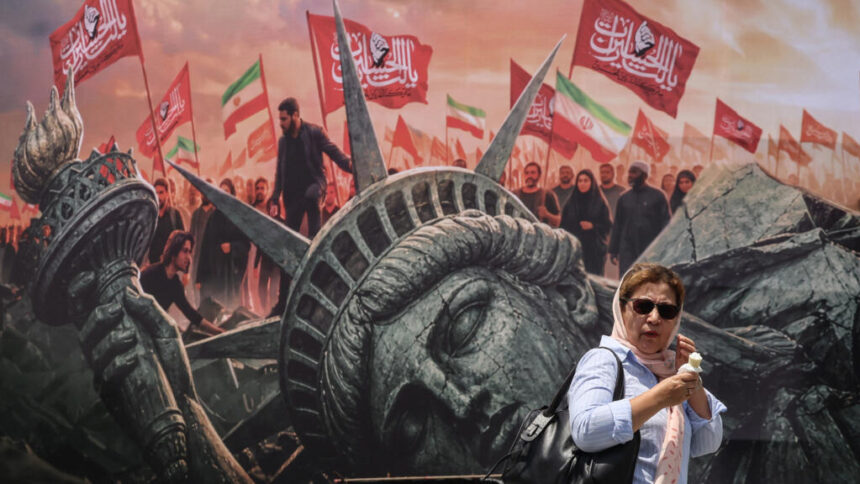
The United States is preparing to launch “the largest financial attack ever mounted against an adversary,” Treasury Secretary Scott Bessent said, as President Donald Trump declared that Iran is “collapsing” hours before Washington announces a major sanctions package.
Writing in the Financial Times ahead of a press conference scheduled for Monday to outline the new economic measures, Bessent stated that the conflict with Tehran has reached a “final phase” that will begin with an “economic landing.” Invoking the 1943 Tehran conference where Allied leaders mapped out the military campaign that led to the Normandy landings in the Second World War, Bessent said Trump and American military force have largely dismantled Iran’s military capabilities and weakened its nuclear programme, leaving the administration ready to exert maximum economic pressure.
The impending measures have already driven the Iranian currency to historic lows, with exchange rate monitoring websites reporting that the rial fell past an unprecedented 2 million to the US dollar amid threats of a financial blockade. A source familiar with US Treasury plans told Reuters that Washington is expected to expand the scope of secondary sanctions to target foreign entities and countries maintaining commercial ties with Tehran as part of the escalated pressure campaign.
Bessent characterised the Iranian government as a malign force for 47 years that has driven a potentially strong economy into decline, repressed its population, and maintained a network of regional proxies to spread terrorism. He said Trump has brought the Iranian economy to a point of historic weakness marked by severe inflation and currency degradation, leaving Tehran reliant on foreign nations that mistakenly believe accommodating aggression will secure lasting peace.
While acknowledging that the United States has paid a heavy price in countering Tehran and often stands alone in demonstrating the resolve to end the threat rather than manage it, Bessent affirmed that Washington will press forward with full determination.
As the United States escalates its economic offensive, global powers and neighbouring countries are engaging in parallel diplomatic efforts. In Beijing, Chinese President Xi Jinping called for a “diplomatic” solution to the Middle East crisis during talks with Jordan’s King Abdullah.
Xi emphasised that the sovereignty and security of regional countries, including Jordan, must be respected, according to a Chinese foreign ministry statement. Highlighting Jordan’s “unique and important role in the region,” Xi reiterated that China has always advocated for a comprehensive ceasefire and resolving disputes through political and diplomatic means. The Jordanian monarch, whose US-allied kingdom has been caught in the middle of Washington’s months-long war with Tehran, has been on an official visit to China since August 18, marking his ninth trip to the country since taking the throne in 1999.
Meanwhile, diplomatic engagements continued in Tehran, where Pakistani Army Chief Asim Munir arrived on Monday for talks with Iranian Interior Minister Eskandar Momeni. Munir was accompanied on the visit by Pakistani Interior Minister Mohsin Naqvi.