

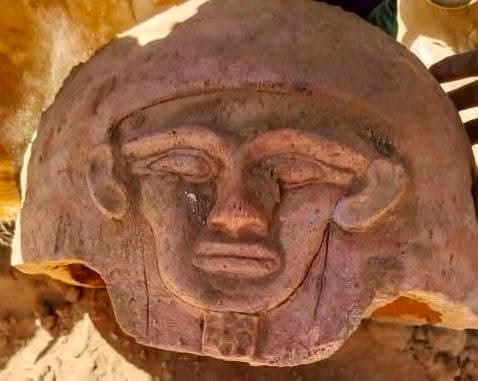
An Egyptian archaeological mission working at the Sheikh Soby archaeological site in Egypt’s Bahariya Oasis has uncovered three tombs dating to different periods of ancient Egypt, along with mummies, limestone and pottery coffins, pottery vessels, offering tables and terracotta votive figurines.
The excavation season is being led by Sabry Farag, Director General of Antiquities of the Bahariya Oasis.
Minister of Tourism and Antiquities Sherif Fathy said the discovery is particularly significant as it provides new evidence about the history of Bahariya Oasis and sheds further light on ancient Egyptian civilisation.
Hisham El-Leithy, Secretary-General of the Supreme Council of Antiquities, said the mission uncovered three tombs representing distinct architectural styles.
The first is a rock-cut collective tomb carved into sandstone and is believed to have been used by a family of five. The second is an undecorated tomb, likely dating to the Roman Period, featuring a staircase-style design. The third, also believed to date to the Roman Period, follows the shaft-tomb architectural style.
According to Mohamed Abdel Badie, Head of the Egyptian Antiquities Sector at the Supreme Council of Antiquities, the first tomb consists of a square shaft approximately three metres deep, leading to two burial chambers.
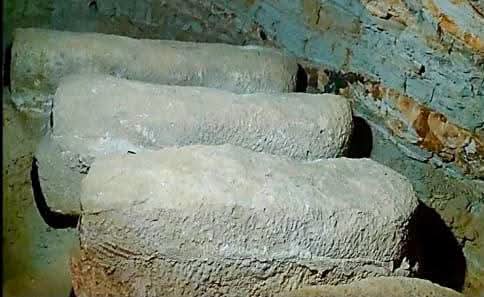
The western chamber is small and rectangular and contained a limestone coffin holding a mummy wrapped in linen. The coffin was placed in a recess in the chamber floor, a burial practice consistent with Late Period tombs at the site.
The northern chamber is larger and also rectangular and appears to have been used for the burial of the remaining family members. Four limestone coffins were found inside, each containing a mummy wrapped in linen.
The second tomb consists of a small shaft leading to a three-step staircase that ends in a burial chamber. Archaeological evidence suggests the tomb was never used for burial.
The third tomb consists of a rectangular shaft with an entrance leading to a small, open-roofed hall.
Archaeologists believe the hall may have been used to receive the mummy during the burial ceremony before it was transferred to its final resting place, in accordance with burial practices associated with this type of tomb.
The hall leads to two burial chambers. The southern chamber contained fragments of a pottery coffin, while the eastern chamber housed a limestone coffin with parts of its lid missing.
Four small entrances were also identified on the eastern, northern and western sides of the shaft.
Excavations at the eastern entrance revealed a subsidiary burial containing a cylindrical pottery coffin broken into several pieces. Its lid features a prominent relief depicting a human face with clearly defined features.
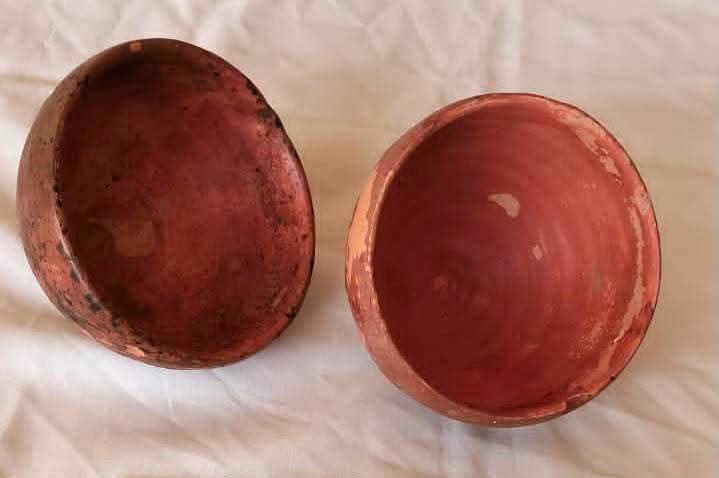
Qutb Fawzy, Head of the Central Administration for Cairo and Giza Antiquities, said the mission also uncovered a diverse collection of archaeological artefacts, including pottery vessels, small bottles and plates of various shapes and sizes, as well as offering tables made of limestone and sandstone.
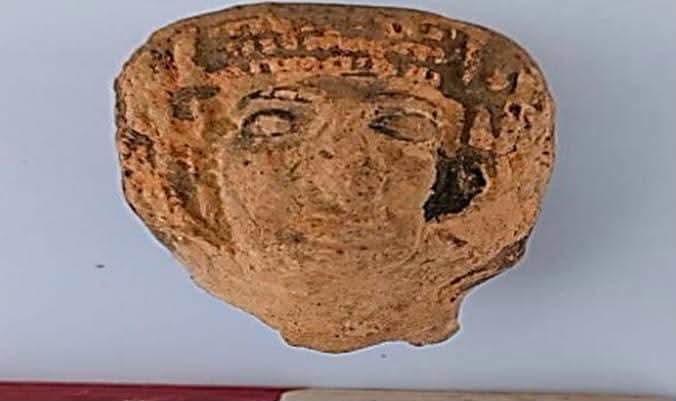
The mission also discovered a number of terracotta votive figurines, including representations of maternal figures and stylised animal forms.
Head of the mission Sabry Farag said excavations at the site will continue during future excavation seasons in light of its archaeological significance and the wealth of evidence it contains.
He expressed hope that future excavations would uncover additional tombs, revealing successive generations of the oasis’s inhabitants and providing further insight into its history.
The Sheikh Soby site contains a necropolis of the rulers and priests of Bahariya Oasis dating to the Late Period. The necropolis is carved into the archaeological hill known as Sheikh Soby, one of the oasis’s most important archaeological sites.
The site also includes the Temple of El-Bawiti, built by Jed-Khonsu-iuf-ankh, the ruler of Bahariya Oasis during the 26th Dynasty, in honour of King Ahmose II.


