Arab and Islamic foreign ministers agreed on Wednesday to launch a joint operational mechanism to document Israeli violations in Jerusalem, warning that escalations at holy sites could provoke a religious conflict with global repercussions.
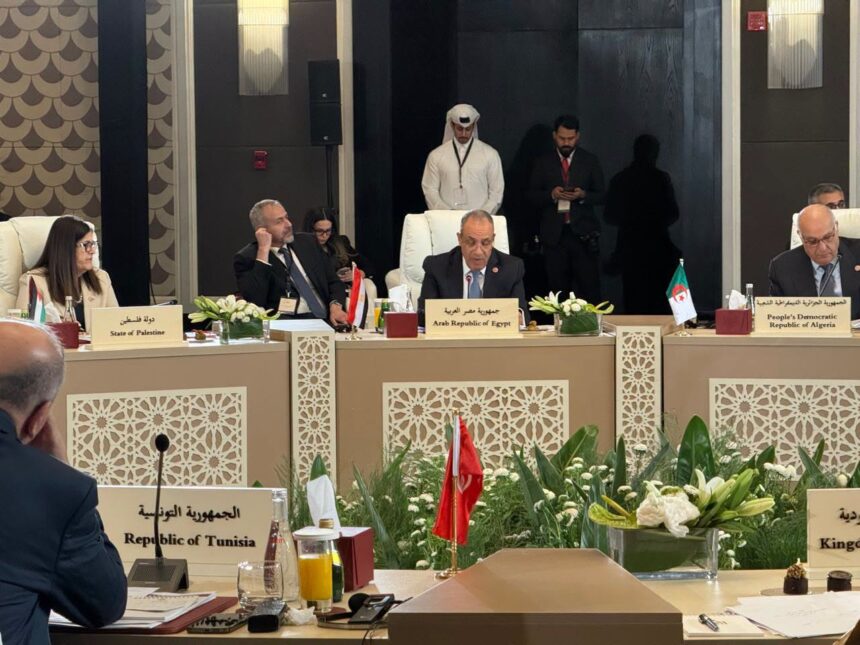
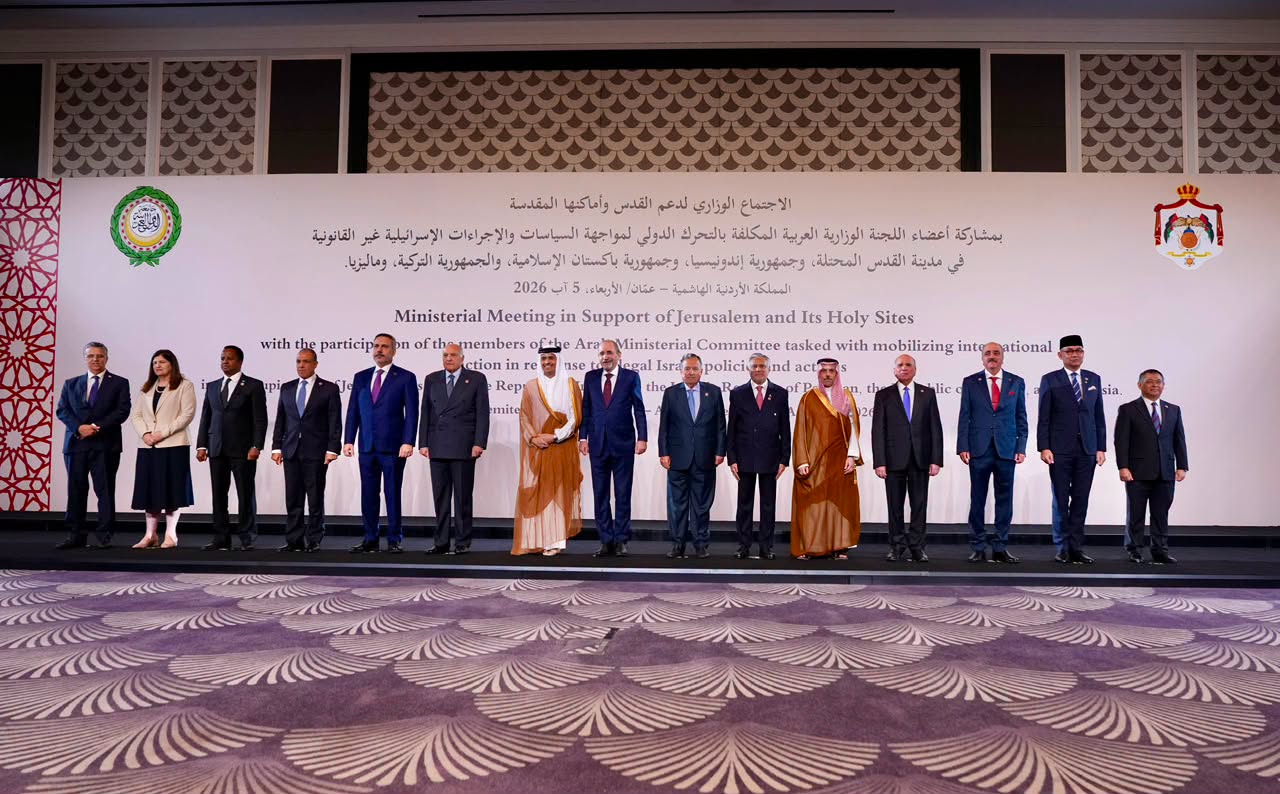
Meeting in Amman at the invitation of Jordan, the Arab Ministerial Committee—comprising Egypt, Jordan, Tunisia, Algeria, Iraq, Qatar, Saudi Arabia, Somalia, Palestine, Morocco, and the Arab League Secretary-General—convened alongside officials from Indonesia, Pakistan, Türkiye, and Malaysia to discuss Israeli actions in the city.
In a joint statement, the participants agreed to launch a sustainable institutional mechanism and media platform to document and expose Israeli practices against holy sites and worshippers to global public opinion. The delegates warned that attacks on Islamic sites constitute a provocation to approximately two billion Muslims worldwide and threaten regional and international security.
The meeting coincided with efforts to halt the war in the Gaza Strip. During the session, Egyptian Foreign Minister Badr Abdelatty voiced support for the implementation of US President Donald Trump’s comprehensive peace plan. Abdelatty urged responsiveness to tangible progress on building a Palestinian national consensus to restrict weapons concurrently with an Israeli withdrawal from Gaza. He added that Israel must fulfil its obligations under the ceasefire agreement and halt its offensives.
The ministers condemned Israeli policies aimed at altering the legal, demographic, and Arab Islamic and Christian identity of occupied Jerusalem, declaring such measures null and void under international law. They reaffirmed that East Jerusalem is the capital of a sovereign Palestinian state based on the June 4, 1967 lines, in accordance with the two-state solution, the Arab Peace Initiative, and the New York Declaration.
The statement condemned incursions at the Al-Aqsa Mosque compound by extremist settlers and Israeli officials, as well as ongoing excavations and attempts to impose temporal and spatial divisions. The participants affirmed that the entire 144-dunum compound is an exclusive place of worship for Muslims, with the Jordanian Ministry of Awqaf serving as the sole legal authority to administer its affairs. The delegates reiterated their support for the historic Hashemite Custodianship over Jerusalem’s holy sites.
Ministers also condemned violations targeting Christian sites, including restrictions on access to the Church of the Holy Sepulchre, interference in church affairs, and attacks on clergy.
The coalition called on the United Nations Security Council to act immediately to halt Israeli settlement expansion, land annexation, settler violence, the suffocation of the Palestinian economy, and the targeting of the U.N. relief agency, UNRWA. They rejected any unilateral decisions to establish or relocate diplomatic missions to Jerusalem, calling on concerned states to reverse such moves.
Abdelatty reiterated Egypt’s absolute rejection of any displacement of Palestinians from Gaza or the West Bank, including East Jerusalem, and warned that settlement expansion threatens the geographic contiguity of a future Palestinian state. He affirmed Cairo’s support for the Palestinian Authority’s reform steps and its central role in ending the occupation.
The participants called for a joint ministerial meeting of the Organisation of Islamic Cooperation and the League of Arab States to discuss the escalation during the U.N. General Assembly high-level week in New York next September. They also recognised the role of the Al-Quds Committee and its executive arm, the Bayt Mal Al-Quds Al-Sharif Agency, in providing development assistance to safeguard the presence of Jerusalemites.