

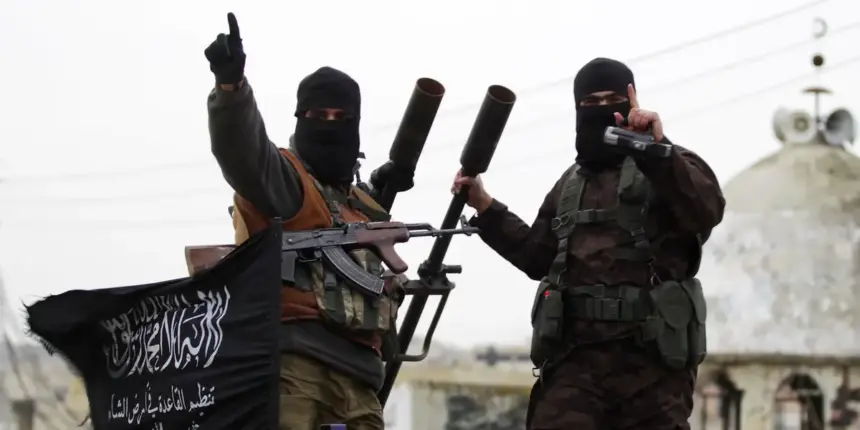
A controversial report published by The Jerusalem Post claimed that Israel’s Mossad had recruited members of the Islamic State (ISIS) operating inside Iran to gather intelligence on the country’s nuclear and military facilities, providing detailed information about activities within these highly sensitive sites. The report further alleged that some of these operatives assisted in analyzing satellite imagery collected by American and Israeli reconnaissance systems monitoring developments across Iranian territory.
Regardless of the report’s accuracy, Israel’s intelligence services have undeniably achieved notable successes in penetrating Iran’s security infrastructure. These include operations targeting senior scientists involved in Iran’s nuclear program, the highly publicized seizure of Iran’s nuclear archive, and the assassination of Hamas political leader Ismail Haniyeh during his visit to Tehran—an incident widely interpreted as evidence of the depth of intelligence penetration inside Iran.
More broadly, the report highlights one of the most sensitive and complex issues in Middle Eastern intelligence and national security. Intelligence doctrine in many countries is based on infiltration and exploitation. Agencies do not necessarily require ideological alignment with a particular organization to exploit it; rather, they seek vulnerabilities, converging interests, or opportunities that can be leveraged for operational purposes.
In Iran’s case, extremist organizations such as ISIS harbour profound ideological and operational hostility toward the regime and its regional allies. Such antagonism may create conditions in which intelligence services attempt to recruit individual members or sources by offering financial incentives, weapons, or other forms of support in exchange for valuable intelligence.
The publication of reports of this nature in Israeli media may itself serve several strategic objectives. It could signal to Iranian security institutions that sensitive facilities have been compromised through unconventional channels, deepen internal suspicion within Iran’s military and security establishments, and reinforce the perception that the covert conflict between Israel and Iran has entered an increasingly fluid phase in which conventional and unconventional methods of warfare overlap.
There are two dominant schools of thought regarding the emergence and evolution of terrorist organizations. The first argues that such groups are not entirely artificial creations of intelligence agencies. Instead, they emerge from complex ideological, political, social, and economic conditions but are subsequently infiltrated, manipulated, and exploited by regional and international intelligence services whenever doing so advances broader strategic objectives.
The second perspective advances a more controversial argument, suggesting that some militant organizations were deliberately created—or at least their expansion intentionally facilitated—to promote strategies of controlled instability, regional fragmentation, or the systematic exhaustion of rival powers. Within this framework, such organizations evolve into instruments serving the geopolitical interests of major powers.
Ultimately, the covert nature of intelligence operations makes it exceedingly difficult to verify intentions, organizational structures, or operational relationships with certainty. Nevertheless, history demonstrates that intelligence agencies have repeatedly relied on insurgent or terrorist organizations as proxies or plausible deniability mechanisms for conducting high risk operations that states would find politically or diplomatically costly to undertake directly.

Historically, there is ample evidence of varying forms of interaction between intelligence services and militant organizations, although the nature and extent of these relationships remain the subject of significant scholarly debate. The Soviet Afghan War (1979-1989) remains one of the most frequently cited examples.
During that conflict, the US Central Intelligence Agency (CIA), working alongside several regional intelligence services, coordinated extensive financial, military, and logistical assistance to Afghan resistance groups fighting the Soviet occupation. At the time, these groups were widely portrayed in both Western and Arab political discourse as “freedom fighters” resisting Soviet expansionism, and some of their leaders received official receptions in numerous Western and Arab capitals.
The so called “Afghan Arabs,” from whose networks Osama bin Laden later established al Qaeda, relied heavily on regional funding and logistical support through recruitment networks ranging from independent initiatives to state sponsored structures. Moreover, the movement of Arab volunteers into Afghanistan was often tolerated because it was perceived as contributing to the immediate strategic objective of weakening the Soviet Union.
Following the Soviet withdrawal and the collapse of President Mohammad Najibullah’s government, the military experience, organizational networks, and ideological infrastructure developed during the Afghan conflict evolved into the foundation for transnational organizations such as al Qaeda. These groups subsequently redirected their attention toward Western countries and numerous Arab governments, giving rise to what political scientists often describe as the “Afghan model”—the phenomenon whereby externally supported militant movements eventually generate unintended long term security consequences for their former sponsors and the wider international system.
Some analysts argue that interactions between intelligence agencies and militant organizations continued to evolve after this period, although the degree of coordination, control, or operational influence remains highly contested and difficult to substantiate. Assertions that such organizations function merely as “dormant cells” activated or discarded entirely at the discretion of intelligence agencies remain speculative and are not supported by conclusive public evidence.
The aftermath of the 2003 invasion of Iraq provides another illustration of temporary convergence between the United States and certain Iraqi Shiite political movements. During the invasion, Washington’s objective of removing Saddam Hussein aligned with the ambitions of opposition parties—including the Islamic Dawa Party and the Supreme Council for the Islamic Revolution in Iraq—which sought to return from exile and participate in rebuilding Iraq’s political order.
The US administration relied, at various stages, on these political actors in establishing the Iraqi Governing Council and the country’s emerging institutions. However, once these groups consolidated domestic influence and armed factions expanded, their strategic priorities increasingly diverged from those of Washington. Some factions eventually confronted the American military presence while simultaneously strengthening regional alliances shaped by broader geopolitical considerations. Nevertheless, channels of communication and implicit red lines often continued to exist despite escalating tensions.
Whether the Israeli report was intended primarily as psychological warfare aimed at undermining Iranian public confidence in state institutions—or as a signal preceding potential American or Israeli military operations involving special forces or precision strikes against strategic targets—such tactics are by no means unprecedented. What remains particularly troubling, however, is that many people continue to believe extremist organizations fundamentally exist to defend religious doctrine or national interests, despite the far more complex political, strategic, and intelligence dynamics that have repeatedly shaped their evolution throughout modern history.
Prof. Hatem Sadek, Helwan University
