

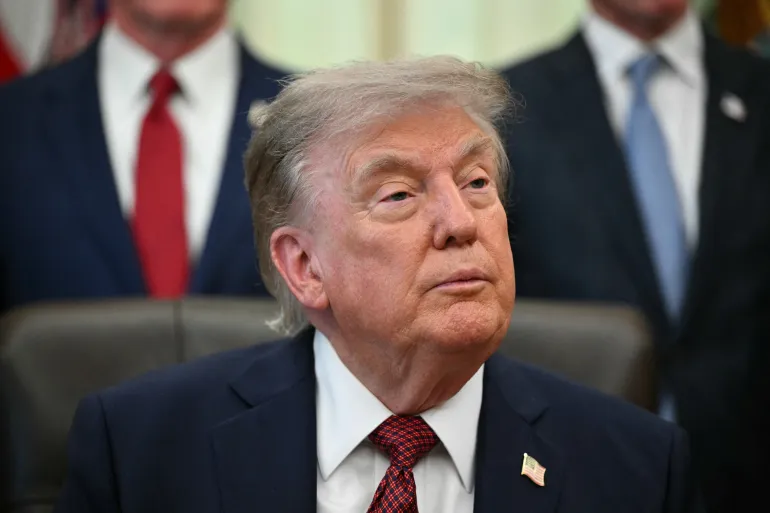
Iran said on Monday it was not currently engaged in negotiations with the United States and had no plans to exchange delegations, contradicting US President Donald Trump’s assertion that an understanding had been reached over the Strait of Hormuz and that new talks with Tehran were imminent.
Iranian Foreign Ministry spokesperson Esmaeil Baghaei said there were no arrangements for direct negotiations with Washington, adding that conditions in the Strait of Hormuz would not change as long as the United States continued to violate its commitments.
Trump had earlier said Washington and Tehran were discussing the format of negotiations expected to begin on Monday evening, although he did not specify the venue, participants or expected duration. He also claimed the United States had been preparing a major military strike on Iran but suspended the operation following appeals from Saudi Arabia, the United Arab Emirates, Qatar, and Iran.
According to CBS News, citing a regional official involved in mediation efforts, the US proposal calls for Washington and Tehran to resume negotiations, reopen the Strait of Hormuz and halt attacks across the region, including strikes by Iran-backed militias in Iraq targeting Gulf states and Jordan.
In return, the United States would lift its naval blockade on Iran and allow Tehran to resume oil exports under the terms of a preliminary ceasefire arrangement, the official said. The source stressed, however, that no agreement had been reached and mediation efforts remain ongoing.
The conflicting statements came as regional diplomatic activity intensified.
Iranian Foreign Minister Abbas Araghchi discussed the latest developments and mediation efforts with Omani Foreign Minister Badr Albusaidi and Pakistan’s Foreign Minister Ishaq Dar. Separately, the foreign ministers of Kuwait and Türkiye reviewed diplomatic initiatives aimed at reducing regional tensions and safeguarding freedom of navigation.
Iranian President Masoud Pezeshkian said Tehran was not seeking to broaden the conflict but would continue to defend its security, national interests and territorial integrity.
On the military front, Iranian state television reported that the Islamic Revolutionary Guard Corps had targeted a US MQ-9 drone over the Strait of Hormuz, although it provided no information on whether the aircraft had been struck.
Meanwhile, an adviser to Iran’s army commander said Iranian special forces had conducted 14 ground operations against armed groups opposed to Tehran in Iraq’s northern governorates of Sulaymaniyah and Erbil. He claimed that several fighters had been killed or captured and that Iranian forces suffered no casualties. Authorities in Iraq’s Kurdistan Region had not commented on the reported operations.
CNN reported that the US military had instructed analysts and operational units to develop “creative and unconventional” options to increase pressure on Iran, reflecting frustration within Washington over the limited impact of recent daily air strikes.
Reuters, citing Gulf officials, reported that Tehran’s strategy is to convince the United States and its regional allies that containing the crisis would prove more costly than accommodating Iran’s demands regarding the Strait of Hormuz.
According to the officials, leaders of the Islamic Revolutionary Guard Corps believe they may be able to secure additional concessions by exploiting what they view as Trump’s reluctance to become deeply involved in another Middle East conflict ahead of the US midterm elections in November.