

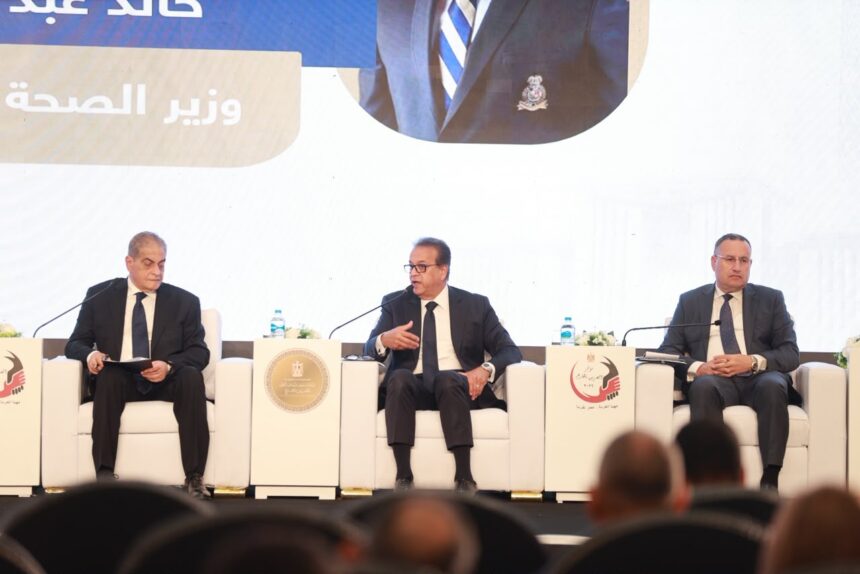
Egypt is expanding healthcare services for its citizens living abroad during their visits to the country, while seeking greater engagement from Egyptian doctors and medical specialists based overseas, Minister of Health and Population Khaled Abdel Ghaffar said.
Speaking during a panel discussion at the opening of the seventh annual Conference for Egyptians Abroad, attended by several cabinet ministers and senior officials, Abdel Ghaffar said Egyptians living overseas remain key partners in supporting the country’s development through both their economic contributions and the expertise of scientists, physicians and medical consultants.
He noted that many Egyptian doctors working abroad regularly return to perform complex medical procedures, train local healthcare professionals and transfer specialised expertise, adding that the ministry is working to institutionalise cooperation with those professionals to maximise their contribution to Egypt’s healthcare sector.
Abdel Ghaffar highlighted the “Your Treatment in Egypt” programme, which aims to provide Egyptian expatriates with faster access to healthcare services during their visits to Egypt while reducing waiting times.
He also pointed to the launch of the “Tour 4 Cure” platform, a national medical tourism portal designed to connect patients from abroad with hospitals and healthcare providers across Egypt, supporting the country’s ambition to become a regional hub for medical tourism.
The minister said Egypt has significantly expanded its healthcare infrastructure and public health programmes in recent years while continuing the phased implementation of the Universal Health Insurance System.
He added that Egyptian medical professionals based overseas have played an important role in supporting those efforts through specialised consultations, training programmes and advanced clinical services.
On the pharmaceutical sector, Abdel Ghaffar said Egypt’s pharmaceutical industry comprises around 180 factories and more than 1,000 production lines, with domestic manufacturing supplying approximately 91% of the country’s medicine needs.
The remaining 8% of pharmaceutical requirements are imported, primarily to meet demand for medicines and products that are not manufactured locally, he said.
Addressing concerns over medicine availability, Abdel Ghaffar rejected claims of a widespread drug shortage in Egypt, stressing that while individual products may occasionally face temporary supply disruptions—as is common in pharmaceutical markets worldwide—the country does not suffer from a general shortage of medicines.
He affirmed that the government will continue supporting local pharmaceutical manufacturing to reduce dependence on imports, strengthen medicine security and enhance the resilience of Egypt’s healthcare system.


