


Philips is reinforcing its long-term commitment to Egypt by advancing AI-powered healthcare technologies, innovative financing solutions, and local capability building to support the country’s healthcare transformation. In an interview with Daily News Egypt, Ahmad Makhlouf, General Manager of Philips North Africa, discusses how the company is helping healthcare providers improve diagnostic efficiency, expand access to advanced medical technologies, strengthen healthcare resilience, and align with Egypt’s Vision 2030 and Universal Health Insurance strategy.
What investments is Philips making in Egypt, and how do your latest innovations support the country’s healthcare transformation?
Our latest innovations showcased at Africa Health ExCon demonstrate how Philips is supporting Egypt’s Vision 2030 and broader healthcare ambitions.
Rembra CT delivers 106 images per second and features AI-enabled smart workflows that automate routine tasks and streamline operations. The system enables rapid image availability in stroke, trauma, interventional, and emergency cases, supporting faster clinical decision-making when every second matters.
Philips’ next-generation MR acceleration technology, SmartSpeed Precise, strengthens Egypt’s push toward precision medicine and AI-enabled diagnostics. Powered by dual-AI engines, SmartSpeed Precise builds on Compressed SENSE and SmartSpeed technologies to enable scans up to three times faster and improve image sharpness by up to 80%, enhancing diagnostic confidence across the full Philips MR portfolio, including its helium-free BlueSeal systems.
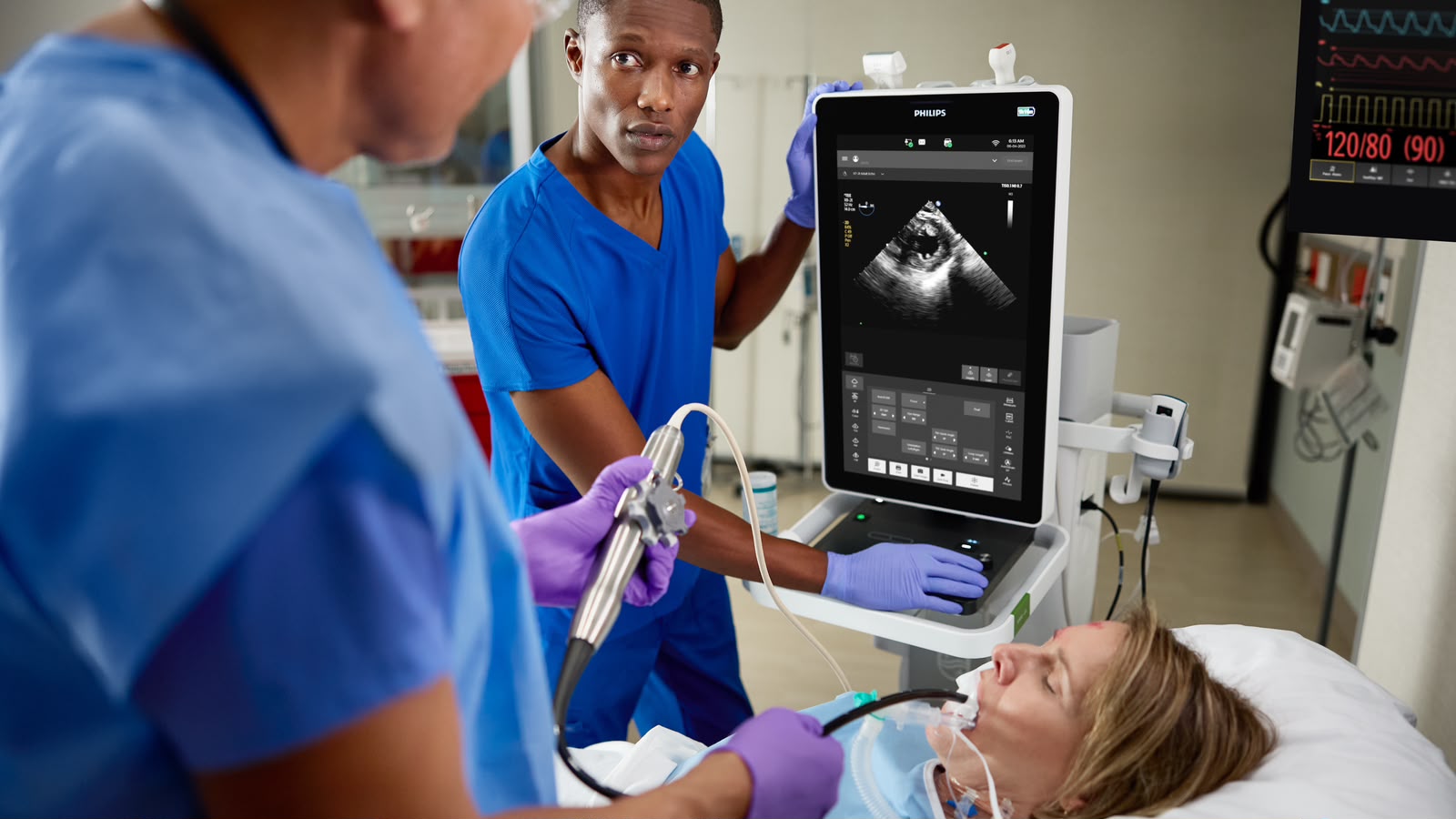
Meanwhile, the Flash Ultrasound System 5100 POC helps address gaps in diagnostic imaging access by combining exceptional image quality, smart automation, and intuitive touchscreen controls in a highly portable system that enables fast, confident decision-making across multiple care settings.
Given Egypt’s focus on localizing medical technology, what manufacturing or assembly capabilities is Philips developing in the country?
Our priority is building local capabilities by exploring medical device refurbishment facilities, training local engineers, and advancing circular economy practices. When communities can maintain, repair, and optimize their own healthcare infrastructure, they achieve greater resilience and long-term sustainability.
A concrete example of that value is already in motion: AI-enabled predictive maintenance capabilities across critical healthcare equipment portfolios. Through remote monitoring, advanced analytics, and AI-driven algorithms, healthcare providers can shift from reactive emergency repairs to proactive, planned maintenance interventions.
For healthcare systems, this significantly reduces unplanned downtime, lowers emergency maintenance costs, and strengthens equipment reliability. That means continuity of care—uninterrupted access to the technology patients need when they need it most.
That’s why we work closely with public and private partners—not only to deliver technology but also to build local expertise and strengthen healthcare systems over the long term.
Does Philips see Egypt evolving into a regional logistics and servicing hub for North and Sub-Saharan Africa?
Our vision is straightforward: enable better care for more people. We’re driven to work in close partnership with healthcare systems and providers across North Africa and the broader region to understand what that means locally—what infrastructure, expertise, and support systems strengthen healthcare delivery and resilience.
Rather than imposing a predetermined regional structure, we listen to market needs, government priorities, and partner requirements. That collaboration directly shapes our solutions and will continue to evolve based on what healthcare systems need to remain operationally strong and deliver continuous quality care.
What financing solutions does Philips offer Egyptian hospitals, and what is the scale of its financing portfolio in Egypt?
Innovative financing goes well beyond procurement. It enables healthcare providers to adopt advanced technologies when clinical demand arises—not only when capital becomes available.
Through Philips Capital, we offer right-to-use leasing models with flexible repayment structures, including stepped payments linked to deployment phases, usage-based arrangements tied to patient volumes, and deferred payment options that allow hospitals to generate revenue before major repayments begin.
These models help preserve operating capital while allowing hospitals to continuously modernize their technology as clinical priorities evolve. That flexibility strengthens healthcare resilience, particularly during periods of currency volatility and capital constraints.
How do you view public-private partnerships as a driver of healthcare modernization in Egypt?
Modernizing healthcare requires more than equipment. It requires a shared vision, long-term commitment, and genuine collaboration: listening deeply to what clinicians, patients, and healthcare systems actually face, then working backward from those needs to co-create solutions that fit real clinical workflows and financial realities.
That’s what we are building in Egypt. We understand the constraints—the pressure to do more with less, rising diagnostic demand, workforce challenges, and sustainability imperatives. We partner with public and private providers to address these challenges meaningfully, working alongside healthcare leaders not just on technology, but on building local expertise, designing for impact, and ensuring sustainable outcomes that serve more people for years to come.
That’s how public-private partnerships drive real healthcare modernization—when all parties are anchored in a shared purpose and commitment to measurable impact.
Philips is promoting its Circular Edition portfolio of factory-refurbished imaging systems. How much budget flexibility can these systems provide?
Philips Circular Edition systems typically cost around 25% less than comparable new Philips systems while maintaining the same quality, performance, warranty, service, and training support. They also have a significantly lower carbon footprint.
Those savings give healthcare providers greater budget flexibility to expand diagnostic capacity, invest in workforce training, or allocate additional resources to clinical services and patient care.
Our refurbishment process also reuses approximately 79% of the average material weight, supporting sustainability objectives while reducing environmental impact.
The Circular Edition portfolio includes mobile C-arms, ultrasound systems, MRI, image-guided therapy platforms, and CT systems, providing healthcare providers with sustainable options across their imaging infrastructure.
At Africa Health ExCon, you showcased the Rembra CT and SmartSpeed Precise MR, which boast significantly faster scanning speeds. How do these AI workflows translate into faster ROI and higher patient throughput for hospitals?
Speed on its own doesn’t drive ROI. What drives ROI is what you do with that speed operationally.
Designed for high-demand environments, Rembra CT can support up to 270 examinations per day, helping imaging departments manage increasing patient volumes while delivering speed, accuracy, access, and diagnostic confidence when it matters most.
Philips’ next-generation MR acceleration technology, SmartSpeed Precise, strengthens Egypt’s push toward precision medicine and AI-enabled diagnostics. Powered by dual-AI engines, SmartSpeed Precise builds on Compressed SENSE and SmartSpeed technologies to enable scans up to three times faster and improve image sharpness by up to 80%, enhancing diagnostic confidence across the full Philips MR portfolio, including its helium-free BlueSeal systems.
Complementing this, MR Workspace R12 introduces a zero-click workflow that streamlines the entire imaging process from scan initiation to report generation, reducing manual steps and improving throughput.
Again, that’s time given back—to radiologists who can focus on interpretation and clinical insight rather than manual adjustments; to patients who spend less time in the scanner; and to hospitals managing rising diagnostic demand without proportional increases in staff or facility costs.
For healthcare providers, the business case follows naturally: more patients scanned, lower cost per examination, and staff capacity focused on clinical expertise rather than administrative tasks. Clinicians and patients alike benefit from greater diagnostic confidence and more time devoted to care.
As Egypt expands its Universal Health Insurance system, how can Philips’ digital health and remote monitoring solutions help reduce healthcare costs?
The greatest opportunity lies in enabling value-based healthcare, where better patient outcomes and operational efficiency go hand in hand.
In healthcare, time means more. But care providers don’t have enough of it. Our end-to-end solutions are designed to give time back by optimizing workflows, enabling real-time clinical insights, and reducing unplanned disruptions.
Operationally, that works in several ways. Predictive maintenance capabilities reduce unplanned downtime across imaging and monitoring equipment, meaning systems remain productive for longer while unplanned costs decline. AI-enabled workflows standardize clinical processes, reducing variability and unnecessary repeat procedures. Remote monitoring platforms enable earlier intervention before conditions escalate, preventing costly hospital admissions and emergency interventions.
But here’s what often gets overlooked: a scanner is only as powerful as the ecosystem it connects to. Our innovations are part of an interoperable system powered by healthcare informatics platforms that ensure the right data reaches the right clinician at the right time.
That’s where truly integrated care happens. It means creating a single, intelligent view of a patient from all available data—diagnostics, pathology, ICU data, and clinical workflows. Our Healthcare Informatics platform breaks down departmental silos, turning fragmented data into actionable intelligence for proactive care. Real-time insights are shared across the entire care continuum, enabling clinicians from different specialties to access the same patient information and coordinate care more effectively because the data flows seamlessly.
What are Philips’ commercial priorities for Egypt over the next three years?
While I cannot discuss specific market-share targets, I can say that Egypt remains a strategically important market for Philips.
For 135 years, Philips has been driven by a single purpose: improving lives through meaningful innovation. For more than 90 years, that philosophy has shaped our presence in this region. We have partnered with healthcare systems, governments, and communities as a committed partner invested in building sustainable healthcare infrastructure.
We understand clinical workflows, institutional dynamics, and how healthcare operates on the ground. That enables us to scale platform solutions that work across diverse healthcare settings. That is why we continue to co-create with healthcare leaders the innovations and capabilities needed to enable better care for more people in Egypt.


