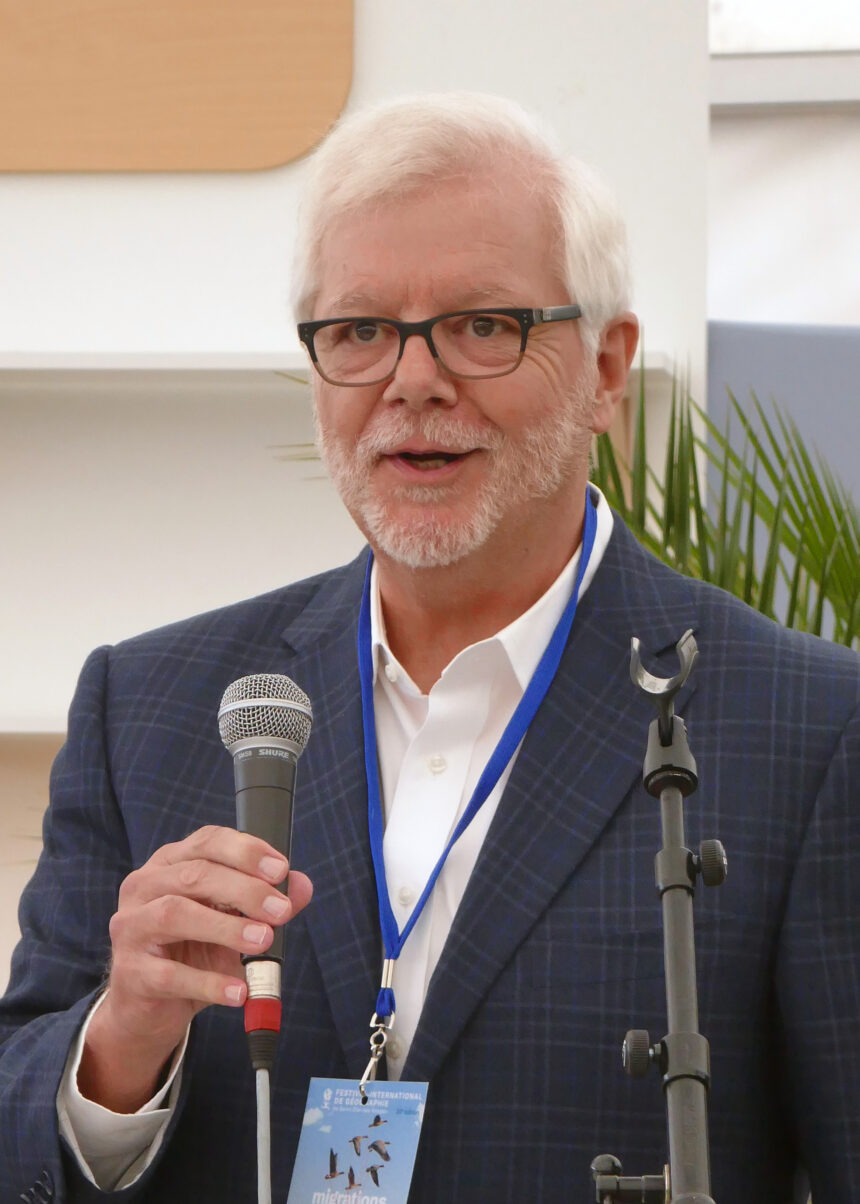
From the village he describes as “the back end of nowhere,” eminent political geographer John Agnew began his journey toward understanding the world through a broad spatial imagination. The boy from Haverigg — a village in northwest England — would go on to become one of the most distinguished geographers of the past two centuries.
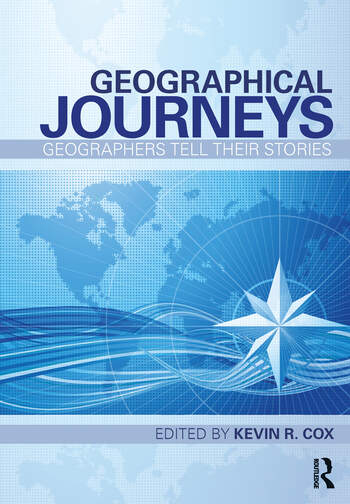
In his autobiographical chapter in Geographical Journeys: Geographers Tell Their Stories, edited by Kevin R. Cox, Agnew does not treat place merely as the backdrop to his childhood, but as a force that shaped his consciousness. From an early age, he understood that living on the margins did not mean living outside history. His father, who had left the village at fourteen to join the Royal Marines, brought home images and stories from Hong Kong, Shanghai, Sri Lanka, and the Suez Canal. From him, Agnew received his first atlas — and with it, the seed of a geographical imagination.
The book does not offer a conventional history of geography. Rather, it presents personal testimonies written by twenty-nine geographers about the paths that led them to the discipline, and about how their research interests and theoretical positions were shaped by place, chance, travel, and academic institutions.
Agnew grew up in a culturally diverse British household: a relatively conservative English father, connected to the navy and the empire, and a mother of Scottish background, more critical of British history and of its relationship with what Agnew calls the Celtic fringes of empire — French Brittany, Scotland, Wales, Cornwall, and the Isle of Man.
At school, Agnew discovered geography as a subject that studied landscapes, maps, settlement patterns, and economic development. He excelled at it, yet he was not certain it alone was sufficient for his university path. He was also drawn to politics, particularly electoral politics and political theory. He therefore chose the University of Exeter because it allowed him to combine geography and politics. But the experience was not inspiring at first. He found the politics courses more stimulating than most of the geography courses, especially as there was no clear course in political geography, and some of the prominent figures in the department struck him as discouraging.
The major turning point for Agnew came with his reading of economic geographer Peter Haggett’s work on spatial analysis, and with his attendance at lectures by Marxist geographer David Harvey. After these encounters, Agnew began to see geography differently. It was no longer a discipline that merely described places and human activities; it became a way of explaining and analysing relationships, patterns, and inequalities.
Agnew received his first practical geopolitical lesson in spatial inequality one year after graduation, when the iron mines closed in 1968. From that moment, geography became for him a way of understanding how economic and political forces leave their traces on places and people. Yet the greater transformation came when he moved to Ohio State University in the United States in 1971, entering one of the most important environments of the quantitative revolution in geography.
The training was rigorous, filled with analytical and quantitative courses. At first, it may have seemed stifling, but it was also, as he describes it, “foundational.” There, he learned that differences and similarities between places could be studied with precision, and that calculation and analysis do not erase the distinctiveness of place; rather, they can grant it greater explanatory power.
At Syracuse University, Agnew delved more deeply into social and political theory, and began to critique what was being presented under the name of geopolitics, as well as the geographical assumptions embedded in international relations theory — particularly those concerning the nation-state, sovereignty, and territory. From this phase emerged one of his best-known concepts: “the territorial trap,” the misleading assumption that the territorially sovereign state is the natural and fixed framework through which world politics should be understood.
For Agnew, sovereignty is not an absolute fact, but a historically shifting relationship, one that has become more fragile and complex under global capitalism. He rejects the idea of a “post-place” politics: however globalised the world may appear, it does not take place in a vacuum. It always unfolds in specific places, laden with history, power, memory, and possibility.
Agnew’s real departure from the shell of the “Anglo-American” school of geography began with his repeated visits to Italy in the 1980s and 1990s. There, he started to read and collaborate with scholars from French and Italian geographical traditions, deepening his interest in place, region, and politics beyond the English-speaking academic centre. Then he moved to the University of California, Los Angeles, where he found a broader department that brought together human and physical geography. There, he became increasingly convinced that geography should not be confined within separate trenches of the “human” and the “physical,” because the problems of the real world exceed these narrow boundaries within a single field of knowledge.
And still, the journey continues — as does the intellectual generosity.