

US President Donald Trump has instructed his top envoys to halt talks with Tehran in a strategic shift aimed at gradually “choking” Iran over time, a move that coincides with heightened risks to commercial shipping and a reported attack in the Strait of Hormuz.
A US official told CNN that Trump is adopting a new approach to Iran after weeks of pushing for positive developments without significant success. White House officials recently informed political allies that the administration is altering its strategy from rapid pressure, or to “hit Iran immediately”, to a gradual long-term squeeze, according to a source familiar with the matter.
The shift marks a stark departure from Trump’s previous assertions. Since the collapse of a ceasefire signed in June, the US president had repeatedly claimed that talks were progressing well and that a new agreement was imminent, before recently declaring that no diplomacy is underway. Officials stated on Tuesday that Trump’s instructions to his negotiating team—which includes Vice President JD Vance and envoys Steve Witkoff and Jared Kushner—to cease engagement with Tehran followed “positive discussions” with Iran.
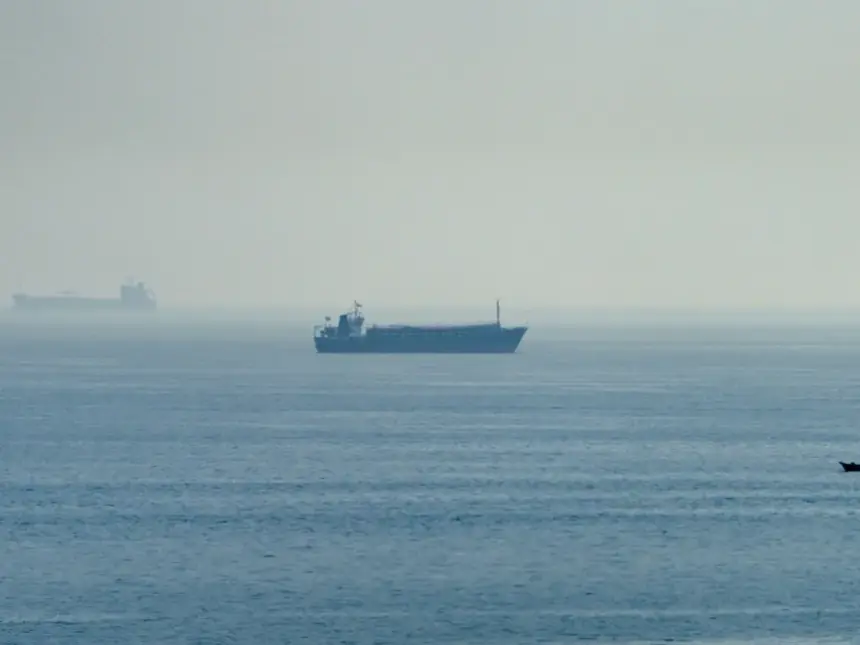
The diplomatic freeze is mirroring a stagnation in regional maritime traffic. Preliminary data showed that vessel transit through the Strait of Hormuz remains low, with only six ships crossing on Tuesday. Bloomberg reported that two Chinese-linked supertankers abruptly changed course in the waterway as shipping risks remain elevated and hopes for a return to normal traffic dwindle following Trump’s hardline stance.
The tanker Sea V, carrying a cargo of Iraqi crude oil, was heading from the Arabian Gulf towards the Strait on Tuesday when it altered its route, according to ship-tracking data. It is currently anchored in the middle of the Strait. Early on Wednesday, the tanker Hestia crossed into the Gulf along the Omani coast before changing direction and sailing out. The reasons for the sudden diversions remain unclear.
Physical threats to shipping also persist in the region. The British Navy reported on Tuesday that a vessel was attacked by an unknown projectile while leaving the Gulf along the Omani coast, marking the latest in a series of recent incidents. Despite these dangers, some vessels continue to attempt the crossing. The Hong Kong-flagged crude supertanker Erecter is navigating towards the Gulf, with broadcast data indicating a Chinese crew on board.
The risks to navigation are expected to continue as Trump’s insistence on the absence of talks keeps the escalating Middle East conflict in a stalemate. Further cementing the deadlock, Iran’s chief negotiator with the United States, Mohammad Bagher Ghalibaf, stated that the Strait of Hormuz will not be reopened until Washington agrees to a series of measures, including lifting the US naval blockade, cancelling oil sanctions, and ending military operations.
Tensions threaten to expand beyond surface shipping infrastructure. Two sources close to the Iranian regime told the Financial Times that Iranian forces have studied the possibility of targeting submarine fibre-optic cables in the Strait of Hormuz in the event of further escalation. The newspaper noted that these considerations reflect the prevailing mood in Tehran, where many within the regime now view the return of war as a “matter of time”.
Responding to separate reports that Iran is studying potential attacks on US targets in Europe, a NATO official affirmed that the alliance is prepared to counter any threat and will always do what is necessary to defend all member states. The official added that NATO’s stance was demonstrated when its air defences intercepted ballistic missiles heading from Iran to Turkey in four separate incidents.
