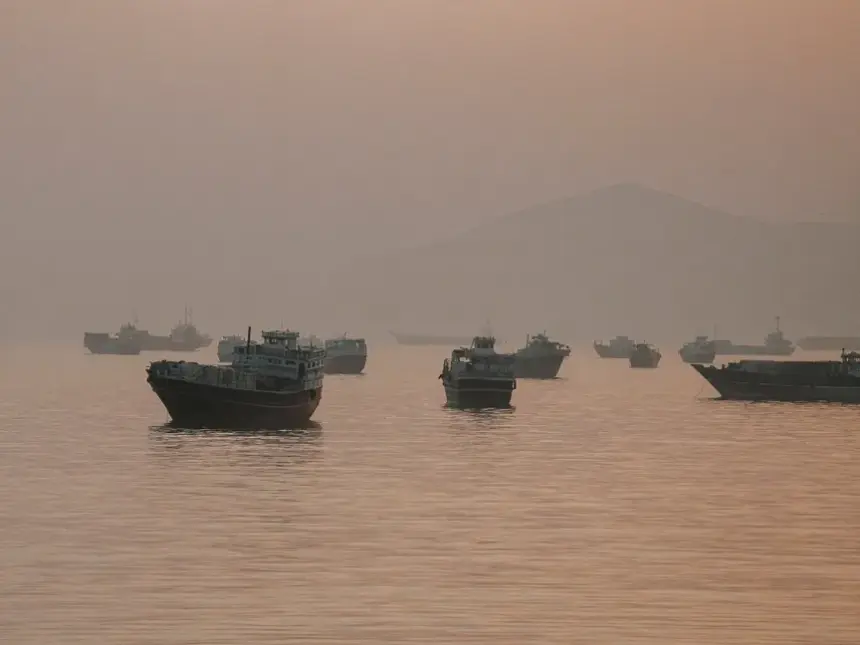
The US will press its NATO allies to contribute more to maritime security in the Strait of Hormuz at an upcoming summit, a White House official said on Sunday, as Iran warned it is using a fragile ceasefire to enhance its combat capabilities.
With the NATO summit scheduled for July 7 and 8 in Ankara, European officials fear the conflict with Iran could overshadow the agenda, either through a resumption of fighting or if US President Donald Trump criticises Europeans for not doing enough to support US military operations.
Tensions remain high as Iran maintains its adherence to controlling the Strait of Hormuz. In Tehran, opponents of negotiations are demanding revenge for the assassination of former Supreme Leader Ali Khamenei, rejecting any concessions to Washington during a week of funeral ceremonies, though mediators continue efforts to progress talks in the coming days.
The US has announced the suspension of negotiations with Tehran. Trump stated he granted Iran a week to hold Khamenei’s funeral ceremonies, noting that the time and location for resuming talks remain undecided.
Speaking on the sidelines of Khamenei’s funeral on Sunday, Iranian military spokesman Brigadier General Mohammad Akrami Nia told the Fars news agency: “We are taking advantage of the ceasefire opportunity to enhance our combat capabilities, and we do not waste a moment doing so.” He added, “If the enemy makes any mistake, it will inevitably face a decisive response from the Iranian armed forces.”
At the Ankara summit, the White House official said the issue of the Strait of Hormuz and the protection of maritime traffic will be presented and discussed.
“It is true that many allies have expressed their willingness to participate and employ their capabilities in protecting maritime traffic through the Strait of Hormuz, but this brings us back to the point I made earlier, which is the issue of allies possessing the necessary capabilities; many of them lack the ships or assets necessary to contribute effectively to a tangible maritime effort,” the official said.
“We urge our allies to enhance their capabilities and take a more active and effective role in defending themselves, and thus in the collective defence system,” the official added.
While the Middle East remains a primary focus, Trump will also discuss the war in Ukraine and the Greenland file, and is scheduled to hold bilateral meetings with the leaders of Turkey, Ukraine, and Syria.
Additionally, the summit will evaluate allies’ progress on the “Hague Commitment” to increase defence spending to 5% by 2035, which is divided into 3.5% for core defence and 1.5% for security and defence-related expenditure. The meeting will review ways to enhance the alliance’s core military capabilities as part of defence burden-sharing within Europe.
The official noted that allies have committed about $139 billion in defence spending, with roughly half of this increase allocated to purchasing US-made equipment, weapons, and ammunition. The US is “the only country capable of producing many of these highly advanced weapons systems,” the official said.