

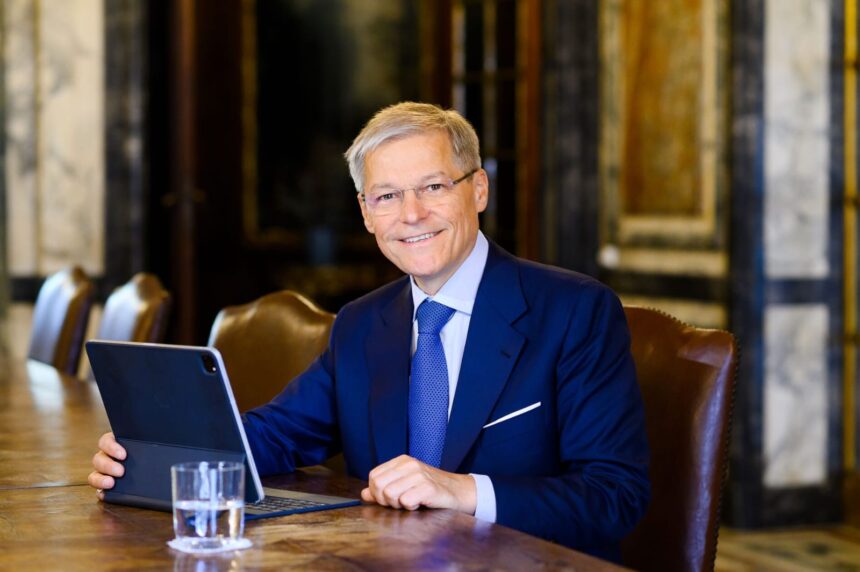
Dacian Cioloș, former Prime Minister of Romania, ex-European Commissioner for Agriculture and Rural Development, and current candidate for Secretary-General of La Francophonie, has concluded a five-day official visit to Egypt, underscoring the country’s expanding role in education, peacebuilding, cultural diplomacy, and African development.
From 1 to 5 June, Cioloș met with senior Egyptian officials and leading institutions, describing Egypt as a model for a modern, opportunity-driven Francophonie. He highlighted Egypt’s investments in education and youth empowerment, particularly through Senghor University in Borg El-Arab, which trains future African leaders.
During talks with Egypt’s Minister of Higher Education and Scientific Research, Abdelaziz Konsowa, Cioloș discussed strengthening bilateral cooperation in higher education and outlined his vision for a revitalized Francophonie with a stronger focus on youth, women, and Africa’s development.
His programme also included visits to the Al Azhar Observatory for Combating Extremism and the Cairo International Center for Conflict Resolution, Peacekeeping and Peacebuilding (CCCPA), where he praised Egypt’s contributions to regional stability and conflict prevention. Cioloș described both institutions as examples of how Francophone countries can foster peace, dialogue, and cooperation.
As part of his humanitarian agenda, Cioloș toured a Save the Children center supporting Palestinian refugee children from Gaza and medical evacuees. He commended Egypt’s humanitarian efforts and donated Romanian children’s books to young beneficiaries.
Cultural diplomacy featured prominently in his itinerary, with visits to the Bibliotheca Alexandrina and the Grand Egyptian Museum. Cioloș lauded Egypt’s commitment to preserving cultural heritage and promoting intercultural dialogue.
Marking 120 years of diplomatic relations between Romania and Egypt, Cioloș expressed confidence in the continued growth of bilateral cooperation and reiterated his vision of building “a Francophonie of opportunities” that delivers tangible economic, educational, and cultural benefits for member states and their citizens.
