

Egypt has launched a unified digital environmental data registry for industrial facilities to support green transformation and help factories comply with international environmental requirements.
In a statement, the Ministry of Local Development and Environment said the new system will create a national environmental database for industrial facilities, covering emissions, fuel, water and energy use, waste data and export-related information linked to the European Union’s Carbon Border Adjustment Mechanism (CBAM).
Minister Manal Awad said the platform is designed to simplify registration and reporting procedures for industrial facilities and connect relevant government bodies through one digital portal, including the Egyptian Environmental Affairs Agency, the Ministry of Industry, the Industrial Development Authority and the Ministry of Electricity.
She said the registry would help the government prepare detailed reports on fuel use across industrial sectors, identify non-compliant facilities and track emissions reductions resulting from environmental compliance plans.
The system will also enable authorities to calculate and monitor carbon emissions, including direct emissions from fuel and industrial processes, indirect emissions from electricity consumption and embedded emissions in exported products.
Industry Minister Khaled Hashem said the platform represents an important step toward accelerating the green transition in Egypt’s industrial sector and improving the competitiveness of Egyptian exports amid growing global requirements to reduce carbon emissions.
He said the digital link between the Industrial Development Authority and the environmental regulator marks a shift in industrial and environmental data management through interactive maps and sectoral and geographic analysis to support planning and decision-making.
The ministry said the new industrial environmental registry focuses on reducing emissions inside facilities and production lines, improving water and energy efficiency, and monitoring production inputs, including raw materials and intermediate goods.
Further development phases will link the platform to inspection and violation systems, interactive maps and other government bodies, including the Waste Management Regulatory Authority, the Ministry of Investment and the General Organization for Export and Import Control.
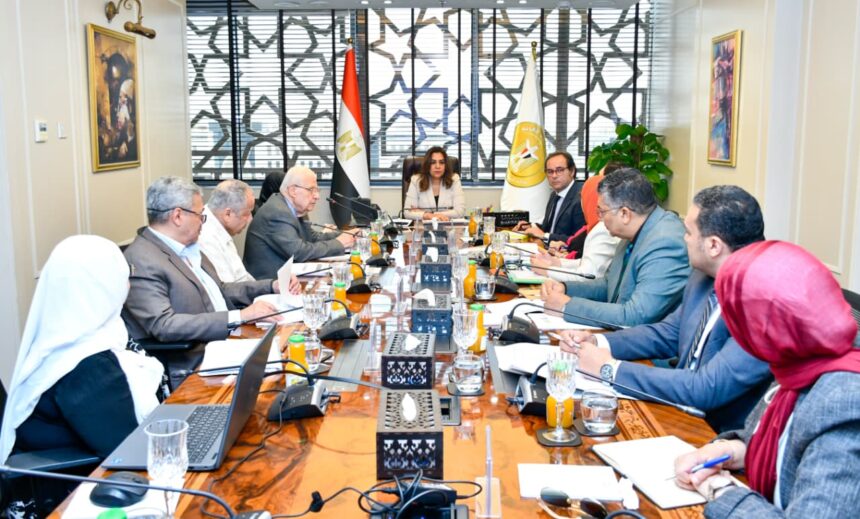
The meeting also discussed preparing a regulatory decision to require industrial facilities to register and update their data regularly, as well as possible incentives for compliant facilities.


