

As Egypt’s real estate market continues to evolve, long-term operational efficiency and robust governance frameworks have emerged as decisive pillars in preserving asset value and sustaining competitiveness.
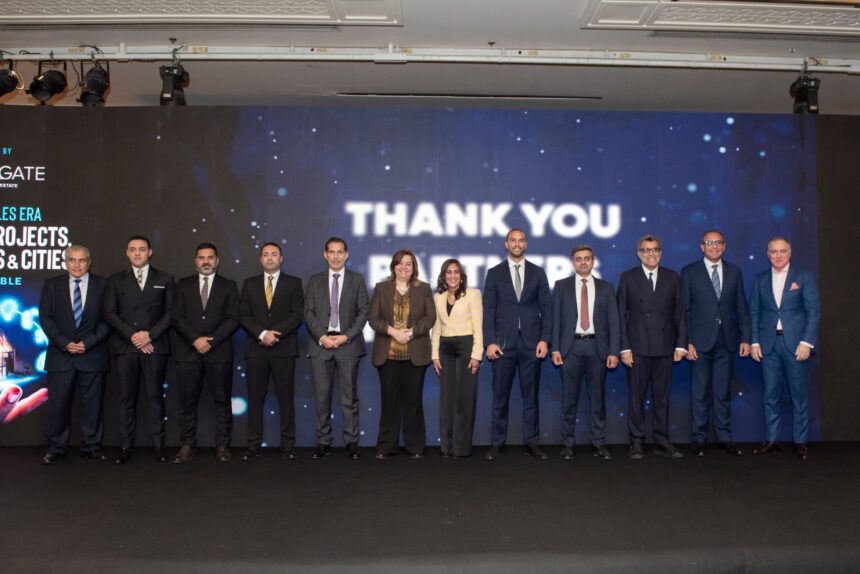
Industry leaders and policymakers convened at “The Post-Sales Era: Managing Projects, Communities & Cities,” a roundtable organized by Invest-Gate, to examine the sector’s transition from a development-driven model, primarily centered on construction and sales, to a more sophisticated ecosystem focused on post-delivery operations, recurring income streams, and institutional asset management.
Discussions highlighted a fundamental transformation: success in today’s market is no longer measured solely by sales volumes or delivery timelines, but by the quality of management and the sustainability of operational performance after project handover.
Participants emphasized that integrated operating systems are essential to enhancing occupancy rates, elevating service standards, stabilizing cash flows, and safeguarding long-term asset performance. Governance frameworks explored during the session included developer-led management models, third-party operators, and public–private partnerships, alongside the growing integration of artificial intelligence and smart city platforms into urban management.
Regulatory Reform
Abdel Khalek Ibrahim, Member of Parliament, outlined operational challenges facing several government-developed projects, attributing them in part to procedural frameworks and limited operational expertise.
He stressed the importance of establishing a comprehensive institutional structure that bridges delivery and operational phases, proposing the creation of a specialized regulatory authority for the real estate market, akin to telecom regulators, to oversee operations, maintenance standards, and governance mechanisms.
Ibrahim noted that while traditional homeowners’ associations may suffice for small-scale residential projects, they fall short when applied to large mixed-use developments or technologically advanced cities such as New Alamein.
He further called for legislative updates, clearer company classifications, and substantial investment in human capital development, particularly given the sector’s increasing reliance on AI-driven asset and facility management systems.
Meanwhile, Mostafa Mounir, CEO of the Tourism Development Authority, presented tourism development as a model of structured post-delivery operation. He underscored that no tourism project can achieve its full value without a comprehensive operational framework that ensures continuity of quality and sustained competitiveness.
Mounir emphasized that operational licensing is not a one-time approval but an ongoing, closely monitored process conducted in coordination with the Ministry of Tourism and Antiquities. He also referenced long-term infrastructure initiatives, including upgrades to Red Sea highways and ports, predicting that the full economic returns on these investments will materialize over the coming decade.
The True Measure of Success
Khaled Seddik, Chairman of the Urban Development Fund, asserted that a developer’s reputation is ultimately built on operational performance rather than construction scale alone. He explained that the most critical phase in the real estate lifecycle begins after occupancy, when management quality directly shapes asset value and community experience.
Seddik revealed that the Fund initiates operational transition once 15-25% of a project is completed and operational readiness, including security and maintenance systems, is fully established. He also advocated for the productive investment of maintenance deposits through commercial activities within projects to generate additional returns that benefit residents while enhancing long-term sustainability.
Meanwhile, Mai Abdel Hamid, CEO of the Social Housing and Mortgage Finance Fund, highlighted that the Fund has delivered approximately 800,000 housing units, with another 300,000 currently under development, representing nearly 60% of total government housing projects nationwide. She explained that sustainability is reinforced through structured mortgage financing mechanisms and carefully managed maintenance deposits, with occupancy rates closely tracked and default rates remaining as low as 0.05%.
The Fund has strategically invested maintenance deposits in treasury bills and banking instruments yielding between 25% and 28% in recent periods, allocating surplus returns toward upkeep and façade maintenance. Abdel Hamid also advocated for the establishment of an official House Price Index to enhance market transparency and support informed investment decisions.
Capital Markets and Transparency
Mohamed Selim, Head of Research and Business Development at the Egyptian Exchange, stressed that transparency and rigorous financial disclosure are indispensable for listed companies. Investors, he noted, increasingly evaluate real estate firms based on operational cash flows rather than land banks alone, relying heavily on discounted cash flow (DCF) valuation models.
Selim also highlighted the absence of a specialized regulatory authority overseeing financial disclosures for non-listed developers, warning of potential systemic risks given the sector’s substantial weight within the stock market.
Developer Perspectives
Ayman Amer, General Manager of SODIC, emphasized that operational excellence must be embedded at the design stage. Separating designers from operators, he argued, can create structural inefficiencies that undermine long-term sustainability.
Amer cited SODIC West as an example of a fully integrated community, where the inclusion of schools, healthcare facilities, and retail components significantly enhances asset value.
Similarly, Ibrahim El Missiri, CEO of Somabay, explained that retaining 10–20% of developments for leasing and hospitality functions secures recurring revenue streams. He highlighted the group’s integrated model, combining hospitality, sports, and commercial assets, as a cornerstone of sustainable operations.
Hazem Helal, CEO of Owest, Makadi Heights, and Byoum at Orascom Development Egypt, questioned whether the country’s approximately 1,900 developers possess adequate operational expertise. He called for a stronger emphasis on capacity building and technology integration to elevate efficiency and enhance customer experience.
Ahmed Mansour, CEO of Cred Developments, referenced Unified Building Law 119 of 2008, underscoring the need for clearer operational timelines and structured handover mechanisms to ensure seamless transitions in newly developed cities.
Asset Management Innovation
Industry experts underscored digital transformation as a central driver of operational excellence. Mohannad Saleh, Executive Director of Horizon Management and Operations, stressed the importance of early operator involvement during the design phase, alongside the adoption of KPIs and SLAs to institutionalize accountability and performance measurement.
Mohamed Ezzat Attia, Head of Smart Cities at Orange Egypt, highlighted the strategic value of centralized digital platforms for compound management, security coordination, and service monetization.
Asset management specialists also addressed operational challenges in medium-income housing projects, where elevated service costs and limited maintenance deposits can constrain sustainability. Diversifying revenue streams through hospitality components, co-branding partnerships, and fractional ownership models was presented as a viable pathway toward long-term resilience.
A Structural Transformation
The overarching message from the roundtable was unequivocal: Egypt’s real estate sector is undergoing a structural transformation, from a transactional, sales-driven industry to a performance-oriented ecosystem grounded in professional operations, governance, and institutional asset management.
As regional and global competition intensifies, stakeholders concurred that sustainable value creation will hinge on regulatory reform, human capital development, digital innovation, and integrated operational planning.
In a market once defined by rapid expansion and aggressive marketing, the next chapter will be shaped by operational excellence, where value is not only created, but meticulously preserved and continuously enhanced.


