

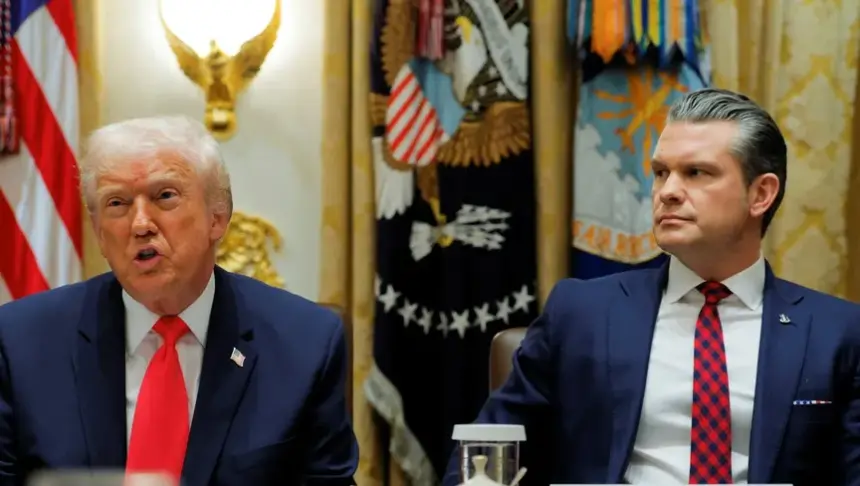
Behind closed doors and away from the usual fanfare of the television cameras, President Donald Trump has formalised a military strategy that may fundamentally clash with his own “America First” instincts. By signing the $901bn National Defence Authorisation Act (NDAA) on Thursday, the President has approved a budget $8bn larger than his own administration requested, while simultaneously accepting a set of legislative “guardrails” designed to keep American boots firmly on European soil.
The signing comes at a delicate moment for the administration. As Trump’s team intensifies negotiations with both Moscow and Kyiv to end the war in Ukraine, the new law effectively ties the Pentagon’s hands, preventing the President from unilaterally withdrawing the very military leverage he might wish to use as a bargaining chip.
By the third paragraph of the extensive legislation, the central tension of the second Trump term becomes clear: while the White House seeks a swift exit from foreign entanglements, a bipartisan coalition of “defence hawks” in Congress has built a legislative cage to preserve the post-war order. The act does more than just purchase ships and missiles; it asserts a minimum threshold for American power in Europe and Asia that the President cannot easily ignore.
The European “Floor”
The most significant constraint within the fiscal 2026 legislation is a strict prohibition on reducing U.S. troop levels in Europe. The law prevents the Pentagon from cutting the total number of American personnel on the continent to fewer than 76,000 for any period exceeding 45 days.
To bypass this limit, the Pentagon and the U.S. European Command chief would be required to certify to Congress that such a reduction serves national interests and provide a detailed assessment of the strategic impact. Furthermore, the legislation prevents the United States from abandoning the role of Supreme Allied Commander Europe (SACEUR)—the top military post in NATO, which an American officer has held for decades.
These provisions represent a direct challenge to Trump’s long-standing criticism of European allies, whom he has accused of benefiting from American military superiority without meeting their own spending obligations. The moves to protect the U.S. presence in Europe, alongside a similar “floor” of 28,500 troops in South Korea, highlight the deep-seated divide between traditional Republican hawks and the administration’s push for a negotiated end to the war in Ukraine.
Caribbean Strikes and Pentagon Constraints
The NDAA also introduces rare personal restrictions on the President’s cabinet. According to Politico, the law freezes a quarter of Defence Secretary Pete Hegseth’s travel budget until the Pentagon releases unedited video footage of a controversial “double-tap” strike conducted in the Caribbean on September 2.
The strike, which targeted survivors of an initial hit on a suspected drug-smuggling vessel, has sparked intense debate in Washington. While Secretary Hegseth defended the mission as a “highly successful” operation against “poisoning” the American people with narcotics, and Secretary of State Marco Rubio described the mission as vital for “dismantling the infrastructure of terrorist organisations,” Congress is demanding transparency. Most lawmakers have yet to see the full footage, which has only been shown to a select group of congressional leaders.

Funding the Peace?
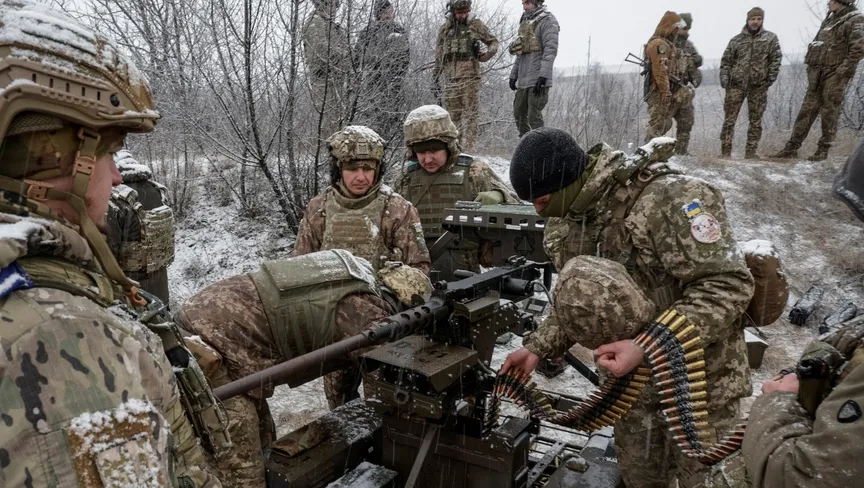
Even as the bill limits the administration’s ability to withdraw, it provides the financial ammunition for the ongoing conflict. The act authorises $800m for the Ukraine Security Assistance Initiative (USAI)—split into $400m for each of the next two years—to pay American companies to produce weapons for the Ukrainian military. An additional $400m is specifically allocated for the Pentagon’s efforts to arm and equip Kyiv.
For the lawmakers who fought for these inclusions, the bill represents a hard-won restoration of congressional authority over war powers and long-term military commitments.
The “kicker” for this legislative cycle remains the balance of power. While the President’s team pursues a diplomatic breakthrough in Miami, the $901bn act ensures that the American military machine remains anchored to its traditional bases. As the administration enters a year of high-stakes peace talks, it does so with a budget that prioritises “hard power” presence over the flexibility of a total withdrawal.
