
Breast cancer is the most common cancer among women in Egypt, accounting for 37.3% of all cancer diagnoses among women. According to estimates from the International Agency for Research on Cancer, Egypt recorded 26,052 new cases and 9,717 deaths in 2024, highlighting the significant health, social and economic challenges associated with the disease.
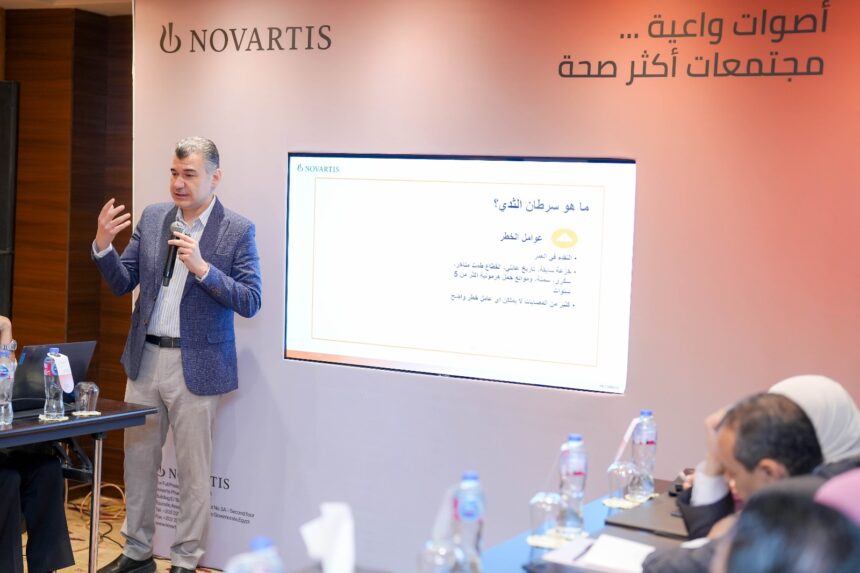
Against this backdrop, Novartis Egypt organised a media workshop titled “Informed Voices, Healthier Communities” in October 2026, bringing together healthcare experts and journalists to explore key challenges in breast cancer care and the media’s role in improving public awareness.
One of the workshop’s central messages was that early detection can make a significant difference. A systematic review of Egyptian studies found that 56% of patients in the pooled analysis were diagnosed at Stage III or IV, when treatment can become more complex.
Loay Kassem, Assistant Professor and Consultant of Clinical Oncology at Cairo University’s Faculty of Medicine, discussed the importance of early detection and treatment adherence in improving patient outcomes. He also addressed common misconceptions about breast cancer and the need for timely diagnosis, appropriate medical care, treatment completion and regular follow-up.
The workshop also examined the financial and social consequences of breast cancer, particularly when diagnosis is delayed. A 2018 study of a screening programme in an underserved urban community in Egypt estimated average treatment costs of approximately $58,170 for late-stage disease, compared with $28,632 for early-stage disease. These figures were based on programme-specific estimates from 2015 and do not represent current national treatment costs.
Dr Hind El Tayeby, Professor and Director of the Pharmacoeconomics Diploma Programme at the German University in Cairo, explored the economic implications of delayed diagnosis and the value of early detection and treatment adherence in reducing the burden on patients and the healthcare system.
The discussions also highlighted Egypt’s Presidential Women’s Health Initiative, which has recorded more than 71.36 million screening and awareness visits since its launch in 2019, according to official Ministry of Health and Population figures.
Adding a personal perspective, Egyptian television presenter and breast cancer survivor Lina Shaker shared her experience with the disease, highlighting the challenges she faced during treatment and the importance of psychological and social support for patients throughout their journey.
Effat Khalifa, Head of Communications and Patient Affairs at Novartis Egypt, emphasised the media’s role in addressing misconceptions, improving public awareness through accurate, evidence-based health information, and bringing greater attention to patients’ needs and experiences.
The workshop reinforced a message that extends beyond the event itself: access to clear, reliable information helps women and their families better understand breast cancer, make informed healthcare decisions and recognise the importance of early detection, treatment adherence and regular medical follow-up.