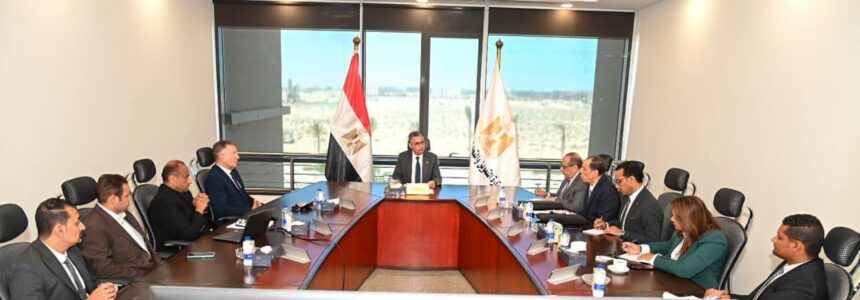
Egypt’s Minister of Supply and Internal Trade Sherif Farouk discussed the advancement of a $278m project to produce bioethanol from sugarcane bagasse during talks with Italian firms Proger and Drexel, outlining plans to establish a joint entity for the project’s implementation.
The venture is bolstered by a 10-year purchasing agreement signed between Proger Egypt and Ecofuel, a subsidiary of Italy’s Eni group. The deal, which allows for potential volume increases, secures a stable export route to the European market and provides the necessary stability to support the project’s economic and investment feasibility.
The initiative aims to convert bagasse, a byproduct of sugarcane processing, into second-generation bioethanol. Farouk emphasised that the ministry supports projects that maximise the use of state resources and transform agricultural waste into value-added products. He described the venture as a practical model for integrating the sugar and clean energy industries, aligning with state directives to expand the green economy, reduce carbon emissions, and enhance environmental sustainability.
During the meeting, officials reviewed the project’s progress since the initial cooperation protocol was signed with Proger Egypt in May 2023. Recent steps have included technical trials on bagasse samples and a preliminary feasibility study that is currently being updated. The state-run Sugar and Integrated Industries Company is participating by providing the necessary land and raw materials, alongside infrastructure preparations such as natural gas connections and boiler modifications to ensure readiness for the execution phase.
The proposed joint entity will include the Sugar and Integrated Industries Company, Proger Egypt, and Drexel. This new body will be tasked with completing the final feasibility study, communicating with investors to finalise the financial structure, increasing capital, and managing the transition to the execution phase. The legal framework for the partnership is currently under review in coordination with the supply ministry’s legal advisor.
Farouk stressed the importance of expediting the technical, financial, and legal studies to establish a clear executive timeline outlining funding sources and partnership structures. Sherif Mohamed Ibrahim, project head at Drexel, noted that the fermentation of bagasse into bioethanol represents a strategic public-private partnership that leverages both state assets and foreign expertise to create a sustainable, value-added industrial project focused on clean energy and foreign market access.