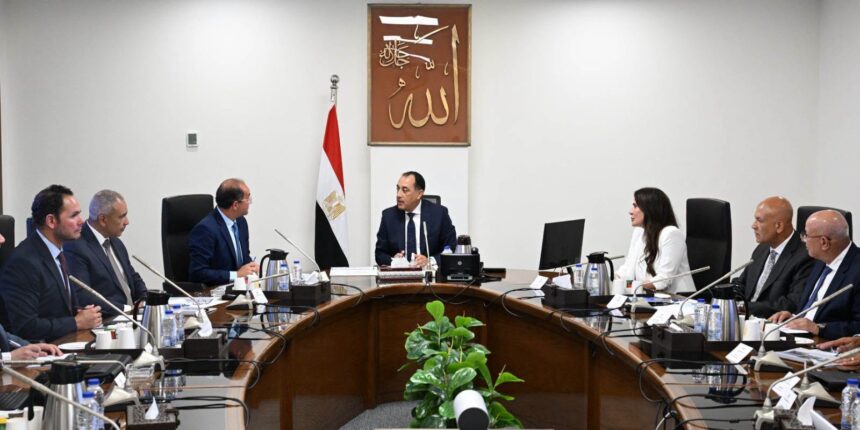
Prime Minister Mostafa Madbouly chaired a meeting on Sunday to review the operation and maintenance of Egypt’s wastewater treatment plants, stressing the need to ensure efficient performance, environmental compliance, and the sustainable management of the country’s water infrastructure.
The meeting, held at the government’s headquarters in New Alamein City, was attended by Minister of Finance Ahmed Kouchouk, Minister of Housing, Utilities and Urban Communities Randa El-Manshawy, Deputy Minister of Housing for Utilities Ahmed Omran, and other senior government officials.
Madbouly described wastewater treatment as a strategic pillar of Egypt’s infrastructure development, emphasizing that maintaining the efficiency of treatment plants is essential to improving sanitation services nationwide in line with Egypt Vision 2030.
According to Cabinet spokesperson Mohamed El-Homsany, the meeting reviewed the operational status of several wastewater treatment plants, including operating rates, periodic and preventive maintenance plans, as well as the challenges facing the sector and proposed measures to improve efficiency and maximize the use of existing capacities.
The discussions also focused on strengthening operation and maintenance systems, enhancing coordination among relevant government entities, and securing the technical and financial resources needed to ensure the continuity of services.
Officials further reviewed efforts to expand the reuse of treated wastewater in development projects as part of Egypt’s strategy to conserve water resources and promote sustainable water management.
El-Homsany added that the meeting examined ongoing efforts by ministries and relevant authorities to monitor the operation and maintenance of wastewater treatment plants in line with directives from the political leadership, with the aim of maximizing the value of the country’s infrastructure investments while supporting environmental protection and sustainable development goals.
At the conclusion of the meeting, Madbouly directed ministries and concerned authorities to continue coordinating efforts to maximize the utilization of treated wastewater in accordance with applicable regulations and standards, while ensuring the sustainable operation of treatment plants and improving the economic and environmental returns from wastewater treatment projects.
During the meeting, Housing Minister Randa El-Manshawy presented a report on the operation and maintenance of three of Egypt’s largest wastewater treatment plants: Abu Rawash in Giza, with a treatment capacity of 1.6 million cubic metres per day; the Eastern Alexandria treatment plant, with a capacity of 800,000 cubic metres per day; and Gabal El Asfar in Qalyubeya, which can treat 2.5 million cubic metres per day. The three facilities serve a significant share of Egypt’s population.