

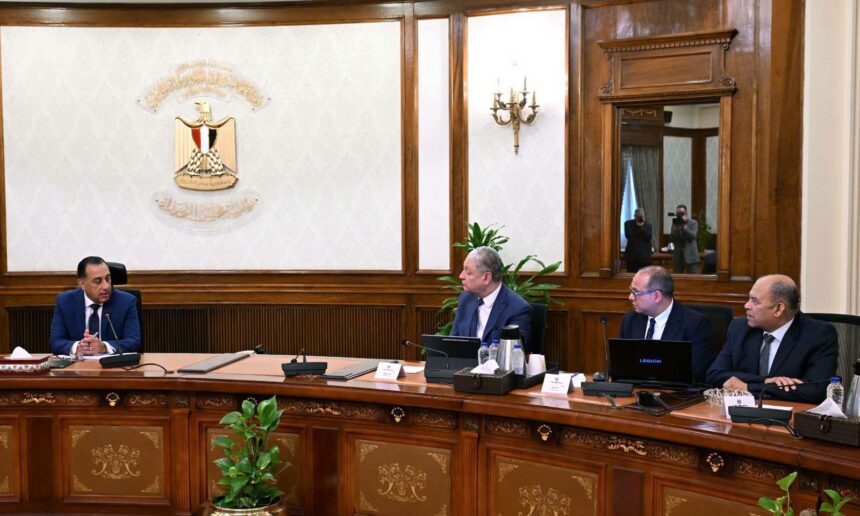
Egyptian Prime Minister Mostafa Madbouly on Sunday reviewed preparations for launching the second phase of the presidential Decent Life initiative, as the government seeks to accelerate the delivery of rural development projects while incorporating lessons learned from the first phase.
During a meeting with representatives of engineering consultancy Dar Al-Handasah, the project’s consultant, Madbouly stressed the importance of ensuring full readiness before construction begins, in line with President Abdel Fattah Al-Sisi’s directives to implement the projects according to schedule and maximise the impact of public investment on improving services across Egypt’s rural communities.
The Prime Minister emphasised the need to address the challenges encountered during the first phase of the initiative to speed up the implementation of the remaining development and public service projects. He also called for greater reliance on locally manufactured components in implementing the second phase.
Ahmed Abdelazim, Director of Dar Al-Handasah, presented a number of proposed implementation mechanisms designed to accelerate project delivery while taking into account the operational challenges experienced during the first phase. The meeting also reviewed the latest progress of the initiative’s first phase.
According to Abdelazim, 826 villages have been completed so far under the first phase of the Decent Life initiative. Between June 9 and July 5, the government completed development works in 31 additional villages, finalised 90 projects, and officially handed over 120 projects across various sectors.
He also outlined several coordination measures and administrative procedures aimed at accelerating the completion of the remaining projects and bringing them into operation so that residents in the targeted villages can begin benefiting from the upgraded infrastructure and public services.
Launched in 2019, the Decent Life initiative is Egypt’s flagship rural development programme, targeting improvements in infrastructure, healthcare, education, sanitation, drinking water, natural gas, roads, and other essential public services across thousands of villages nationwide. The second phase is expected to build on the achievements of the first phase while enhancing implementation efficiency and project delivery.


