The United States and Iran exchanged fresh military strikes on Sunday, deepening tensions despite ongoing efforts to preserve the ceasefire framework reached earlier this month, while Gulf states strongly condemned Iranian missile and drone attacks targeting Bahrain and Kuwait.
The latest escalation began after the US military carried out additional strikes against Iranian coastal facilities overnight, marking the second round of American attacks on Iran since the memorandum of understanding was signed on June 18. US Central Command said the strikes targeted missile and drone storage sites as well as coastal radar installations after Iranian forces allegedly attacked a commercial vessel transiting the Strait of Hormuz.
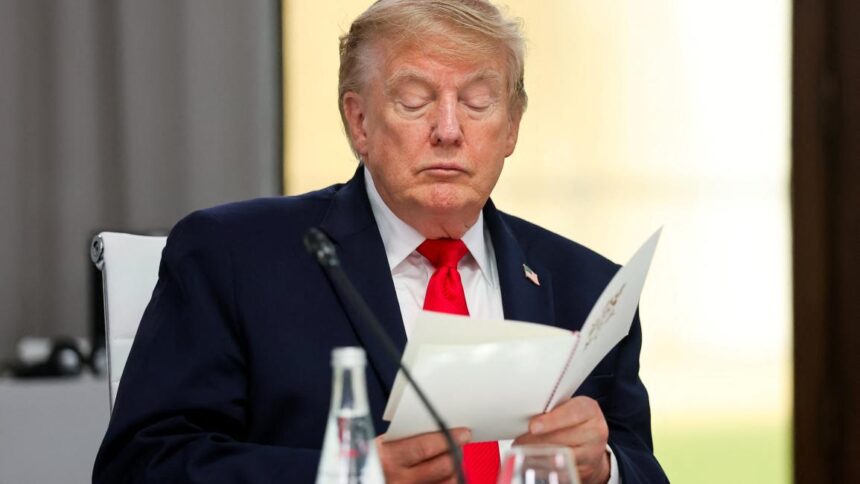
US President Donald Trump accused Tehran of violating the ceasefire agreement, saying the United States had responded by striking Iranian military sites. “There may come a point where we can no longer act rationally and will have to finish the job militarily,” Trump wrote on Truth Social. “If that happens, the Islamic Republic of Iran will cease to exist.”
Iran condemned the strikes, describing them as a clear violation of both the ceasefire memorandum and the United Nations Charter. The Foreign Ministry said the attacks demonstrated that Washington could not be trusted to honour its commitments.
In response, Iran’s Revolutionary Guards said they had launched missiles and drones at what they described as US military positions in Bahrain and Kuwait. The Guards also warned that any future violations of the ceasefire would bring a “crushing response” and threatened tougher action against vessels they consider to be operating in violation of Iranian instructions in the Strait of Hormuz.
Bahrain said its air defences intercepted and destroyed several Iranian missiles and drones targeting the kingdom, while Kuwait’s military said its air defence systems engaged hostile missiles and unmanned aircraft. Both governments condemned the attacks as violations of their sovereignty and announced additional defensive measures.
The attacks triggered a wave of regional condemnation. Egypt denounced the strikes “in the strongest terms,” describing them as a blatant violation of the sovereignty of Bahrain and Kuwait and a threat to regional stability. Cairo reaffirmed its full solidarity with both countries and urged all parties to remain committed to the ongoing diplomatic process and the peaceful resolution of disputes.
Qatar likewise condemned the missile and drone attacks, calling them a clear violation of international law and urging all sides to continue dialogue and build on the gains achieved through the US-Iran memorandum of understanding. Jordan, Oman, Lebanon, and the Arab League also condemned the attacks, warning that they risk undermining efforts to prevent a broader regional conflict.
The Gulf Cooperation Council described the attacks as a direct threat to the security of Bahrain and Kuwait and accused Iran of jeopardising regional and international efforts aimed at consolidating peace.
As military tensions mounted, Iranian Foreign Minister Abbas Araghchi travelled to Baghdad for talks with Iraqi leaders on bilateral relations and regional developments. Speaking alongside his Iraqi counterpart, Araghchi warned that attempts to establish alternative arrangements for managing the Strait of Hormuz without Iran would only increase tensions and delay the full reopening of the strategic waterway.
“All parties must adhere to the memorandum of understanding and prevent it from deviating from its intended course,” he said.
Meanwhile, Israel maintained a hard line towards Iran. Prime Minister Benjamin Netanyahu reaffirmed Israel’s commitment to protecting its security interests against Tehran and announced that an Israeli delegation would travel to Washington for consultations on Iran’s nuclear programme. Defence Minister Israel Katz also warned that Israel would respond forcefully to any future Iranian attack.
The renewed exchange of strikes came as Lebanon and Israel continued to grapple with the implementation of a recently signed framework agreement in Washington, adding another layer of uncertainty to diplomatic efforts aimed at reducing tensions across the Middle East.