

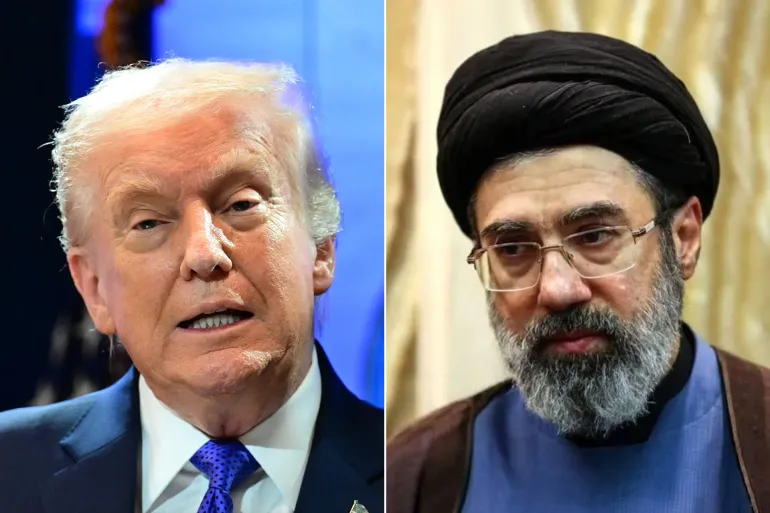
The United States and Iran made significant progress in their first round of high-level talks in Switzerland, agreeing on a roadmap aimed at reaching a comprehensive agreement within 60 days and establishing a direct communication mechanism to prevent misunderstandings and safeguard commercial navigation through the Strait of Hormuz.
In a joint statement issued on Monday, Qatar and Pakistan announced the conclusion of the first round of negotiations, which took place with mediation from both countries. The statement said the parties had agreed to create a communication channel to manage incidents and reduce tensions while continuing efforts towards a final settlement.
The talks marked the most substantial diplomatic engagement between Washington and Tehran since the signing of a memorandum of understanding designed to halt hostilities across the region and lay the groundwork for a broader agreement.
Iranian Foreign Minister Abbas Araghchi described the discussions as a major step forward, praising what he called the persistent efforts of Qatari and Pakistani mediators.
“The mediation has achieved significant progress towards ending the war in Lebanon,” Araghchi wrote on X. He added that Iranian oil and petrochemical exports had been exempted from sanctions, the naval blockade had been lifted, some frozen assets had been released, and a major reconstruction plan for Iran had been launched.
US Vice President J.D. Vance also struck an optimistic tone, saying the negotiations had established a strong foundation for a lasting agreement.
“We have laid a very serious foundation for a successful final agreement,” Vance told reporters at the Bürgenstock resort near Lake Lucerne. “The final agreement is the house. We have not built the house yet, but we have laid the foundation.”
According to a US diplomat quoted by Axios, the negotiations focused heavily on mechanisms for implementing the Lebanon ceasefire, preventing military incidents and ensuring freedom of navigation through the Strait of Hormuz. Washington reiterated that the waterway must remain fully open, and officials reported encouraging progress on that issue.
The diplomat said both sides also reviewed all elements of a future nuclear agreement and discussed procedures for implementing the provisions of the memorandum of understanding, alongside plans for continued dialogue at both the political and technical levels.
However, differences remain. Iran’s Fars News Agency cited an informed source rejecting claims by Vance that Tehran had agreed to allow inspectors from the International Atomic Energy Agency to return to the country. The source said the issue had not been discussed during the Swiss meetings.
Despite those disagreements, signs of economic easing emerged. US Energy Secretary Chris Wright announced that Washington had issued a temporary 60-day general licence permitting the production and sale of Iranian oil, describing the move as part of the understandings reached during the talks.
Switzerland, which hosted the negotiations, said conditions were now in place for technical discussions between the two sides to begin immediately.
The diplomatic momentum has also prompted broader regional engagement. The US State Department announced that Secretary of State Marco Rubio will begin a tour of the United Arab Emirates, Kuwait and Bahrain on Tuesday to discuss implementation of the memorandum with Iran, freedom of navigation through the Strait of Hormuz and regional security. Rubio is also expected to attend a Gulf Cooperation Council meeting in Bahrain.
Meanwhile, maritime traffic has gradually resumed despite lingering uncertainty. According to data cited by the Associated Press from analytics firm Kpler, 71 confirmed vessel transits were recorded through the Strait of Hormuz over the weekend, including 35 on Saturday alone. While the central shipping lane remains closed, vessels are currently using smaller routes through Iranian and Omani waters.
The outcome of the Swiss talks suggests that both sides remain committed to diplomacy despite persistent disagreements, with negotiators now turning their attention to technical discussions that could determine whether the current ceasefire evolves into a broader and more durable settlement.


