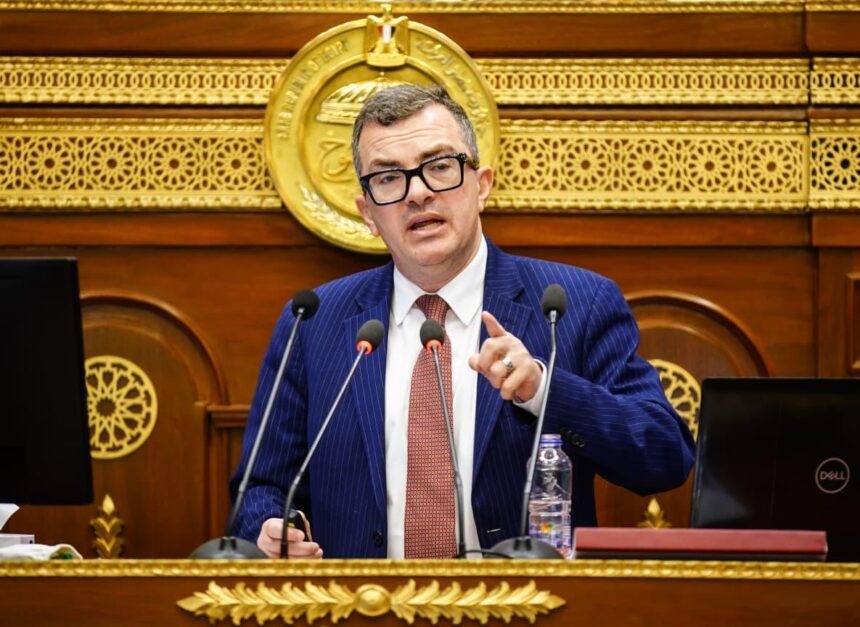
Ahmed Rostom, Minister of Planning and Economic Development, said the philosophy underpinning Egypt’s economic and social development plan for fiscal year 2026/27 and the medium-term development strategy through 2029/30 is based on striking a careful balance between investment-driven growth and social protection.
He explained that the plan seeks to support production and private-sector activity in key sectors including industry, agriculture, and communications, while ensuring fairness in the distribution of development gains through expanded social spending.
“The figures and indicators included in this plan are ultimately translated into tangible projects,” Rostom said. “They mean new classrooms that provide our children with quality education, hospital beds and health units that ease patients’ suffering, real job opportunities for young people, and villages transformed through the Decent Life initiative.”
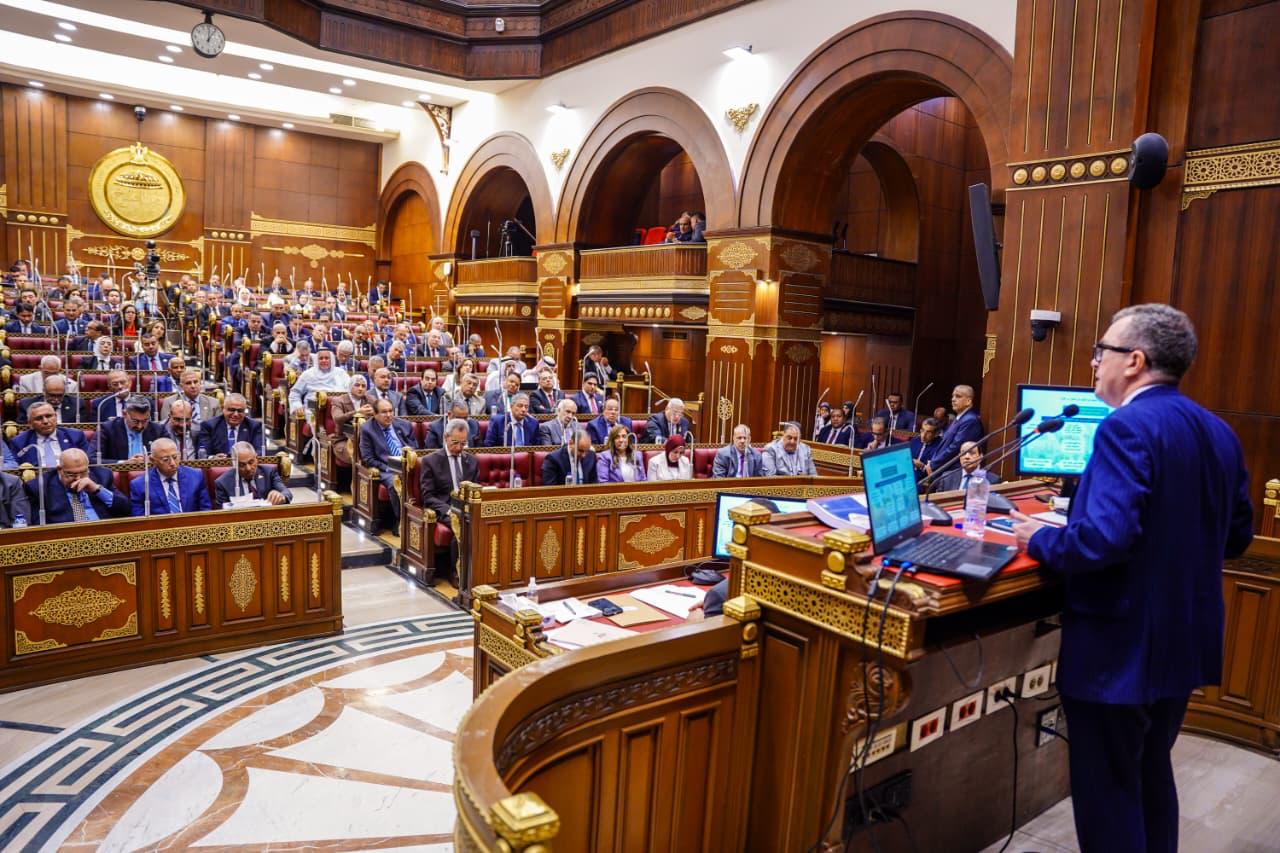
The remarks were delivered during a plenary session of the Senate, chaired by Essam El-Din Farid, during which the minister reviewed the main features of the government’s development plan.
Rostom said the economic and social development plan, together with the medium-term framework through 2029/30, reflects the Egyptian state’s commitment to placing citizens at the heart of the development process. He noted that the plan’s central theme is “building people”, translating President Abdel Fattah Al-Sisi’s directives that citizens should be both the foundation and ultimate objective of development efforts.
“This vision has been reflected in increased allocations for education, healthcare, and both basic and productive services,” he said.
The minister stressed that the Decent Life initiative remains at the forefront of the government’s priorities. He described the presidential programme as a source of national pride, noting that the government is working to complete its first phase while simultaneously preparing to launch the second.
Rostom noted that the development plan is being implemented against a backdrop of mounting global and regional challenges, including geopolitical tensions and international economic pressures that continue to affect supply chains and inflation levels worldwide.
Despite these challenges, he said, the government has chosen to expand rather than reduce spending on human development.
“We firmly believe that investments made today in the Egyptian citizen will generate returns tomorrow in the form of healthy, educated individuals equipped with suitable employment opportunities,” he said.
According to Rostom, the draft plan demonstrates the resilience of the Egyptian economy and its ability to move beyond the stage of absorbing shocks towards a phase of sustainable growth and job creation.
He emphasised that the government’s objective is not simply to achieve higher growth figures, but to ensure that citizens across Egypt’s cities and villages feel the benefits of every percentage point of growth and every investment made.
The minister outlined the plan’s key economic and social priorities, which include improving living standards, enhancing the quality of public services, increasing productivity, strengthening energy and food security, accelerating the rollout of the comprehensive health insurance system, and raising growth rates across all sectors of the economy.
Turning to investment targets, Rostom said total investments for fiscal year 2026/27 are projected to reach approximately EGP 3.7trn. Public investments are expected to account for 41% of the total, equivalent to EGP 1.5trn, while private-sector investments will represent 59%, or around EGP 2.2trn. The investment-to-GDP ratio is projected at approximately 17%.
He noted that government measures aimed at regulating public investments and rationalising expenditure have yielded positive results, contributing to sustained growth in private-sector investments and strengthening the sector’s role in economic activity.
As part of the government’s strategy to invest in human capital, Rostom announced that allocations to the health sector will increase by 25% in the next fiscal year, in line with presidential directives to support healthcare services, particularly the comprehensive health insurance programme.
The plan also includes an 11.5% increase in allocations for pre-university education to support both general and technical education, alongside an 11% increase in higher education spending.
Meanwhile, allocations for utilities, drinking water and sanitation projects, and social housing will rise by 22% and 21%, respectively, to improve the quality and accessibility of essential services for citizens.
Concluding his remarks, Rostom described the draft plan as an ambitious roadmap and a practical commitment to fulfilling the aspirations of the Egyptian people.
“Through this plan, we are building a strong and sustainable economy that places citizens at the forefront of its objectives,” he said.