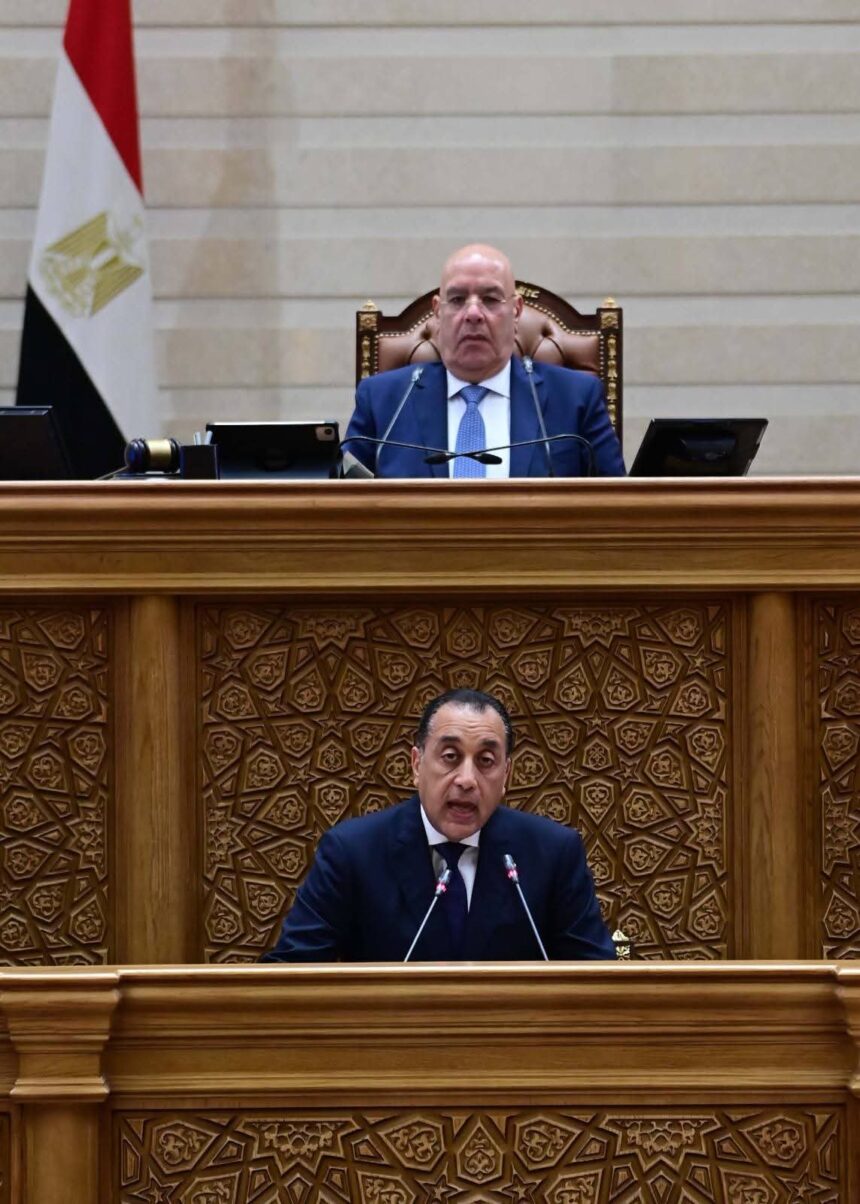
Egypt has raised approximately $6bn through the execution of 19 full and partial state exit deals, achieving 48% of its $12.2bn target under the government’s offering programme up to June 2025, Prime Minister Mostafa Madbouly told parliament on Tuesday.
The announcement comes as Egypt navigates the severe economic fallout from a two-month-old US-Israeli-Iranian conflict. Madbouly stated that Egyptian diplomacy, led by President Abdel Fattah al-Sisi, has focused on supporting Gulf states against sovereign violations and pushing for a political resolution to halt the war.
Addressing the global economic shock, Madbouly noted that attacks on Middle Eastern energy infrastructure caused a historic contraction in oil supplies. Crude exports through the Strait of Hormuz plunged from 20 m barrels per day (bpd) to 3.8 m bpd, pushing global oil prices to peak at $120 a barrel before averaging $95. He warned prices could reach $150 to $200 if the situation worsens.
The crisis has significantly increased Egypt’s financial burden, with the monthly natural gas import bill surging by $1.1bn to reach $1.65bn. In response, the government raised domestic fuel prices and implemented energy rationalisation measures, including early shop closures, a 30% cut in government vehicle fuel allocations, and a three-month pause on heavy diesel-consuming projects. A mandate for remote government work one day a week during April saved 4,700 megawatt-hours (MWh) and 980,000 cubic metres of fuel, contributing to total first-week savings of 18,000 MWh and 3.5 million cubic metres of fuel.
The Prime Minister cited international warnings to illustrate the global strain, noting the UN World Food Programme described global food supply disruptions as the most severe since the COVID-19 pandemic and the Ukraine war, while the FAO food price index rose 2.4% in February. The regional tourism sector is losing an estimated $600 m daily due to flight cancellations, according to the World Travel and Tourism Council.
Furthermore, the IMF cut its April 2026 global growth forecast from 3.3% to 3.1%, predicting a drop to 2% if the war persists, while global inflation is expected to accelerate to 4.4%. The World Bank lowered its Middle East and North Africa growth forecast for 2026 to 1.8%.
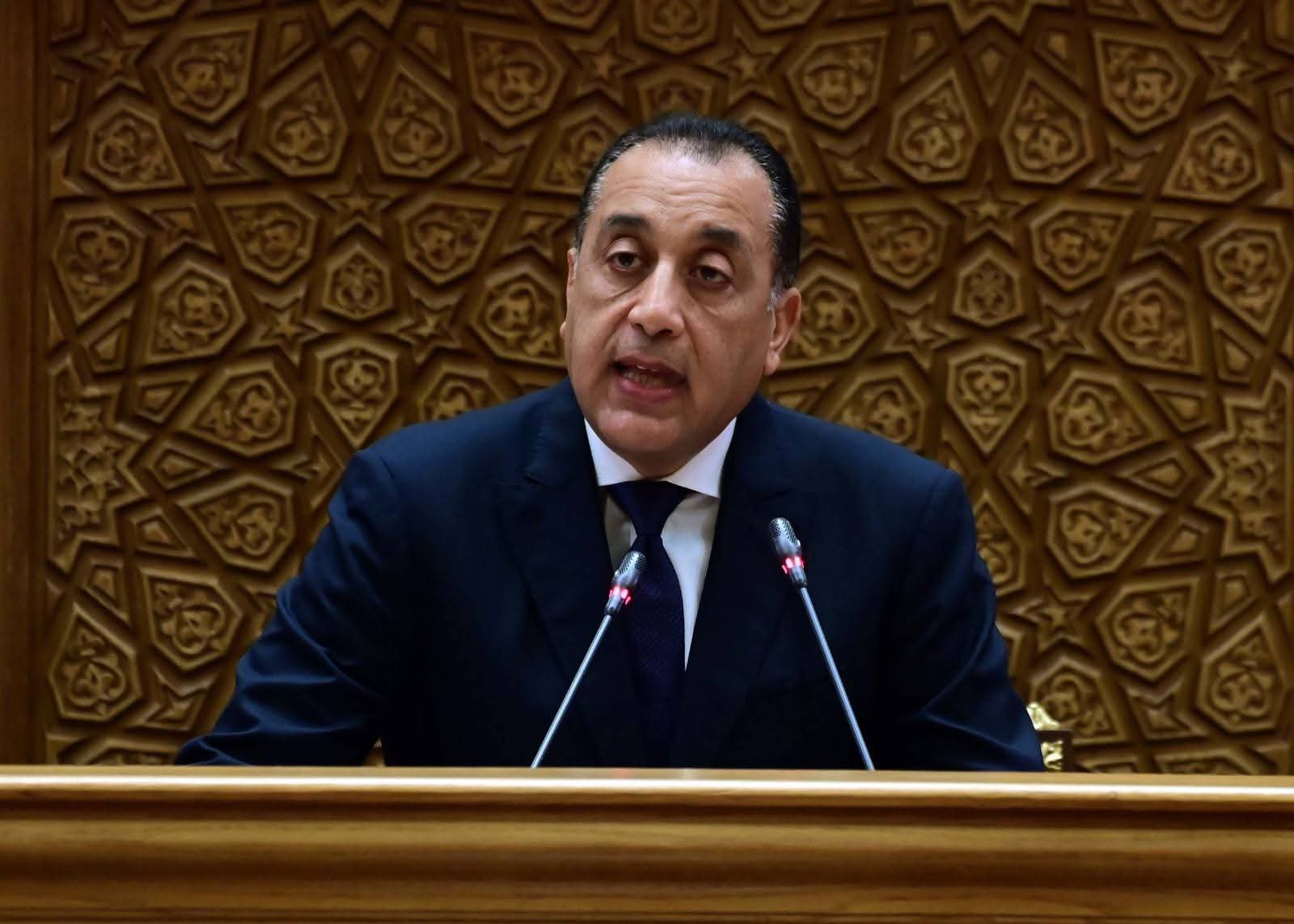
To manage domestic pressures, the government secured strategic goods and foreign exchange through coordination with the Central Bank of Egypt, maintaining a flexible exchange rate and inflation targeting. Madbouly announced that public sector wages will increase by 21% in the 2026/27 fiscal year budget, raising the minimum wage to EGP 8,000 a month starting in July at a total cost of EGP 100bn. This follows a February cash support package exceeding EGP 40bn for 15 million families.
Looking ahead, Egypt aims to generate 45% of its electricity from renewable sources by 2028, up from 9,366 megawatts (MW) in 2025, which would save $7bn annually in gas imports. The government will add 2,500 MW of renewable energy and 920 MW of battery storage to the grid in 2026, alongside an EGP 200bn grid upgrade plan.
In the petroleum sector, the government plans to clear all foreign partner arrears by June 2026, down from $6.1bn in June 2024. For food security, Egypt aims to procure 5 million tonnes of local wheat this season at EGP 2,500 per ardeb, an increase of EGP 300 from the previous year.
Prior to the conflict, Egypt’s economy showed strong signs of recovery. Foreign exchange reserves reached a record $52.8bn at the end of March 2026, and inflation fell from a peak of 38% to 11.9% in January 2026. In the first half of the 2025/26 fiscal year, GDP grew by 5.3%. Foreign direct investment recorded a net inflow of $9.3bn, while the current account deficit narrowed by 13.6% to $9.5bn. Remittances jumped 29.6% to $22.1bn, and tourism revenues rose 17.3% to $10.2bn. External debt was reduced by $3.9bn between June 2023 and early April 2026, aided by the Ras Alam El Roum deal.
The government’s 2026/27 economic plan targets EGP 3.8 trillion in total investments, with the private sector expected to contribute 60%. Private investments already accounted for 66% of total investments in the first quarter of the 2025/26 fiscal year, supported by the February 2026 launch of a unified startup charter. Additionally, the government is executing 623 health projects and 1,304 education projects for the upcoming fiscal year.