

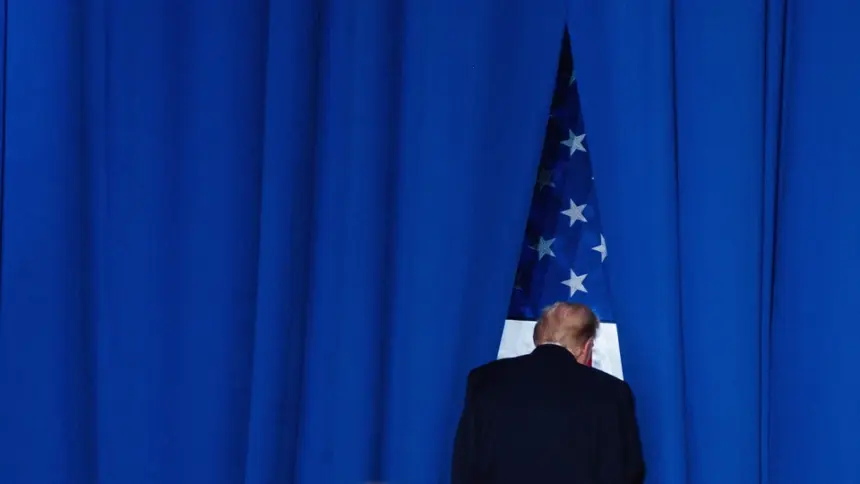
Three weeks into a war he launched against Iran, Donald Trump stood before cameras this week and declared the campaign was, in effect, already over. The United States and Israel had been so successful, he said, that the conflict was “largely done in the first two or three days.” Yet at the very moment he spoke, Iranian strikes were reverberating across the Gulf, a critical global energy chokepoint remained effectively sealed, and his own Pentagon was asking Congress for an additional $200bn to sustain the fight.
The contradiction at the heart of America’s Iran war — between the triumphalist rhetoric from the White House and the grinding, costly reality on the ground — has revived an uncomfortable parallel that haunts Washington’s foreign policy establishment: the spectre of Iraq and Afghanistan. For a president who built two electoral victories partly on the resentment those conflicts generated, and who in 2019 called the invasion of the Middle East “the worst mistake the United States has ever made,” the question posed increasingly by analysts and former officials on both sides of the aisle is stark: has Trump, the self-styled champion of “America First,” engineered a quagmire of his own making?
That question — and the absence of a clear answer — defines the most consequential foreign policy moment of Trump’s second term. It is, as Ilan Goldenberg, a former Middle East adviser to the administrations of Presidents Joe Biden and Barack Obama, put it bluntly: “a recipe for a quagmire.”
Shifting Goalposts and a $200bn Price Tag
The scale of America’s military commitment has expanded at a pace that critics say echoes the mission creep that defined the post-2001 wars. The Pentagon confirmed on Thursday that it had formally requested $200bn in supplementary funding from Congress to sustain the war effort — a figure roughly equivalent to the combined annual budgets of the US Departments of Education, Health and Human Services, and Housing and Urban Development.
Trump won two presidential races by tapping into the bitterness felt by voters who watched governments spend trillions of dollars and thousands of American lives in Iraq and Afghanistan. As recently as 2019, he was categorical: “The worst mistake the United States ever made was going into the Middle East. It’s a quagmire.” He also attacked the 2003 Iraq invasion directly, asking: “They had no weapons of mass destruction.”
Now, according to Goldenberg, his administration “has trouble even identifying a single casus belli for the war on Iran.” The stated rationales include permanently preventing Tehran from acquiring a nuclear weapon, ending its support for terrorism, restoring energy flows, and protecting American interests and allies — objectives so broad, Goldenberg argued, that the administration has “set itself impossible-to-meet conditions.”
‘Iran Is Winning by Simply Surviving’
Perhaps no voice carries more weight in the current debate than that of Ryan Crocker, who served as US Ambassador to both Iraq and Afghanistan. His assessment is sobering: “Iran is winning, as they say, simply by staying alive, and they have clearly demonstrated their ability to survive.”
Crocker catalogued the claimed military gains — an Iranian fleet reduced to the ocean floor, a 90 per cent reduction in ballistic missile launches, the reported destruction of ground forces and air power — before delivering his counterpoint: “Just the thought that there might be a mine was enough to prevent ships from crossing the Strait of Hormuz. And Iran’s missiles are still penetrating American defences.”
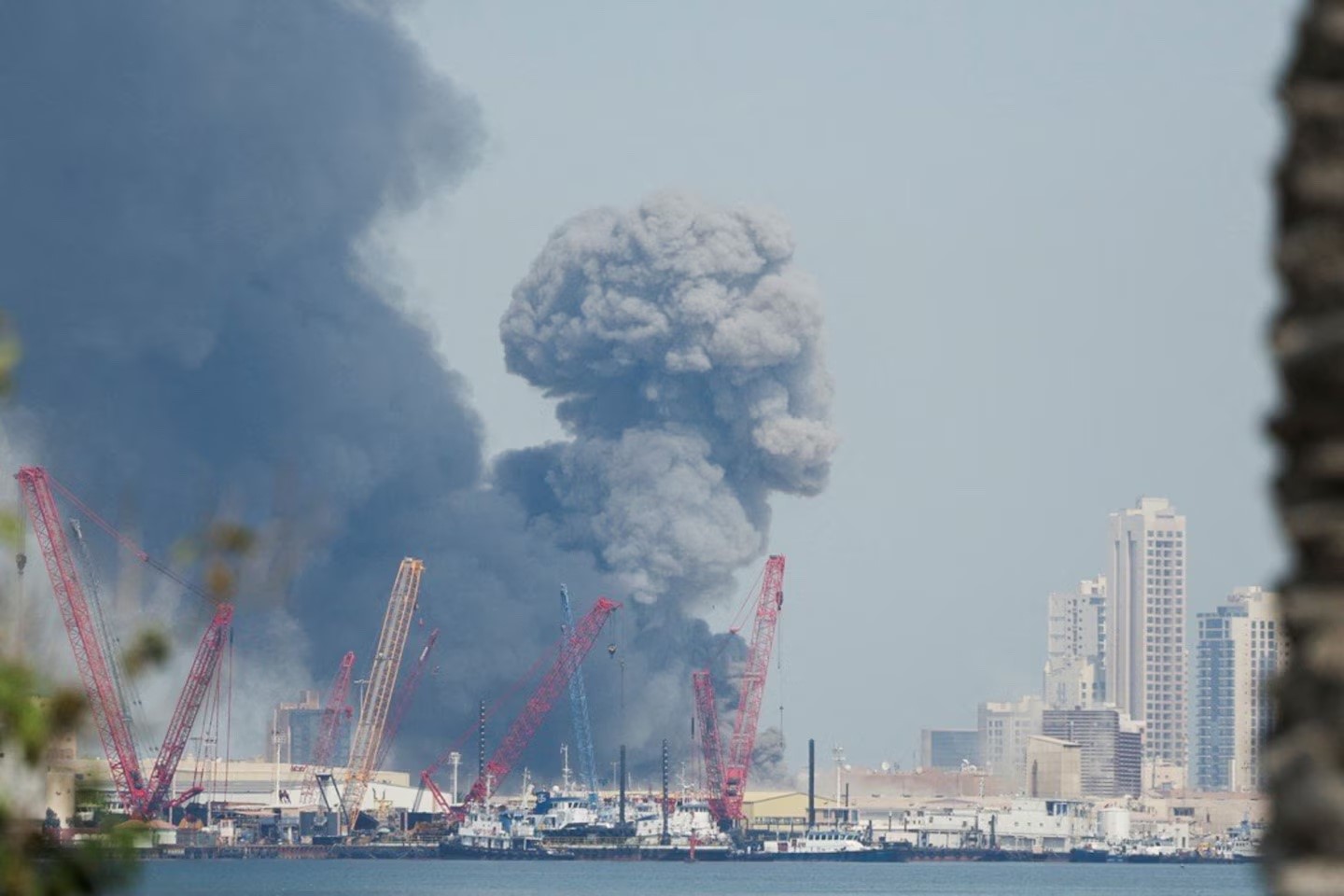
The Strait of Hormuz, through which approximately one-fifth of the world’s oil supply passes, remains effectively closed — a fact that has transformed a regional military conflict into a global energy crisis, driving fuel prices up by 33 per cent, according to the Financial Times.
A Fractured Coalition and an Undefeated Regime
Iran retains both the capability and the motivation to prolong the conflict. Tulsi Gabbard, the US Director of National Intelligence, told Congress this week that the Iranian regime — the very one Trump had promised to “hand over” to the Iranian people — remained “largely intact” and was already positioned to rearm and recover once hostilities ceased.
John Bolton, Trump’s former National Security Adviser, acknowledged the structural problem plainly: “At the outset, he was in favour of regime change, but when the job is not done… you end up with a regime that may be exhausted but immediately reverts to what it was doing before.”
‘This Is Not One of Those Wars’
Administration officials have pushed back forcefully. Defence Secretary Pete Hegseth was unequivocal on Thursday: “The idea that we are somehow heading towards an endless pit or an endless war or a quagmire — nothing could be further from the truth. This is not one of those wars.” Vice President JD Vance added: “I guarantee you that the President of the United States is not interested in getting us into long-term quagmires like the ones we’ve seen over the last several years.”
Senator Elissa Slotkin, a Democrat and former CIA analyst, was equally direct in the other direction: “You don’t need a CIA analyst to figure out that we have not won.”
The Insurgency Trap
Adam Winestein, a Middle East analyst at the Quincy Institute for Responsible Statecraft, identified the systemic danger: “A regime committed to rebuilding will put enormous pressure on the Trump administration and future American presidents to prevent that. That is a recipe for a permanent war.”
Goldenberg supplied the structural logic: “The reason counter-insurgency is so hard, the reason we got into these quagmires in Iraq and Afghanistan, is that a counter-insurgency mission is to completely control everything and prevent the insurgent from making progress. All the insurgent needs to do is show up here, kill some people, then disappear.”
No Easy Exit
Three weeks in, the Strait of Hormuz remains closed. Fuel prices are up a third. The Pentagon wants $200bn more. And Iran, by the account of Trump’s own intelligence chief, is still standing.
In 2019, Trump surveyed America’s interventions in the Middle East and offered a verdict that resonated with millions of voters: “It’s a quagmire.” Six years later, as his administration struggles to define what victory in Iran would even look like, the word has a new and uncomfortably personal resonance.

