Egypt has called for urgent de-escalation in the Middle East as military escalation between Iran, Israel and the United States intensifies, while U.S. President Donald Trump signalled the possibility of a diplomatic breakthrough with Tehran.
In a statement, Cairo said it was closely monitoring the rapidly evolving situation and strongly condemned attacks targeting Gulf states and Jordan, stressing the importance of respecting their sovereignty. It warned of the serious consequences of continued escalation on regional stability, as well as its economic and commercial repercussions regionally and globally.
The Egyptian foreign ministry added that it was intensifying diplomatic contacts and consultations with all concerned parties to help de-escalate tensions and prevent further deterioration, emphasising coordination with regional and international partners to contain the crisis and avoid a broader conflict.
Cairo also welcomed ongoing diplomatic efforts, including recent signals from Washington, stressing the need to prioritise dialogue over military confrontation to reach a comprehensive settlement. Egypt reiterated its commitment to maintaining open channels with all parties to support negotiations and safeguard regional and international peace and security.
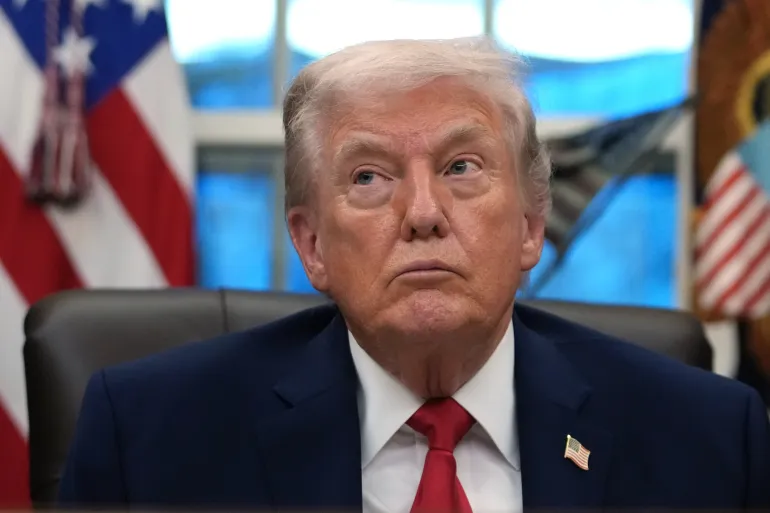
Against this backdrop, Trump said Washington and Tehran were engaged in what he described as “constructive” and potentially productive talks, raising the prospect of an agreement. He noted that U.S. envoys Steve Witkoff and Jared Kushner had held discussions with Iranian counterparts, with further talks expected by phone.
“We don’t want Iran to have a nuclear weapon and we want peace in the Middle East,” Trump said, expressing hope for a settlement and adding that Tehran “wants to make a deal and we want to make a deal too.”
He said he had ordered a five-day delay to planned strikes on Iranian energy infrastructure, including power stations, to give diplomacy a chance. Trump added that a potential agreement could include up to 15 points and might deliver “long-term guaranteed peace” for Israel and the region, while acknowledging there was no certainty a deal would be reached.
At the same time, Trump reiterated that Iran posed a long-standing threat, warning that without recent U.S. military action, Tehran could have developed a nuclear weapon “within two weeks.” He also suggested that any agreement would make access to enriched uranium “very easy,” without elaborating.
Iranian officials swiftly denied that any negotiations were taking place. State television, citing senior sources, described Trump’s claims as “not true” and framed them as an attempt to walk back earlier threats to strike Iran’s electricity infrastructure.
A source cited by Fars News Agency also denied any direct or indirect negotiations, while Iran’s foreign ministry said U.S. statements were aimed at lowering energy prices and buying time for military planning. Tehran maintained that any diplomatic engagement must involve Washington as a direct party and insisted it had not initiated the conflict.
Despite the diplomatic signals, military activity continued to escalate. Iranian media reported a new wave of large-scale airstrikes on Tehran targeting multiple locations across the capital, with explosions heard throughout the day. No official casualty figures were immediately available.
The Islamic Revolutionary Guard Corps said it had launched its 76th wave of missile attacks, while Hezbollah carried out strikes targeting northern Israel, underscoring the widening scope of the conflict.
In the Gulf, the United Arab Emirates said its air defences intercepted seven ballistic missiles and a drone launched from Iran, as concerns mounted over maritime security. Meanwhile, Oman’s foreign minister Badr al-Busaidi said Muscat was working intensively to ensure safe passage through the Strait of Hormuz, warning of severe economic consequences if tensions persist.
Separately, reports of U.S. strikes near Iran’s Bushehr nuclear power plant drew concern from Russia over the risk of nuclear contamination, highlighting the potential for broader environmental and geopolitical fallout.
Efforts to mediate remain ongoing. Axios reported that Türkiye, Egypt and Pakistan had conveyed messages between Washington and Tehran in recent days, with senior officials holding separate talks with Witkoff and Iranian Foreign Minister Abbas Araghchi in a bid to reduce tensions.
Meanwhile, Japan denied a U.S. claim that it had committed part of its naval fleet to protect shipping in the Strait of Hormuz, though officials in Tokyo reaffirmed support for diplomatic efforts to resolve the crisis.
In Israel, the Maariv newspaper reported that a cabinet meeting on the war had been postponed following Trump’s remarks about “very good” talks with Iran, suggesting that political calculations may be shifting alongside military developments.
As conflicting narratives over diplomacy and continued escalation unfold simultaneously, the situation remains highly volatile, with uncertainty over whether negotiations can gain traction before the conflict expands further.