Egypt will raise the national minimum wage and implement a package of government spending cuts to mitigate the domestic economic impact of regional military escalation, Prime Minister Mostafa Madbouly announced on Monday.
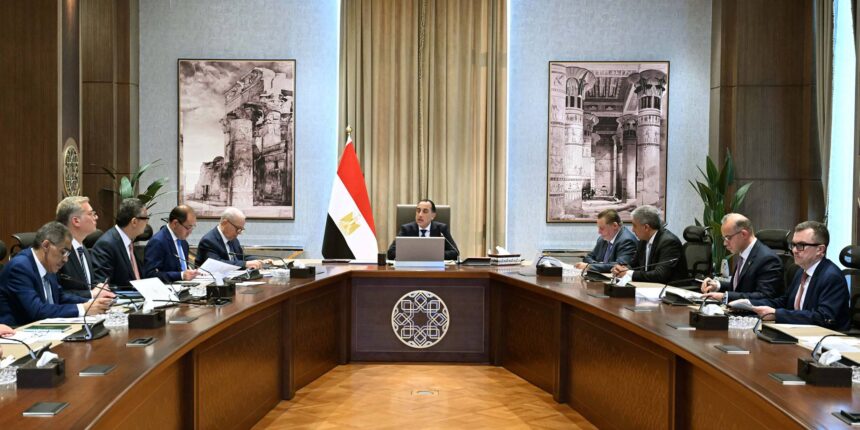
The decisions were made during a meeting of the Central Crisis Management Committee, chaired by Madbouly, to monitor the repercussions of US-Israeli operations in Iran and broader regional developments. The committee, which will now meet periodically, includes Deputy Prime Minister for Economic Affairs Hussein Issa, Central Bank Governor Hassan Abdalla, and the ministers of finance, tourism, supply, petroleum, investment, information, and planning, alongside Foreign Minister Badr Abdelatty.
Madbouly stated that Egypt strongly condemns repeated attacks by Iran against the Arab Gulf states, Jordan, and Iraq. He affirmed Egypt’s full solidarity with its “sisterly Arab nations,” demanding an immediate halt to all aggressions and a rejection of any violation of their sovereignty or territorial integrity. The Prime Minister added that Arab national security is an “indivisible part” of Egyptian national security.
To address the economic fallout, the committee approved a suite of measures to rationalise government expenditure and consumption. Cabinet spokesperson Mohamed El-Homsany said the measures include the cancellation of government events, a reduction in official foreign travel, and a decrease in training courses. Further details of these cuts are expected to be announced soon.
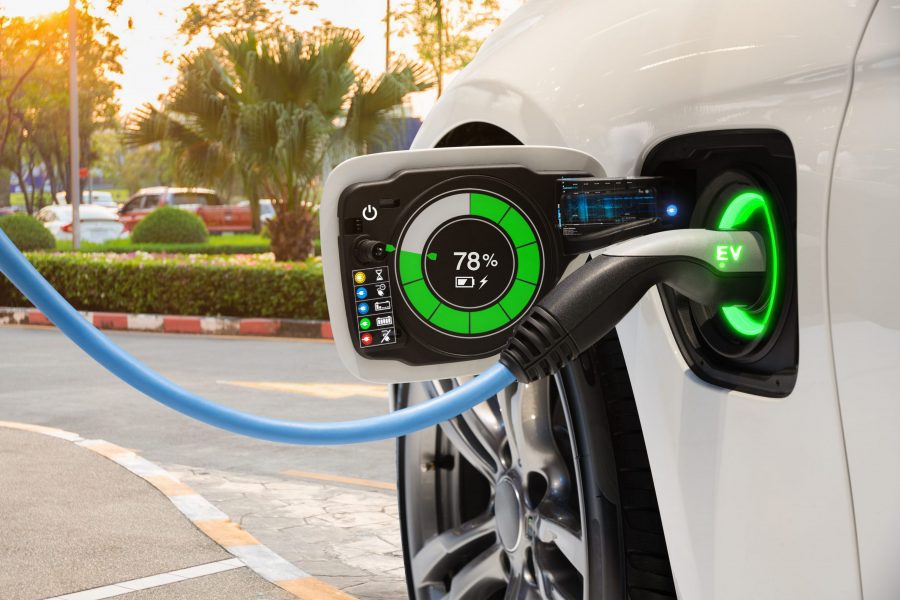
The government also plans to implement a strategy to govern road lighting and billboard electricity use, review fuel consumption across sectors, and accelerate the operation of mass transit systems. The plan further encourages the conversion of vehicles to natural gas, the use of electric vehicles, and a reduction in the volume of non-essential finished goods imports.
Amid these austerity measures, Madbouly underscored the importance of social protection for low-income citizens. He noted that in addition to recently announced social packages, the government will announce new measures in the coming days, including an increase in the minimum wage.
The meeting addressed the impact of the ongoing conflict on the tourism and petroleum sectors. Petroleum Minister Karim Badawi reported significant increases in the prices of petroleum products and gas, alongside rising transport costs and the closure of several regional oil fields.
Madbouly stressed the need to maintain regular payments to international oil companies to incentivise exploration and production. He also directed officials to accelerate the government “offerings” programme—referring to the sale of stakes in state-owned assets—and to increase foreign currency resources by attracting investment and enhancing the role of the private sector.
The committee reviewed various scenarios prepared by ministries to handle potential market disruptions, with Madbouly reiterating the necessity of maintaining economic stability in the face of external challenges.