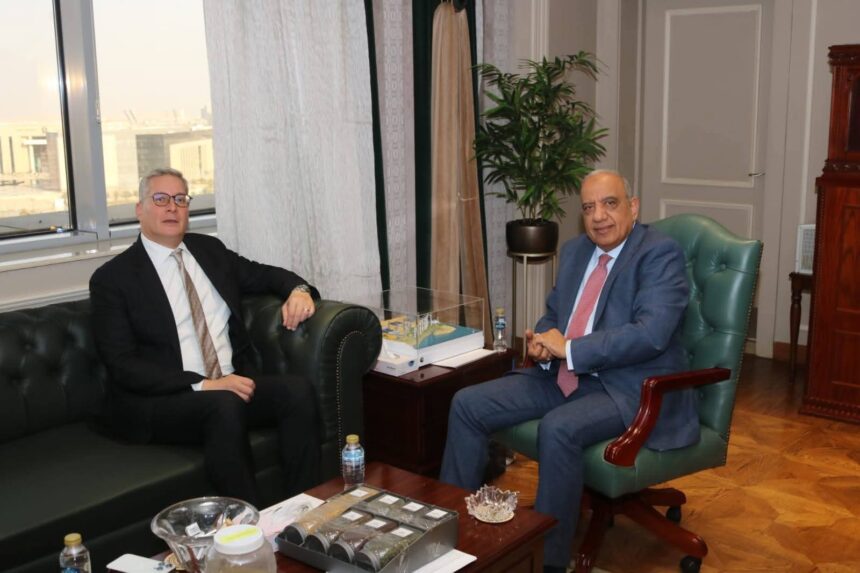
Mahmoud Esmat, Minister of Electricity and Renewable Energy, and Karim Badawi, Minister of Petroleum and Mineral Resources, held a meeting on Wednesday to review and assess the action plan as part of ongoing preparations to meet the expected increase in energy demand next summer, amid higher consumption and rising loads.
The meeting was attended by Gaber Desouky, Chairperson of the Egyptian Electricity Holding Company; Mahmoud Abdel Hamid, Managing Director of the Egyptian Natural Gas Holding Company (EGAS); Mohamed Marzouk, Chairperson of GASCO; along with a number of senior officials from both ministries.
Discussions were held within the framework of the national energy strategy and the work programmes of the Ministries of Electricity and Renewable Energy and Petroleum and Mineral Resources, aiming to ensure the availability of electricity with quality, stability, and continuity across all voltage levels and uses. The meeting reflected the close partnership, joint work, and continuous coordination between the two ministries to secure the fuel required for power generation plants, building on last summer’s success and the lessons learned.
During the meeting, the two ministers reviewed work plans, scenarios, and alternative options across the electricity and petroleum sectors to secure fuel supplies and ensure the stability and continuity of electricity generation. Preparations to address potential and evolving variables were also examined, in line with achieving targeted objectives and maintaining the stability of the unified national grid during peak periods.
The meeting also discussed indicators pointing to rising energy demand compared with last year’s peak loads, which were the highest in the history of the national grid. It further reviewed the continuous monitoring of future demand indicators by joint working committees tasked with securing fuel supplies for power plants, in line with the state’s industrial, agricultural, and urban development plans.
In addition, the meeting reviewed efforts undertaken by the electricity sector over the past period to adjust operating patterns, increase returns per unit of fuel used, reduce reliance on conventional fuels, improve performance and energy efficiency, and add 2,000 MW of renewable energy capacity before last summer, as part of broader efforts to expand the share of renewables in the energy mix.
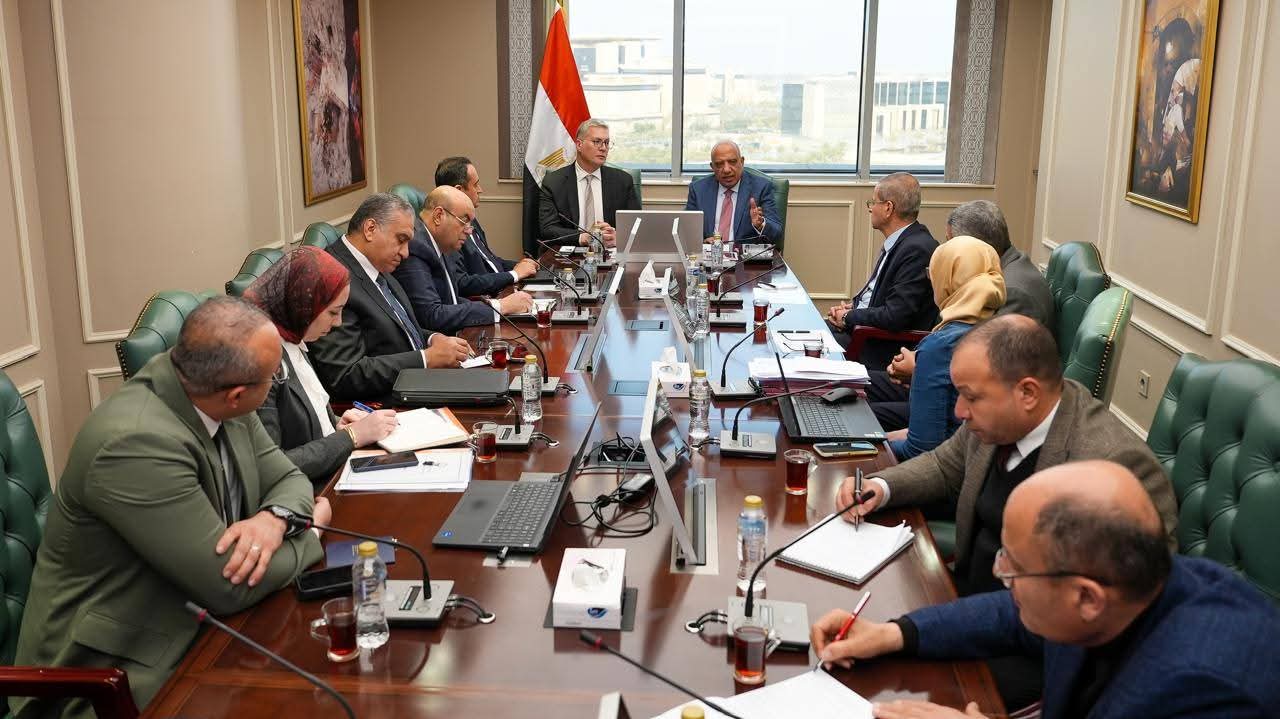
For his part, Esmat said that continuous coordination and cooperation are underway among all relevant state entities, particularly the Ministries of Electricity and Renewable Energy and Petroleum and Mineral Resources, to secure electricity supplies and ensure the sustainability and stability of the power grid. He noted that the success achieved last summer, despite record-high loads and unprecedented growth in energy demand, was the result of joint efforts by all concerned bodies.
“In the electricity sector, we have changed the operating patterns of power plants, applied quality and economic operation standards, and succeeded in reducing fuel consumption per kilowatt-hour to less than 170 grams,” he said. Esmat added that starting next week, new renewable energy capacities will begin to be connected to the grid, with a total of 2,500 MW expected to be added before next summer.
He also stressed the continued implementation of the national energy strategy, diversification of power generation sources, expansion of renewable energy, and enhancement of its returns through the use of energy storage technologies. He pointed to plans to expand both grid-connected and standalone storage projects to strengthen grid stability during peak periods.
Esmat further underlined ongoing efforts to improve service quality, enhance overall system efficiency, raise the operational performance of affiliated companies, stabilise electricity supply, and meet power needs within the framework of the state’s sustainable development plan.
Meanwhile, Badawi reaffirmed the continuation of integrated coordination and pre-emptive planning between the Ministries of Petroleum and Electricity to secure the natural gas and petroleum product requirements of power generation plants in 2026.
He noted that this builds on the successful coordination achieved last summer, which saw the highest electricity loads in Egypt’s history, as teams from both ministries worked around the clock to align fuel supplies with the operational needs of power plants.
Badawi added that the Ministry of Petroleum and Mineral Resources has developed multiple scenarios this year to address potential changes in consumption rates and ensure flexibility in the supply of gas and petroleum products. This flexibility, he said, is based on diversifying supply sources, ensuring the ability to meet varying demand levels, and responding swiftly to any developments.