

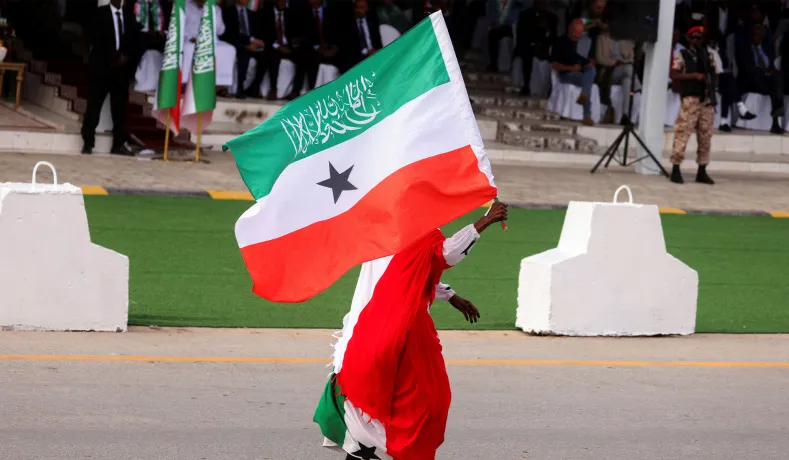
A few days ago, Israeli Prime Minister Benjamin Netanyahu officially announced Israel’s recognition of the so-called “Republic of Somaliland.” For those unfamiliar with the entity, Somaliland is a self-declared region within the internationally recognized state of Somalia. It has remained unrecognized by the international community for decades, with Taiwan being the only previous exception. In recent months, its name has resurfaced repeatedly as one of the proposed destinations for the forced displacement of Palestinians from the Gaza Strip, within the framework of a relocation plan promoted by U.S. President Donald Trump following his return to the White House—a plan aimed at liquidating the Palestinian cause and transforming Gaza into a luxury tourist destination under the label “Gaza Riviera.”
The recognition itself was hardly surprising. Since last April, intensive and largely covert contacts have reportedly taken place, coordinated by Israeli Foreign Minister Gideon Sa’ar and involving reciprocal visits by senior officials from both sides. These efforts culminated in a statement by the so-called foreign minister of Somaliland to the Israeli Broadcasting Corporation (KAN), in which he said they were open to discussing any issue, while stressing that formal diplomatic relations and the opening of foreign missions must come first. That long-sought objective has now been achieved; what remains, it appears, is the negotiation of details.
To fully grasp the implications, one must note a key element of the recognition process. During a video call celebrating what was described as a diplomatic breakthrough, Netanyahu told Somaliland President Abdirahman Mohamed Abdullahi that he would inform President Trump of Somaliland’s willingness and readiness to join the Abraham Accords. In a statement, the Israeli Prime Minister’s Office added that Israel planned to immediately expand relations with Somaliland through intensive cooperation in agriculture, health, technology, and economic development.
In contrast, Trump appeared to downplay the significance of the move. Speaking with visible irritation while playing golf in West Palm Beach, he reportedly remarked, “Does anyone really know what Somaliland is?” When asked about Somaliland’s offer to allow the United States to establish a port on the strategically vital Gulf of Aden, Trump responded with biting sarcasm: “So what?” Despite this, Netanyahu’s office sought to frame the recognition as being “in the spirit of the Abraham Accords, signed at the initiative of President Trump.” Trump, however, attempted to distance himself entirely from the move, stating that he had no intention of recognizing the African entity and that he was not impressed by Israel’s decision. He further noted that it was Netanyahu who had requested the meeting at Mar-a-Lago, and that discussions on a ceasefire in Gaza were expected to be on the agenda.
The timing of the recognition is particularly striking. It comes just days before a highly anticipated meeting between Netanyahu and Trump in Washington to discuss the implementation of the second phase of the Gaza agreement—a phase that has become increasingly complex due to the intransigence of Israel’s right-wing government. This includes disputes over disarmament and the so-called “yellow line,” which the Israeli army refuses to relinquish, treating it as a new border between Gaza and surrounding settlements under the pretext of ensuring their security.
Netanyahu appears to believe that this recognition provides Trump with political cover and renewed momentum to advance the displacement agenda, now that a potential destination—Somaliland—has ostensibly been prepared. This approach diverts attention away from addressing the obstacles hindering the implementation of the “complex” second phase of the Gaza agreement, as described by extremist factions within the Israeli government. In this context, reports have recently emerged of flights carrying Palestinians from Gaza landing in South Africa, prompting Pretoria to cancel visas for Palestinians arriving on similar flights.
In response, Egypt, Turkey, and Somalia condemned Israel’s recognition of Somaliland as a “sovereign and independent state.” They reaffirmed their full support for Somalia’s unity, sovereignty, and political independence, as well as the Somali people’s right to security, stability, and a dignified life, in accordance with international law, Arab consensus resolutions, and decisions of the Organization of Islamic Cooperation. They also rejected and condemned Israel—an illegal occupying power—for recognizing Somaliland, warning against any steps that legitimize secession, undermine Somalia’s sovereignty and territorial integrity, or destabilize the region.
From the outset, there has been skepticism regarding the consent and viability of this alleged state. While many African entities seeking independence have gravitated toward China, Somaliland has deliberately chosen a different path, maintaining close diplomatic ties with Taiwan and presenting itself as a natural ally of the United States. In a letter to President Trump in January, President Abdullahi emphasized that when forced to choose between the United States and China, Somaliland consistently chose America, Taiwan, and democratic partners. Yet despite these efforts, the breakaway region has failed to secure recognition from any other state. Somalia, for its part, has long mobilized influential international actors against any such recognition. Somaliland now hopes that Israel’s move will encourage others to follow suit, thereby enhancing its diplomatic standing and access to international markets.
Israel’s recognition could also trigger a chain reaction among neighboring African states. The announcement comes amid Ethiopia’s continued intransigence over the management of the Grand Ethiopian Renaissance Dam, which has contributed to humanitarian crises in Sudan, and Addis Ababa’s persistent attempts to secure access to the Red Sea in defiance of established international laws and norms governing the security of this vital waterway. Egypt has already moved decisively by signing a military cooperation agreement with Somalia, underscoring the regional sensitivity of the issue.
Ultimately, this unilateral recognition is both unacceptable and dangerous. It forms part of Israel’s broader pattern, as a colonial occupying power, of undermining international peace and security—particularly regional and Arab stability. By pursuing policies that threaten sovereignty, unity, and territorial integrity, Israel continues to violate international law, the United Nations Charter, and peremptory norms that constitute the foundation of the international legal order.
Prof. Hatem Sadek – Helwan University
