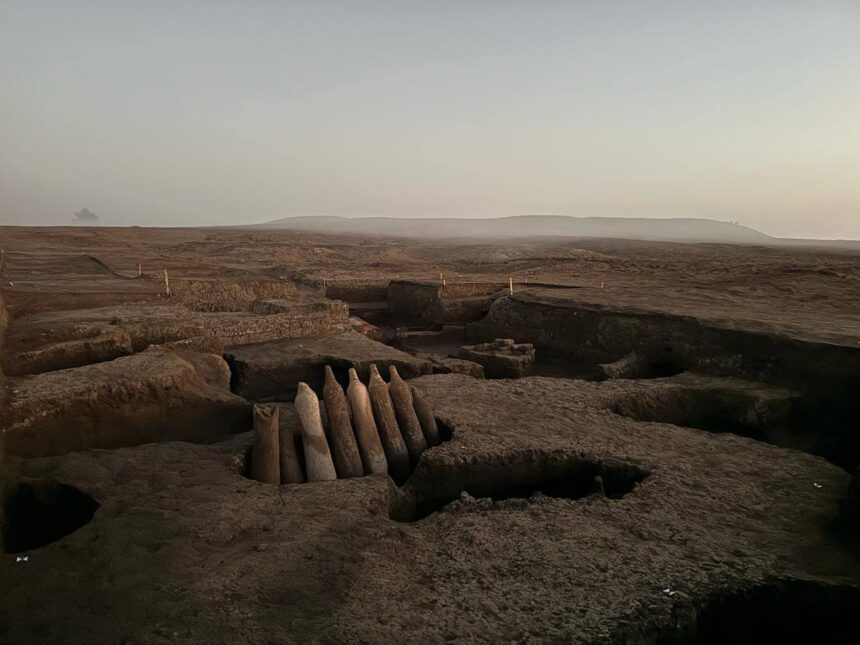
Ancient industrial workshops dating from the Late Period to the early Ptolemaic era, along with a Roman-era cemetery, have been discovered at the Kom al-Ahmar and Kom Wasit sites in Egypt’s Western Nile Delta.
The find, announced by the Ministry of Tourism and Antiquities on Tuesday, includes a large industrial building containing at least six rooms. Two of these rooms were dedicated to the mass processing of fish, evidenced by the recovery of approximately 9,700 fish bones, suggesting a significant salted fish industry existed in the region during the 5th century BC.
Mohamed Abdel Badie, head of the Egyptian Antiquities Sector, stated that other rooms in the complex were likely used for manufacturing metal and stone tools, as well as faience amulets. Archaeologists recovered several unfinished limestone statues and pieces in various stages of production, alongside imported Greek pottery and amphorae used to date the site’s activity.
The excavations also revealed a portion of a Roman cemetery featuring three distinct burial methods: direct ground burials, burials within pottery coffins, and child burials placed inside large amphorae.
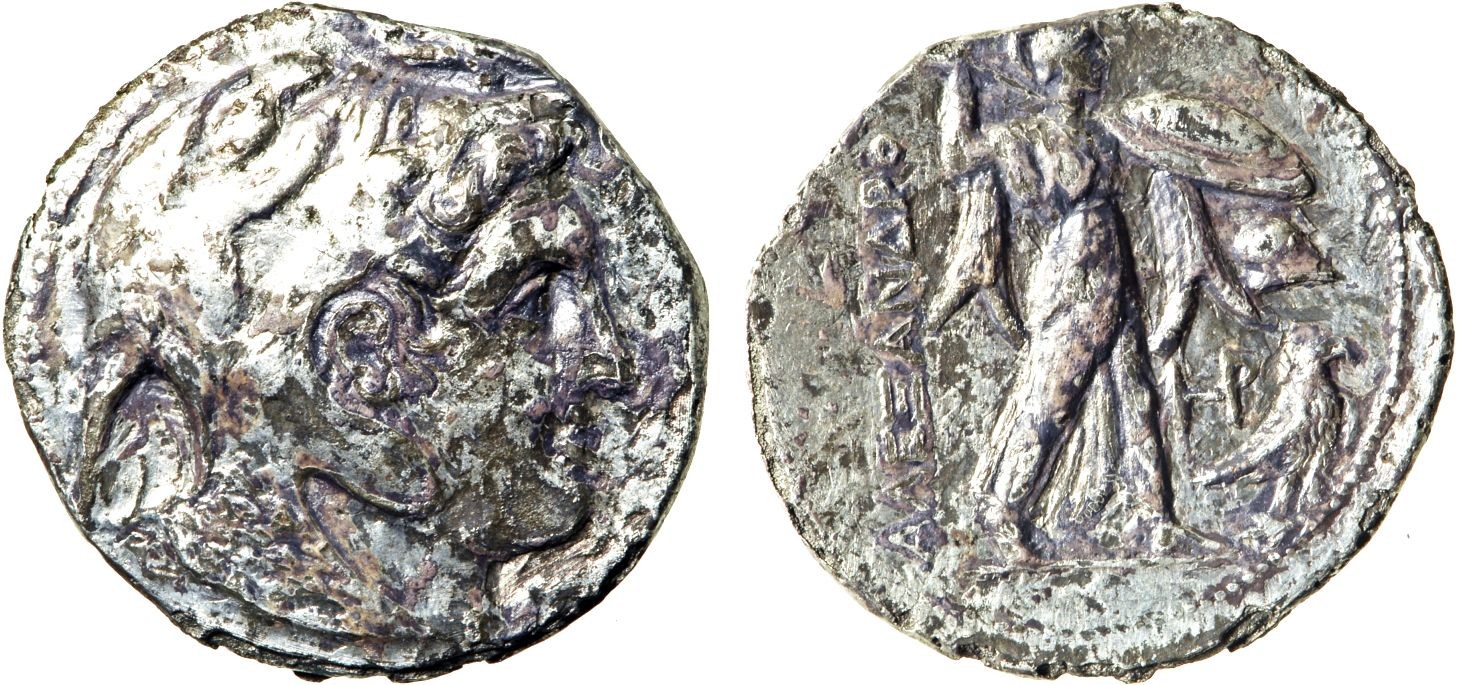
Mohamed Ismail Khaled, Secretary General of the Supreme Council of Antiquities, said the discovery is a significant addition to the study of settlement patterns and industrial activities in the West Delta hinterlands near Alexandria. He noted that the site provides new evidence of regional trade and communication networks spanning from the Late Period through to the early Islamic era.
A bio-archaeological study is currently underway on the remains of 23 individuals found at the site, including men, women, and children. Cristina Mondin, head of the mission from the University of Padua, said preliminary results indicate the individuals lived in relatively good health, with no signs of major disease or violent trauma.
Among the artefacts recovered were dozens of intact amphorae and a pair of gold earrings belonging to a young girl. The items have been transferred to the Egyptian Museum in Cairo for restoration and further study.
The discovery was made by a joint Egyptian-Italian archaeological mission involving the Supreme Council of Antiquities and the University of Padua.