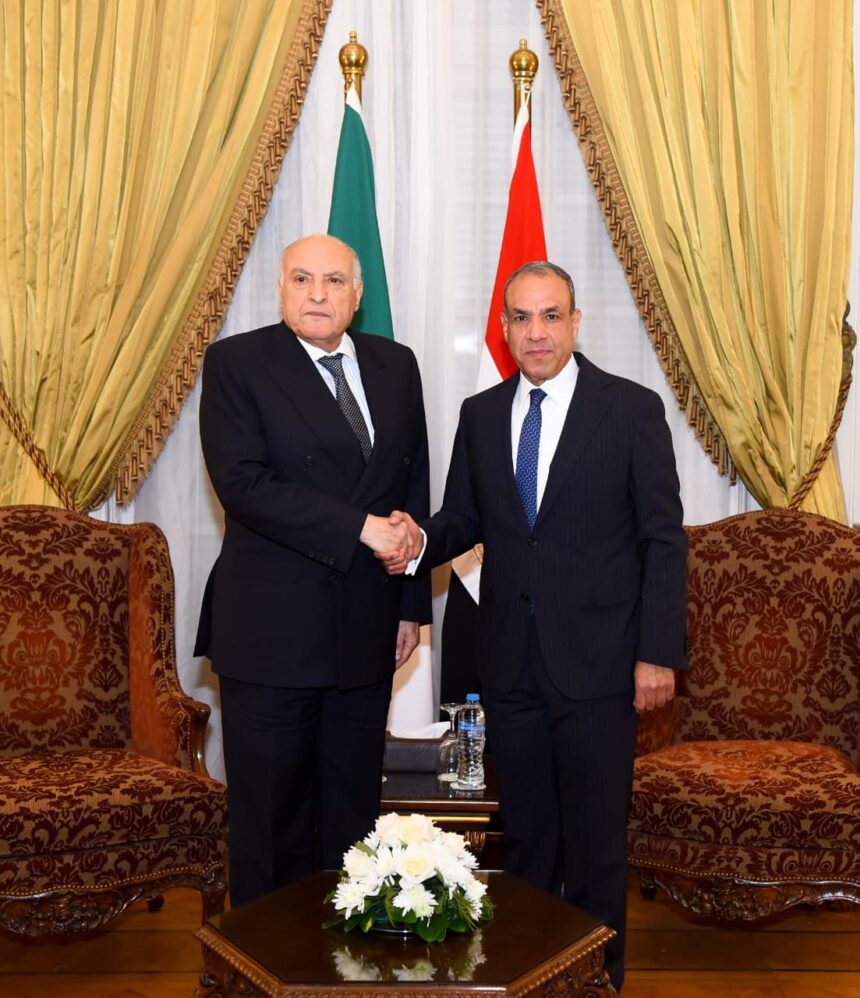
Foreign forces and mercenaries must withdraw from Libya and a comprehensive ceasefire should be established in Sudan, the foreign ministers of Egypt and Algeria said on Friday during a high-level meeting.
Egyptian Foreign Minister Badr Abdelatty and Algerian Foreign Minister Ahmed Attaf reaffirmed their support for a”Libyan-Libyan” solution to the crisis, according to Egyptian foreign ministry spokesperson Tamim Khallaf. The ministers highlighted the necessity of activating the tripartite mechanism involving Egypt, Algeria, and Tunisia to unify Libyan institutions and facilitate simultaneous presidential and parliamentary elections.
Addressing the conflict in Gaza, Abdelatty outlined ongoing efforts to secure a sustainable ceasefire and execute the second phase of the U.S. President’s plan. He emphasised the requirement for unhindered humanitarian aid and the initiation of early recovery and reconstruction, while rejecting any actions that would compromise Palestinian territorial integrity.
On the Sudanese conflict, Abdelatty confirmed that coordination continues within the “quadrilateral mechanism” to reach a comprehensive ceasefire. He stressed the importance of securing humanitarian corridors for aid delivery and reiterated support for Sudan’s sovereignty and the preservation of its national institutions.
Bilateral economic relations were also a primary focus, following the ninth session of the Egyptian-Algerian Joint Higher Committee held in Cairo from Nov 23 to 26, 2025. Abdelatty noted that 18 cooperation documents were signed during the session, which also featured a joint economic forum. He expressed a commitment to implementing these outcomes to boost trade and investment.
Regarding the African continent, the two ministers agreed to enhance coordination within various African frameworks to promote stability and development. They underscored the importance of respecting state sovereignty and rejected external interference in African affairs.
The meeting concluded with both parties emphasizing the depth of their historical ties and the importance of continued consultation to safeguard regional interests and stability.