

When news circulates about the “return of conscription in Germany”, the headline appears shocking at first glance. In reality, however, it fails to capture the full picture. Berlin has not reverted to its pre-2011 model, nor has it declared a general mobilization. What Germany has undertaken is far deeper: a fundamental rethinking of the relationship between the state and society in the realm of security. What is unfolding is not an administrative decision, but a slow reconfiguration of what may be described as Germany’s security social contract.
After World War II, modern Germany was built on a clear principle: the neutralization of militarism, the constitutional and ethical restraint of the armed forces, and the strict linkage of any use of force to alliances and binding rules. This was a direct response to a catastrophic historical experience that rendered any discussion of “obligation” or “conscription” deeply sensitive. Consequently, when Germany suspended compulsory military service in 2011, the move appeared to be the natural culmination of a long process of transferring security from society to a relatively small professional institution.
The second decade of the twenty-first century, however, overturned these assumptions. The war in Ukraine, the erosion of Europe’s deterrence framework, the return of power politics, and Germany’s expanding commitments within NATO forced Berlin to confront a question it long preferred to avoid: can a major economic and political power remain a “post-historical” state in security terms?
Rather than directly reinstating conscription, Germany opted for a hybrid model combining mandatory registration, medical assessment, and extensive incentives for voluntary service, while legally preserving the option of compulsory service should the voluntary track fail. This approach does not impose service by force, but it reintroduces the idea of societal participation in defense and narrows the gap that had widened between the military and society over the past decade.
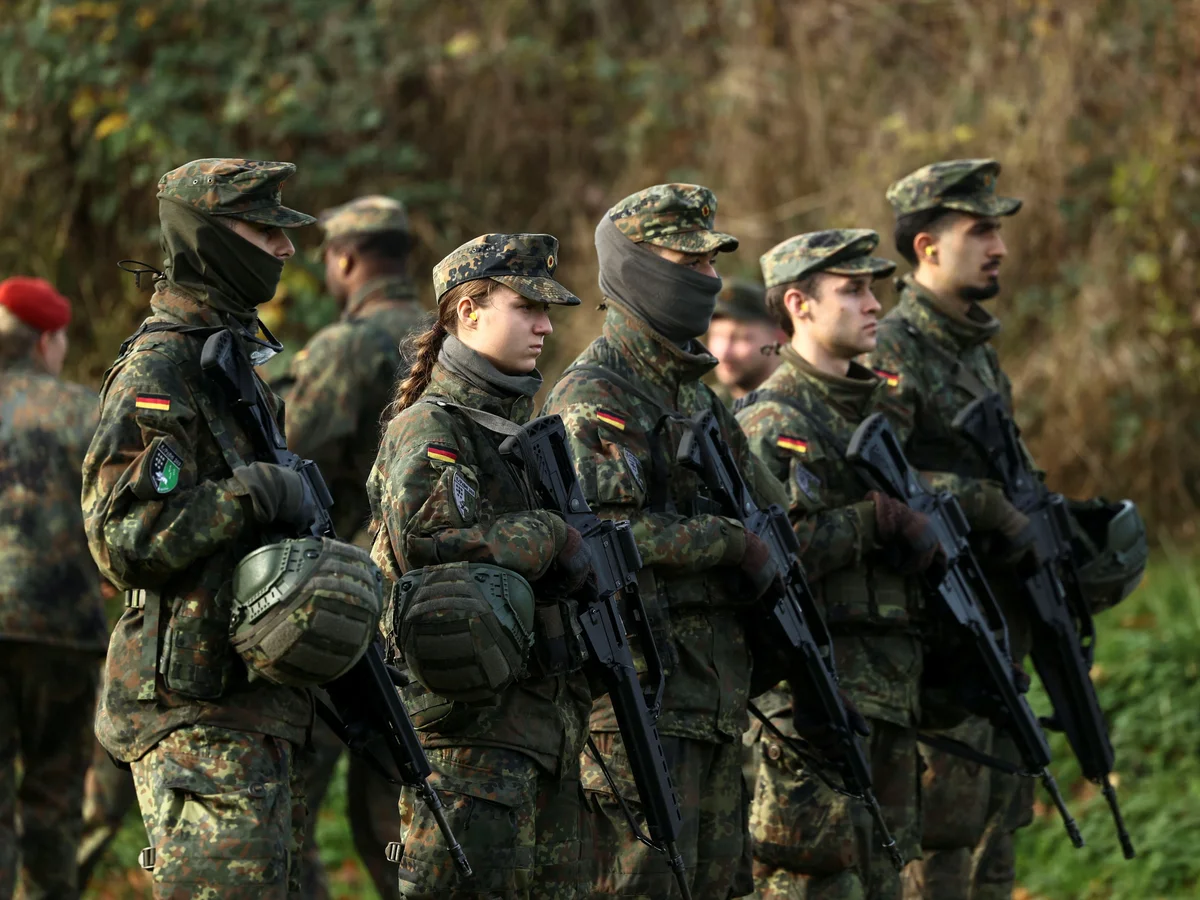
Unlike France, Poland, or the Baltic states, Germany’s reassessment does not stem from a sudden strategic vacuum or acute escalation. France has long maintained an intervention-oriented military posture, while Poland and the Baltic states built their defense doctrines on assumptions of permanent existential threat. Germany’s trajectory is fundamentally different. Since 1945, it has shaped its identity around restraining power rather than displaying it, and distancing the military from society rather than integrating it into it. This is why the current shift draws attention not because it deviates from the European path, but because it breaks a long-standing domestic taboo: reinserting society itself into the security equation.
The deeper transformation lies not in the mechanism, but in the philosophy behind it. The German state has begun to frame security as a collective responsibility rather than a purely technical matter. This raises a fundamental question: what are the limits of individual freedom when national security becomes a societal task, and how can a democracy balance persuasion with obligation?
Germany’s answer is neither authoritarian nor populist. It seeks equilibrium through political transparency in explaining threats, prioritizing incentives over coercion, and retaining compulsion strictly as a last resort under robust parliamentary oversight. In this sense, Germany is not abandoning its democratic spirit, but acknowledging that absolute freedom without collective preparedness can translate into strategic vulnerability.
What we are witnessing is not a rupture with the past, but a rational reassessment of it. Germany is shedding its old security skin, slowly and without spectacle, but the direction is clear: from security assumed by circumstance to security built on preparedness. This transformation deserves to be read as one of the defining features of a new Europe, rather than a mere debate over conscription.
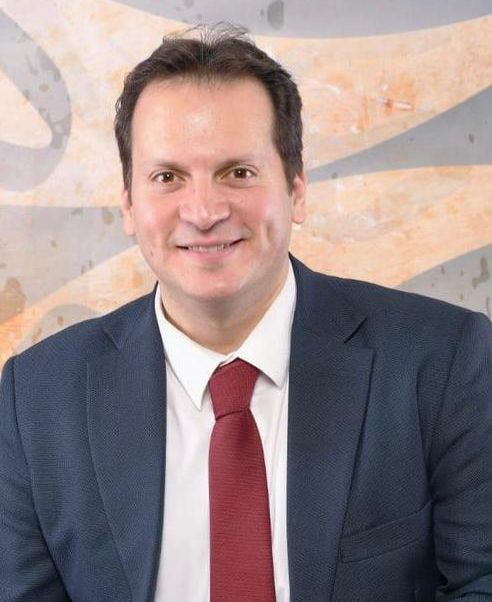
Dr Ramy Galal is an Egyptian writer, and academic specializing in public management and cultural policies. He has authored studies on cultural diplomacy, the orange economy, and restructuring Egypt’s cultural institutions.
Galal holds a PHD degree from Alexandria University, a master’s degree from the University of London, and Diploma From the University of Chile.
A former senator, and former adviser and spokesperson for Egypt’s Ministry of Planning. He was also the spokesperson for the Egyptian Opposition Coalition.

