Behind closed doors in the German capital, a marathon session lasting more than five hours on Sunday marked a potential turning point in the roadmap to end the war in Ukraine. President Volodymyr Zelenskiy, seated across from Donald Trump’s envoys Steve Witkoff and Jared Kushner, engaged in deep discussions that extended well into the night—a dialogue that Washington claimed yielded “significant progress”.
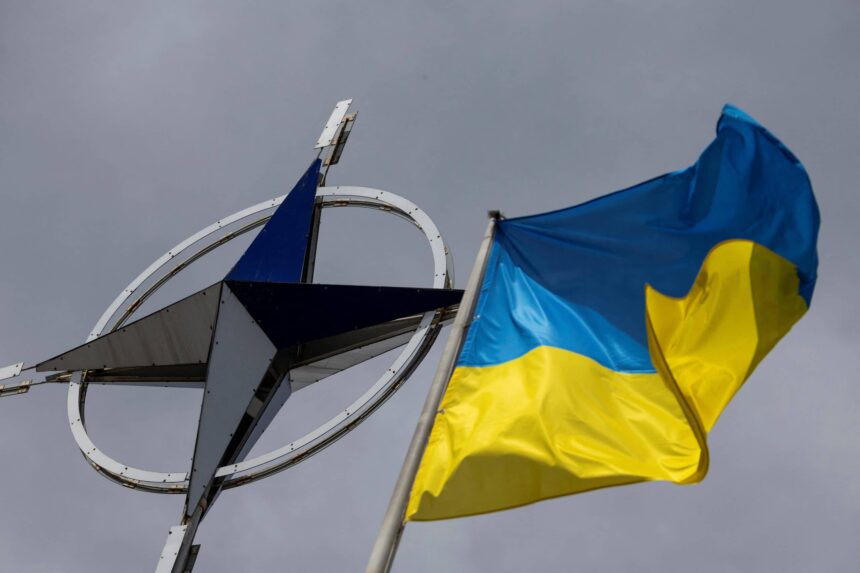
Yet, as the dust settled on Sunday’s talks, the contours of a controversial trade-off began to emerge. Amidst the diplomatic manoeuvring in Berlin, Kyiv indicated it is prepared to abandon its ambition to join NATO in exchange for Western security guarantees, a concession that touches the very nerve centre of the conflict.
This potential shift serves as the kernel of a developing, albeit fragile, peace process. While the Kremlin on Monday welcomed the prospect of a legally binding document on Ukraine’s neutral status as a “cornerstone” of negotiations, senior European Union officials issued stark warnings. They argued that without “real guarantees”—specifically the deployment of soldiers—any concession on territory or status might simply pave the way for further Russian aggression.
The Berlin Blueprint
Sunday’s meeting in Berlin, described by participants as intense and productive, focused on a 20-point peace plan alongside critical economic files.
“Significant progress was made,” Steve Witkoff stated on the social media platform X, noting that the meeting with Zelenskiy covered “in-depth discussions”. The talks, involving representatives from the UK, France, and Germany, are reportedly working to refine American proposals. Drafts revealed last month suggested a framework requiring Kyiv to cede further territory, renounce its NATO aspirations, and accept limitations on its armed forces.
Presidential adviser Dmytro Litvyn confirmed via WhatsApp that talks between Ukrainian and American officials had concluded after five hours and were set to resume on Monday morning. Zelenskiy is expected to comment on the proceedings once this latest round of dialogue concludes.
While the specifics of the “Western security guarantees” Kyiv seeks in lieu of NATO membership remain under discussion, the silence on the future of occupied Ukrainian territories remains a heavy variable in the equation.
Moscow’s View: A Legal Cornerstone
In Moscow, the reaction was one of cautious receptiveness mingled with firm demands. Kremlin spokesman Dmitry Peskov told reporters on Monday that an agreement legally obliging Ukraine not to join the NATO alliance constitutes a “cornerstone” of any settlement.
“Naturally, this issue [NATO] is one of the key pillars, and it is certainly subject to special discussion,” Peskov said.
However, the Kremlin emphasised that it is not yet directly discussing the compromise proposals circulating in Berlin with Washington, stating that Russia would wait for information from the United States regarding the outcome of the negotiations.
Peskov noted that while President Vladimir Putin is “open to peace and serious decisions,” he remains staunchly opposed to a temporary truce or “political tricks”. He added that Trump and his team appear to “sincerely wish to achieve peace in Ukraine” and are making strenuous efforts to do so, though he dismissed the utility of setting artificial timelines for a settlement as “futile work”.
“The Fortress Falls”
Contrasting sharply with the diplomatic momentum in Berlin and Moscow, the European Union’s foreign policy chief, Kaja Kallas, offered a grim assessment of the strategic landscape.
Kallas insisted that security guarantees for Ukraine must translate into “real capabilities” and the presence of soldiers, warning that the Donbas region—which President Putin claims in its entirety—is “not his final goal”.
“We have to understand that if he gets Donbas, the fortress falls, and after that, they will certainly move to control all of Ukraine,” Kallas said, cautioning that if Ukraine falls, other regions would soon face similar peril.
Her comments underscore a deep anxiety within Europe that the current trajectory of talks might validate Moscow’s use of force. “If Russian aggression is rewarded, we will see more of it,” she added.
A Fragile Path Forward
As European leaders gathered for further meetings in Berlin on Monday, the disconnect between the negotiating table and the battlefield remained stark.
While Witkoff and the Trump team drive toward a deal they believe can halt the fighting, and the Kremlin waits for its “legal cornerstone” on neutrality, the ultimate cost of such a peace remains the subject of fierce debate. With Zelenskiy set to resume talks on Monday, the world waits to see if the “significant progress” in Berlin can translate into a settlement that satisfies Moscow without fulfilling Europe’s darkest predictions.