Women are playing an increasingly vital role in Egypt’s energy and heavy industries, including managing the country’s largest mine, Planning Minister Rania Al-Mashat said on Tuesday, as she called for closing the gender gap in traditionally male-dominated sectors.
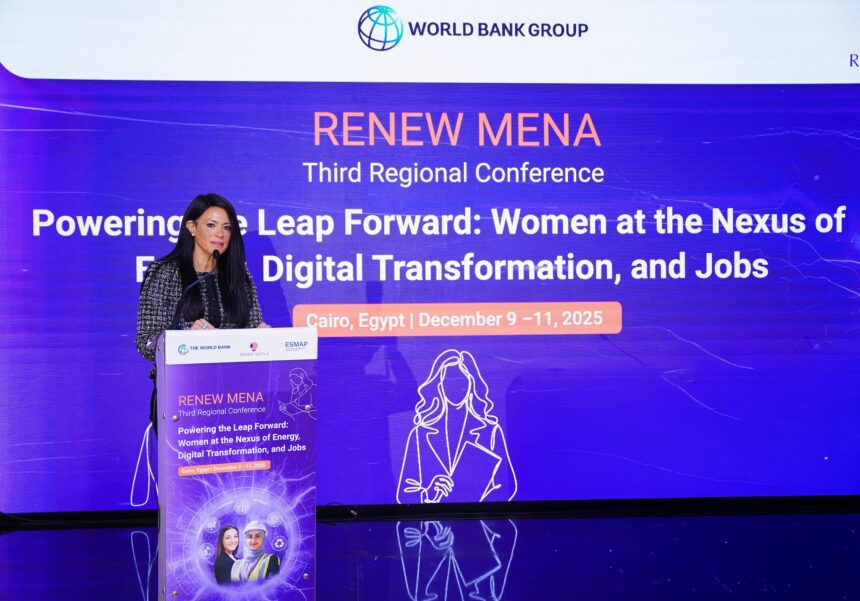
Speaking at the third annual conference of the Regional Network in Energy for Women in the Middle East and North Africa (RENEW MENA), Al-Mashat stated that the presence of women in energy is valuable precisely because the sector has historically been male-dominated.
“The country’s largest mine is currently managed by a woman, which reflects the reality we witness daily: women are capable, qualified, and effective in every sector,” Al-Mashat said.
The minister noted that massive electrical interconnection projects—linking Egypt with Jordan and Saudi Arabia—are not only enhancing energy security but creating employment, with a significant number of women included in the teams managing these operations.
Al-Mashat said the transition to renewable energy, such as wind and solar, is critical for producing efficient, low-cost power while opening new horizons for jobs requiring “green skills”.
To support this shift, Egypt has launched a “National Narrative for Economic Development” to integrate policies and enhance labour market flexibility. Al-Mashat added that a new labour law includes specific elements to address obstacles hindering women’s participation, ensuring their professional rights and regulating the work environment.
“Development cannot be achieved without skilled cadres,” Al-Mashat said. She emphasised the importance of gender-responsive public spending and financial tools, such as green bonds and sustainable development goal (SDG) bonds, to fund activities that elevate women’s presence in the economy.
Organised by the World Bank, the conference included participation from Stephane Guimbert, the bank’s Country Director for Egypt, Yemen, and Djibouti, and Anna Bjerde, World Bank Managing Director of Operations.
RENEW MENA, supported by the World Bank and the Energy Sector Management Assistance Programme (ESMAP), functions as a platform to accelerate gender equality in the energy sector, involving over 60 partners from public institutions, private companies, and academia.