

Seventy-five years after the establishment of the Federal Republic in 1949, the German democratic experience appears to be one of the most stable in the world. This stability was not the result of a political decision or a constitutional text alone, but the outcome of a long journey in which Germany rebuilt itself after a total collapse. Democracy in Germany is not merely a system of governance; it is a culture and a collective consciousness shaped over decades of historical transformation. The German society realized early on that democracy is not a ready-made formula but the result of a process that begins with building the citizen before building the institutions.
Germany went through an ordeal few nations have experienced: total defeat, confrontation with its past, and the reconstruction of state institutions on entirely new foundations. This profound transformation created an awareness that the absence of democracy leads to chaos and collapse, and that its presence is a necessity, not a political option. Thus, German democracy was born in solid ground and within a social consciousness that granted it moral and historical legitimacy.
The success of the German model rests on the fact that institutions were built before citizens were asked to participate. The Constitutional Court, the federal system, party laws, and proportional representation are mechanisms designed to prevent power monopolies and preserve pluralism. Institutional engineering alone was not enough, but it formed the stable framework upon which the system developed.
History played a decisive role as well. Denazification was not merely a symbolic trial of a dark era; it was a process of reshaping public consciousness. It produced what can be called a “survivor’s awareness”, a collective understanding of the dangers of absolute power and the need to protect society from slipping back into extremism. This awareness turned democracy into a red line for the German citizen.
A strong economy and a broad welfare state also contributed to stabilizing democracy by creating a secure middle class. A citizen who enjoys economic security is less vulnerable to populism and is unlikely to attempt to bring down the system impulsively. Germany thus produced a confident citizen who protects democracy by conviction before being protected by law.
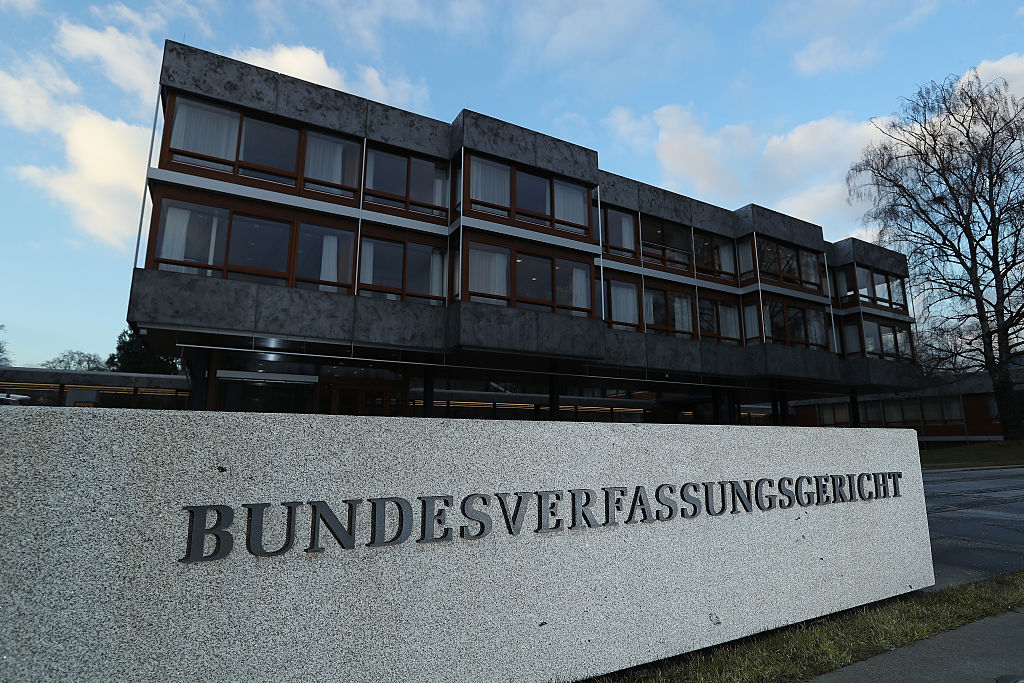
Respect for the rule of law remains central. In Germany, nothing stands above the constitution, no party is beyond accountability, and no authority can override institutions. The rule of law is not a slogan but a daily practice that strengthens trust in the state and grants the political system resilience.
Education is perhaps the most influential factor. The German educational system does not stop at academic knowledge; it teaches the meaning of the modern state, how institutions function, the value of participation, and the importance of respecting difference. It shapes the democratic citizen long before laws regulate behaviour. This is precisely what is lacking in Egypt, where democratic culture was not built in schools or society, and where a culture of fear and obedience often prevailed.
Thus, German democracy is stable because it is the natural result of correct foundations. Meanwhile, the struggle of democracy in Egypt stems from attempting to apply the outcome before constructing the necessary social, cultural, and institutional groundwork. Germany succeeded not because it imposed a model but because it transformed society before transforming the system.
The German lessons are not for imitation but for understanding: no democracy without gradualism, no gradualism without institutions, no institutions without culture, and no culture without education. Germany succeeded in producing a democratic citizen before drafting a democratic constitution, allowing its model to endure for decades. This is the most important lesson we must learn.
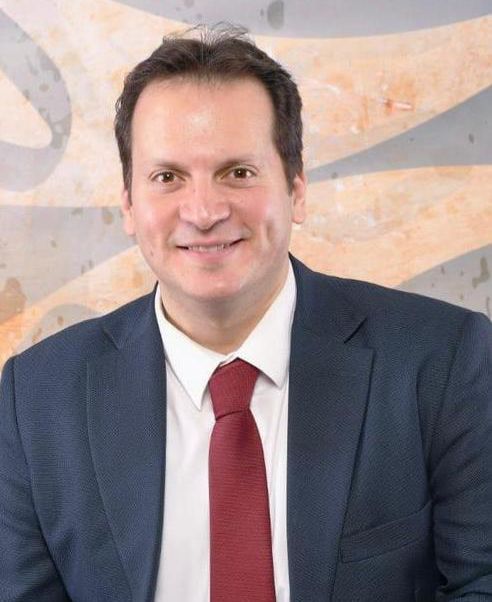
Dr Ramy Galal is an Egyptian writer, and academic specializing in public management and cultural policies. He has authored studies on cultural diplomacy, the orange economy, and restructuring Egypt’s cultural institutions.
Galal holds a PHD degree from Alexandria University, a master’s degree from the University of London, and Diploma From the University of Chile.
A former senator, and former adviser and spokesperson for Egypt’s Ministry of Planning. He was also the spokesperson for the Egyptian Opposition Coalition.


