
DailynewsegyptDailynewsegyptDailynewsegypt October 14, 2026
  • Home
  • Business
    BusinessShow More
    Capital University partners with engineering association to launch fire safety inspector training programme
    Capital University partners with engineering association to launch fire safety inspector training programme
    October 14, 2026
    Egypt explores Indonesian experience in health financing, pooled procurement
    Egypt explores Indonesian experience in health financing, pooled procurement
    October 14, 2026
    Egypt backs financing for 36 projects in southern Nile Basin states: Sewilam
    Egypt backs financing for 36 projects in southern Nile Basin states: Sewilam
    October 14, 2026
    CMA CGM continues return to Suez Canal as authority reports surge in large vessel transits
    CMA CGM continues return to Suez Canal as authority reports surge in large vessel transits
    October 14, 2026
    Egypt re-elected to chair Arab Electricity Council’s Executive Bureau for second consecutive term
    Egypt re-elected to chair Arab Electricity Council’s Executive Bureau for second consecutive term
    October 14, 2026
  • Politics
    PoliticsShow More
    The El Alamein Declaration: New Red Lines in the Horn of Africa
    Opinion | The El Alamein Declaration: New Red Lines in the Horn of Africa
    October 13, 2026
    Trump and Xi: Who Holds the Keys to Power in the New World Order?
    Opinion | Trump and Xi: Who Holds the Keys to Power in the New World Order?
    October 13, 2026
    Egypt's FM discusses food security, financing and regional cooperation in Bangkok
    Egypt’s FM discusses food security, financing and regional cooperation in Bangkok
    October 13, 2026
    Egypt’s FM discusses expanding economic, parliamentary ties with Thai officials
    Egypt’s FM discusses expanding economic, parliamentary ties with Thai officials
    October 12, 2026
    Azza Ramzy Mohamed Hassan
    Egypt condemns Riyadh airport attack that killed Egyptian woman, injured five
    October 11, 2026
  • Interviews
    InterviewsShow More
    ‘Red Flag’ offers distinctive experience as I seek variety: Ahmed Hatem
    ‘Red Flag’ offers distinctive experience as I seek variety: Ahmed Hatem
    September 30, 2026
    Belal Zahran, Chief Revenue Officer at Foodics
    Restaurant technology evolving from support tool into business engine: Foodics
    September 28, 2026
    Abeer Sabry: I seek roles that leave a lasting impression on audiences
    Abeer Sabry: I seek roles that leave a lasting impression on audiences
    September 16, 2026
    Atef Abdel Latif: Cinema creates the dream, tourism brings it to life
    Atef Abdel Latif: Cinema creates the dream, tourism brings it to life
    August 19, 2026
    Somaya El Khashab: I won’t take on project that doesn’t add to my artistic legacy
    Somaya El Khashab: I won’t take on project that doesn’t add to my artistic legacy
    August 12, 2026
  • Culture
  • Opinion
  • Sports
  • Lifestyle
Font ResizerAa
DailynewsegyptDailynewsegypt
Font ResizerAa
  • Home
  • Business
  • Politics
  • Interviews
  • Culture
  • Opinion
  • Sports
  • Lifestyle
Search
  • Home
  • Business
  • Politics
  • Interviews
  • Culture
  • Opinion
  • Sports
  • Lifestyle
Follow US
Culture

Fanous Ramadan: more than just a lantern

Nada Deyaa’
Last updated: June 12, 2016 11:58 pm
Nada Deyaa’
Share
6 Min Read
SHARE


Fanous have always played an inspirational role in Ramadan. Ever since the Fatimid era, fanous, which are decorative lanterns crafted specifically for the holy month, are a sign that Ramadan is near. You see them hung in the streets and sitting in windows, decorating cafes, store fronts, and homes.

However, while the new generation of fanous are complicated by different designs, shapes, and colours, do the makers and buyers of these famous lanterns ever wonder about the story behind them?

The stories behind fanous’ significance during Ramadan vary, yet all agree about the time period of the concept’s inception. It is undisputed that the Fatimid’s were the first to introduce lanterns to Egyptian culture.

Some say it started when the Caliph used to take his fanous while looking for the new moon as an indication of the beginning of the fasting month. Back in the day, when people saw their Caliph walking at night with his fanous, they enthusiastically waited for the start of the month.

Others say that when Al-Muzz Lidenallah used to go out looking for the new moon, he would be accompanied by many children that held fanous used to help light the way and to see the moon more clearly.

Another story says that back in the Fatimid era, women were only allowed to leave their homes during Ramadan, and when they would leave, young boys would walk ahead them holding fanous in order to alert men that there would be women passing by.

Egyptians are considered to be the first to introduce fanous to the Arab and Islamic world. Centuries after they were introduced, the industry of making fanous carries on and you can now find fanous in a variety of shapes that play to the modern era.

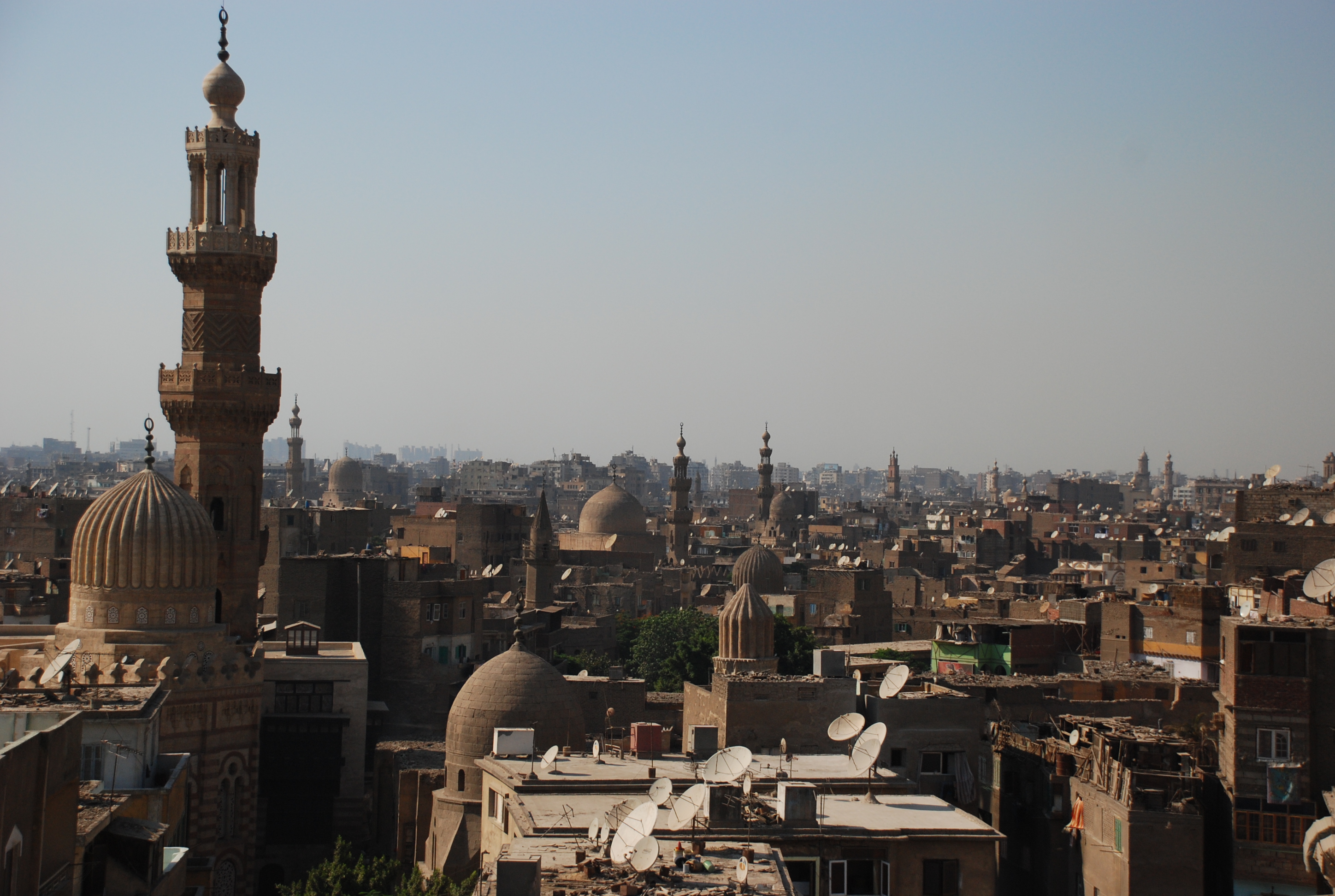
In Cairo’s  Sayeda Zeinab neighbourhood, located near Islamic Cairo, fanous workshops are spread all over the area. In these workshops you’ll meet elderly people who have spent their lives working on fanous that come in all shapes and sizes. These workshops are considered the main source of hand-made fanous all around the world.

Like many other handicraft professions, making fanous is an inherited trade that requires patience and hard work. The creation starts from designing the fanous’ shape, colours, and size and then goes onto the final phase where all these elements are pinned together.

In one of the older workshops in the area, Uncle Salama, as he likes to be called, creates Egypt’s most colourful fanous.

Uncle Salama, who is in his mid-70s, works the whole year in order to create his Ramadan fanous collection.

“It takes me weeks and sometimes months in order to make a unique fanous that I’m satisfied with,” he said. “I tend to merge between Egyptian folklore and Islamic designs.”

The collection includes hundreds of designed fanous, and, in order to be ready by Ramadan, it takes him the entire year to prepare and create his lanterns. Working alone and exerting the effort and hard work necessary to be ready in time, it is his passion for the craft that helps him endure the struggle leading up to Ramadan season.

“The biggest challenge this art faces nowadays is that people who work in it are not passionately in love with it, and they only do it for the money,” said Uncle Salama.

A few metres away, Kamel runs a bigger fanous workshop.  Kamel, 56, was nicknamed the “king of fanous”, as he has been working as a fanous maker ever since he was a young child helping his father and grandfather make them.

The workshop has other employees who spend hours making some of the best fanous in Cairo. After working as a fanous maker for such a long time, the lanterns become so much a part of your life that you start to give them names, explained Kamal.

While some people opt to buy cheaper fanous that are manufactured in far off countries, the handmade fanous in Kamal’s shop are still idolised by Egyptians and other Muslims celebrating Ramadan in the region. “We export some of our lanterns to Saudi Arabia, the UAE, and Jordan,” said Kamal.

The handmade fanous market has faced more challenges recently due to the invasion of Chinese lanterns that have taken over Ramadan. While the competition is high, none of the workers in the fanous workshops show signs of abandoning their craft.

“I took this trade from my father, who took it from his father as well,” Kamal said, “I plan to pass it on to my children as well.”

Uncle Salama said, “I inherited the craft from my father and I teach my children about it so that the art form may survive my death. We will make it through, as we managed to do through all of these years, and our children will do the same”.


Additional reporting by Asmaa Gamal and Mohammed Omar


To follow Daily News Egypt on WhatsApp press here

To follow Daily News Egypt on Telegram press here

New 3-D app shows what Rome looked like over the centuries
The Palace Ramadan Tent: A taste of Ramadan’s Oriental Elegance!
’50 Kitchens, One City’: 50 restaurants, countries and recipes in Berlin
Roman Empire traces discovered in Dakhla
Egypt to open Zahi Hawas Egyptology centre 
TAGGED:fanouslanternramadan
Share This Article
Facebook Copy Link Print
ByNada Deyaa’
Follow:
Culture reporter, passionate reader and writer, animals lover and arts follower.
Ad image
Ad image
Ad image

You Might Also Like

Lifestyle

The six white days of Shawal

August 21, 2012
India's embassy in Cairo organises tree planting event to celebrate World Environment Day
Culture

India launches ‘Plant for Mother Earth’ campaign in Cairo

July 8, 2024
Culture

Culture Ministry holds exhibition of Nobel laureate Naguib Mahfouz’s official documents

September 3, 2019
Culture

Local artisans spread hand-made art in Cairo

August 1, 2016
//
Egypt’s only independent daily newspaper in English. Discuss the country’s latest with the paper’s reporters, editors, and other readers.

Quick Link

  • home
  • Advertise with us
  • Developers
  • Subscribe with us
  • careers
  • Terms of service
  • Get In Touch
Welcome Back!

Sign in to your account

Username or Email Address
Password

Lost your password?