

Egypt has called for sustainable and predictable financing to strengthen Africa’s preparedness for epidemics, while urging the continent to play a greater role in shaping the future of the global health system.
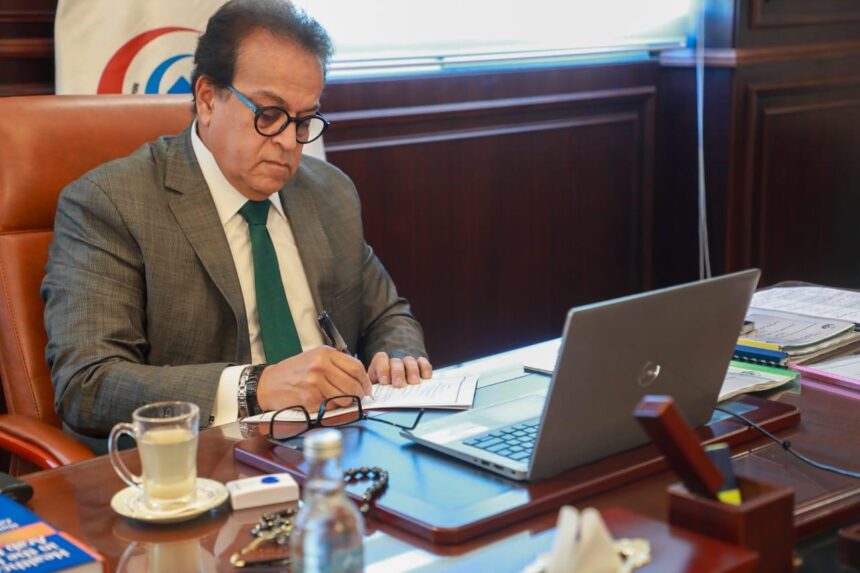
Health and Population Minister Khaled Abdel Ghaffar, co-chair of the African High-Level Ministerial Committee on Global Health Architecture Reform, reaffirmed Egypt’s support for African countries facing shared health challenges during a virtual meeting of the committee.
The meeting was attended by Africa Centres for Disease Control and Prevention Director-General Jean Kaseya, African health ministers and representatives of international health organisations.
Abdel Ghaffar expressed Egypt’s solidarity with the governments and people of the Democratic Republic of the Congo and Uganda and praised frontline health workers responding to Ebola outbreaks and other epidemics.
He said Africa must move beyond a model based on receiving reactive assistance during emergencies towards one centred on sustainable preparedness and African-owned capabilities and solutions.
The current response to disease outbreaks, he added, represents a test of the global health architecture. He argued that the strength of health systems should be measured not only by the institutions established during periods of stability, but also by their ability to turn preparedness into rapid action and effective coordination during emergencies.
Abdel Ghaffar also reiterated Egypt’s support for African-led clinical trials and scientific evidence generation, stressing the need to establish clinical research capacity before health emergencies occur.
On financing, the Minister argued that epidemic preparedness cannot be separated from sustainable and predictable funding.
He called for ongoing discussions on global health architecture reform, including reviews of financing mechanisms at the World Bank and multilateral development banks, to be used to strengthen Africa’s ability to protect its health security.
Egypt also backed the unified African position on the global Pathogen Access and Benefit-Sharing system.
Abdel Ghaffar said rapid sharing of genetic information on disease outbreaks must be accompanied by equitable African access to medical countermeasures, technology transfer and a fair share of the resulting benefits.
He concluded by calling for an Africa that emerges from health crises with stronger capabilities, stressing that the continent should not merely participate in global health decisions, but help lead and shape the future of the global health system.


