

Gold prices in Egypt edged higher on Saturday despite the closure of global markets, following a volatile week in which bullion recorded its steepest weekly decline since early June, as rising US Treasury yields and a stronger dollar outweighed support from heightened geopolitical tensions, according to Marsad Al Dahab for Economic Studies.
Walid Farouk, Director of Marsad Al Dahab for Economic Studies, said the price of 21-karat gold rose by EGP 10 from Friday’s close to around EGP 5,810 per gram.
Globally, spot gold ended the week at approximately $4,017 per ounce, down $103, or about 2.5%, from the start of the week, marking its largest weekly loss in nearly six weeks.
In the local market, 24-karat gold traded at EGP 6,640 per gram, while 18-karat gold reached EGP 4,980 per gram. The price of a gold sovereign stood at around EGP 46,480.
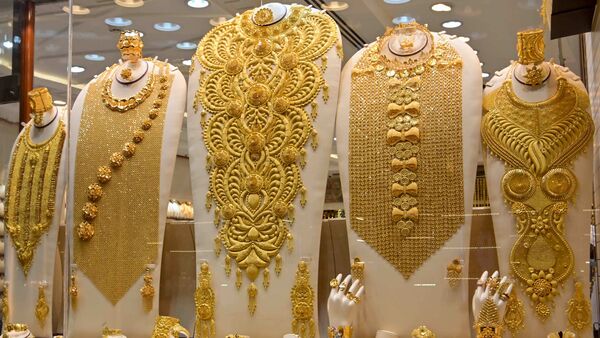
Farouk said the Egyptian gold market is witnessing a gradual recovery in demand for gold jewellery after an extended period during which consumers favoured bullion bars and gold coins as savings and investment vehicles.
He added that manufacturers have expanded their range of lower-weight jewellery products to make purchases more affordable and attract a broader base of consumers.
However, Farouk noted that the hallmarking system continues to face operational challenges, with manufacturers and traders reporting delays in certifying jewellery after hallmarking operations previously prioritised bullion products during the surge in investment demand.
He said industry participants believe separating the hallmarking process for jewellery from bullion could improve efficiency and reduce waiting times.
On global markets, gold failed to derive significant support from rising geopolitical tensions, as investors instead focused on the potential inflationary impact of higher oil prices.
The increase in crude oil prices renewed inflation concerns, pushing US Treasury yields higher and reinforcing expectations that the US Federal Reserve could keep interest rates elevated for longer. Higher bond yields increase the opportunity cost of holding non-yielding assets such as gold.
Although US consumer and producer inflation data came in below market expectations, providing temporary support for bullion, those gains were outweighed by the stronger US dollar, rising energy prices and higher bond yields, leaving gold with its largest weekly decline since early June.
According to the World Gold Council, uncertainty surrounding US monetary policy and continued volatility in bond markets have become among the main drivers of gold prices. The council noted that fluctuations in bond yields could strengthen gold’s role as a portfolio diversification and hedging asset over the medium term.
For the second half of 2026, the council expects gold to trade within a relatively narrow range around current levels, as the strong US dollar and elevated bond yields continue to weigh on prices. However, slower global economic growth, interest rate cuts or renewed geopolitical risks could restore upward momentum.
The World Gold Council also highlighted changing demand patterns across Asia.
In India, lower gold prices during June helped revive jewellery demand, although overall consumer demand remained relatively subdued. Nevertheless, major jewellery retailers reported strong revenue growth during the April-June quarter.
Investment demand in India remained resilient, with inflows into gold exchange-traded funds (ETFs) and digital gold products increasing, while demand for bars and coins moderated. Gold imports also continued to decline amid sufficient domestic supplies.
In China, wholesale demand improved during June, supported by continued inflows into gold ETFs. Jewellery sales, however, remained under pressure because of elevated prices and weak consumer confidence, while investment products continued to attract savers.
Farouk said these developments suggest that the world’s two largest gold-consuming markets are undergoing a gradual rebalancing, with lower prices encouraging renewed interest in jewellery while investment products continue to enjoy strong demand.
Several international financial institutions have also revised down their gold price forecasts for 2026 and 2027, citing the strength of the US dollar and expectations that interest rates will remain higher for longer.
Bank of America lowered its average gold price forecast for 2026 to around $4,360 per ounce, expecting prices to remain under pressure through August and September before establishing a more stable base.
However, the bank maintained that the current decline does not signal the end of gold’s long-term bullish trend and could instead provide opportunities for gradual accumulation.
HSBC expects gold to trade within a range of $3,800 to $4,700 per ounce for the remainder of the year, while Goldman Sachs maintained its constructive long-term outlook, supported by continued central bank purchases and reserve diversification.
Gold enters the new trading week trading near the $4,000-per-ounce level, with investors expected to closely monitor movements in oil prices, the US dollar, Treasury yields and comments from Federal Reserve officials for fresh direction.
The Gold Observatory said bullion’s near-term performance will largely depend on developments in these factors. Lower energy prices could ease inflation concerns and support gold prices, while further increases in oil prices may reinforce expectations of prolonged high interest rates and keep pressure on the precious metal.
Despite the recent correction, the observatory stressed that gold’s long-term outlook remains underpinned by sustained central bank purchases, reserve diversification and persistent geopolitical uncertainty. It added that the latest weekly decline reflects the dominance of monetary policy expectations, the stronger US dollar and elevated bond yields rather than any fundamental deterioration in the long-term investment case for gold.


