While the world’s attention is focused on the wars in Gaza, the tensions between Israel and Iran, the ongoing Russian-Ukrainian conflict, and the escalating rivalry in the South China Sea and the Indo-Pacific region, these confrontations dominate the headlines shaping the international system. Yet, behind these military scenes, another war is unfolding—quieter, less visible, but potentially far more consequential in defining the contours of the world over the coming decades. It is the struggle for control over technology, supply chains, and strategic minerals that have become the true fuel of advanced industries and the engine of the new global economy.
The 21st century is not being reshaped solely on battlefields, but also in mines, research centres, semiconductor factories, and global trade ports, where the economic and technological balance of power among nations is determined.
It is no coincidence that strategic minerals have once again dominated headlines. On June 22, 2026, Reuters reported that China had imposed export controls on several American companies operating in the strategic minerals sector, including MP Materials and USA Rare Earth, amid ongoing trade and technological tensions between Beijing and Washington. This coincided with continued US efforts to rebuild independent supply chains and reduce reliance on China in this vital sector.
Readers may not linger long on such a story, viewing it as a specialized economic report. However, these developments represent early indicators of major shifts in the international system. What appears to be a limited commercial decision may constitute a new chapter in a global race for technology, industry, and influence—a race whose outcomes could have a more profound impact on the future of the economy and politics than many of the military conflicts dominating daily headlines.
International competition is no longer confined to control over territory or traditional energy sources. It now centres on dominance over entire production chains, from the extraction of raw materials to the manufacturing of high-tech products. Power in the 21st century is not measured merely by possession of natural resources, but by the ability to transform them into knowledge, advanced technologies, and industries with high added value. The world has gradually moved from the “petroleum geography” that defined the 20th century to a “mineral geography,” where technology gives resources their true value.
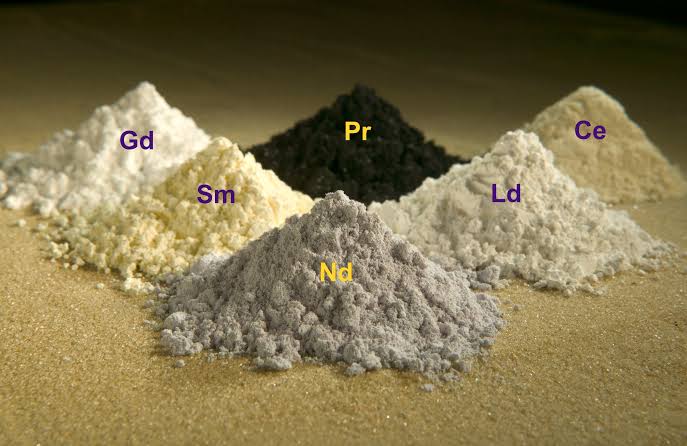
These minerals derive their importance from their direct link to the most advanced industries. Lithium is the core component of electric vehicle batteries and energy storage systems. Cobalt and nickel enhance battery efficiency and longevity. Graphite is used in battery anodes, while rare earth elements such as neodymium and dysprosium are essential for manufacturing ultra-strong magnets used in wind turbines, electric motors, fighter jets, robots, and precision guidance systems. Gallium and germanium, meanwhile, are critical for semiconductors, telecommunications networks, solar cells, and advanced military applications. Consequently, control over the production and processing of these minerals has become a cornerstone of economic and technological power.
In this context, China stands out as the nation that anticipated this transformation early on. For more than three decades, its strategy has gone beyond mere extraction to building a fully integrated industrial system encompassing exploration, mining, refining, manufacturing, scientific research, and the development of related technologies. China has also expanded its network of economic partnerships, particularly in Africa, Latin America, and Asia, based on a long-term vision centred on infrastructure investment and enhanced economic connectivity. This approach has enabled it to solidify its position at the heart of global value chains, explaining its prominent standing in the strategic minerals market today.

The recent Chinese measures cannot be understood in isolation from the intensifying technological competition with the United States. From Beijing’s perspective, these resources form part of the tools for safeguarding its economic and technological security—just as Washington considers semiconductors, artificial intelligence, and advanced technologies integral to its national security. In this way, natural resources have evolved from mere commodities into instruments that influence the global balance of power.
In response, the United States—particularly under the return of President Donald Trump to the White House—has adopted an approach aimed at restructuring global supply chains under the slogan “America First.” This has manifested in the imposition of tariffs, stricter controls on the export of advanced technologies, and efforts to restore vital industries within the United States or with more “reliable” partners. Supporters of these policies view them as essential for strengthening American economic security and reducing dependence on strategic competitors, while critics argue that they reflect an increasing use of trade and technological tools to preserve US industrial and scientific supremacy and reshape the global economy in service of Washington’s strategic interests.
What we are witnessing today is not merely a rivalry between the world’s two largest economies, but a competition between two visions for managing the global economy. China relies more heavily on long-term planning, infrastructure investment, the construction of an integrated industrial base, and the expansion of economic partnerships. The United States, by contrast, tends to reshape the rules of global trade through economic and technological pressure tools, aiming to maintain its industrial and scientific leadership. This does not mean that either model is free of challenges or criticisms, but it underscores that the elements of power in the 21st century are increasingly tied to innovation, technology, and the ability to manage strategic resources.
For developing countries, this competition represents both a historic opportunity and a challenge. Possessing mineral reserves alone does not guarantee development. The real value lies in technology transfer, industrial localization, workforce qualification, and investment in scientific research—enabling a shift from exporting raw materials to producing high-value-added goods. In the modern economy, wealth is not created when the mineral is extracted from the earth, but when it is transformed into an advanced product that competes in global markets.
In this context, Egypt emerges as a promising case worthy of attention. In addition to its reserves of gold, phosphates, and black sands containing strategic minerals such as ilmenite, zircon, and monazite, Egypt possesses an exceptional geographical location linking three continents, along with the Suez Canal—one of the world’s most important trade passages. These assets offer an opportunity to build advanced transformative industries, attract investments in mineral processing and electronic waste recycling, and strengthen international cooperation in technology and sustainable mining. If combined with a long-term strategic vision, Egypt can transform from a mere source of raw materials into an active partner in global value chains.
The world today is not witnessing merely a race for resources, but a race for the future itself. The winner in this race will not necessarily be the possessor of the largest armies or the biggest economies, but the state most capable of long-term planning, investing in its people and scientific research, building an advanced industrial base, and converting natural resources into sustainable economic, technological, and influential superiority.
The 20th century taught us that oil was the title of power. The 21st century, however, appears destined to be written in a different language—the language of strategic minerals, technology, innovation, and smart partnerships. In this new world, the question will no longer be: Who owns the resources? But rather: Who possesses the ability to transform them into knowledge, industry, and influence?
Dr. Marwa El-Shinawy – Academic and writer