Iranian President Masoud Pezeshkian said on Monday that the proper implementation of the memorandum of understanding reached with the United States could mark the beginning of “a new phase” for both Iran and the wider Middle East, as governments around the world welcomed the agreement and voiced hope that it would bring lasting stability to a region shaken by months of conflict.
Speaking on Iranian state television, Pezeshkian described the deal as “a document of pride for Iran” capable of addressing numerous outstanding issues. He said the understanding represented not only a domestic achievement but also “a major gain” for the region and what he called the resistance front, adding that its details would be made public at an appropriate time.
The Iranian president thanked the country’s negotiating team and said the agreement would not have been possible without the support and guidance of Supreme Leader Mojtaba Khamenei.
The breakthrough followed an announcement by Iran’s Supreme National Security Council that Tehran and Washington had finalized the text of the memorandum after months of what it described as difficult and intense negotiations. According to the council, the agreement provides for an immediate and permanent end to military operations on all fronts, including Lebanon, as well as the lifting of the US naval blockade on Iran and the reopening of the Strait of Hormuz. A formal signing ceremony is expected on Friday, while negotiations on a final comprehensive agreement are to continue after both sides begin implementing their commitments.
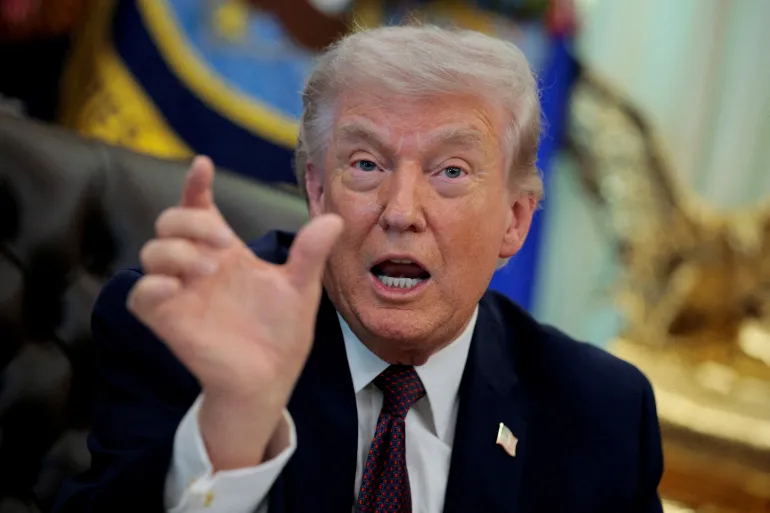
US President Donald Trump declared that the agreement had been completed and said ships, including oil tankers, were already moving through the Strait of Hormuz. “The vessels are moving again,” Trump wrote on Truth Social, describing the shipping route as “completely safe.”
A senior US official said Trump, Vice President J.D. Vance, and Iranian Parliament Speaker Mohammad Bagher Ghalibaf had signed the memorandum electronically, although details of the arrangement have not been independently confirmed.
The agreement triggered a wave of international reactions.
Oman’s Foreign Minister Badr Albusaidi described the accord as “a timely victory for diplomacy and common sense,” while Bahrain, Saudi Arabia, and Kuwait welcomed the breakthrough as an important step toward restoring regional stability.
Egypt said it had worked seriously and sincerely over recent months, in coordination with regional and international partners, to help bring the parties to this point and end the war. Jordan described the deal as an important step toward restoring regional and international security, while Iraq reaffirmed its support for dialogue and diplomatic solutions to regional crises.
Qatar, which played a role alongside Pakistan in facilitating contacts between the two sides, called the agreement “an important step toward sustainable peace.” Prime Minister and Foreign Minister Sheikh Mohammed bin Abdulrahman Al Thani said the understanding would strengthen regional stability and economic growth.
Pakistani Prime Minister Shehbaz Sharif praised the agreement as the culmination of intensive mediation efforts, expressing confidence that it would lay the foundations for lasting peace in the Middle East.
Turkish President Recep Tayyip Erdogan welcomed the breakthrough and thanked the United States, Iran, Pakistan, Qatar, and Saudi Arabia for supporting diplomatic initiatives. He urged all parties to avoid statements or actions that could undermine the process before the formal signing ceremony. Turkish Foreign Minister Hakan Fidan described the accord as a significant step toward durable peace and stability.
China also welcomed the memorandum, saying it hoped the document would be signed as planned and stressing that reopening the Strait of Hormuz would benefit the entire international community.
French President Emmanuel Macron said the agreement could pave the way for broader regional de-escalation and called for its swift and full implementation. He added that the Franco-British international maritime mission stood ready to support the urgent and unconditional reopening of the Strait of Hormuz. British Prime Minister Keir Starmer described the accord as “an extremely important achievement,” reiterating that Iran must never acquire nuclear weapons and that freedom of navigation through the strait must be restored without restrictions or transit fees.
European Commission President Ursula von der Leyen welcomed the diplomatic progress but cautioned that any future lifting of European sanctions would depend on a “real, credible and verifiable” change in Iran’s behaviour.
United Nations Secretary-General António Guterres described the agreement as “a decisive step” toward peace in the Middle East. His spokesperson said the UN chief hoped the parties would build on the new momentum and intensify efforts to secure a lasting resolution to the conflict.